Adult female pythons cause the most trouble in Florida
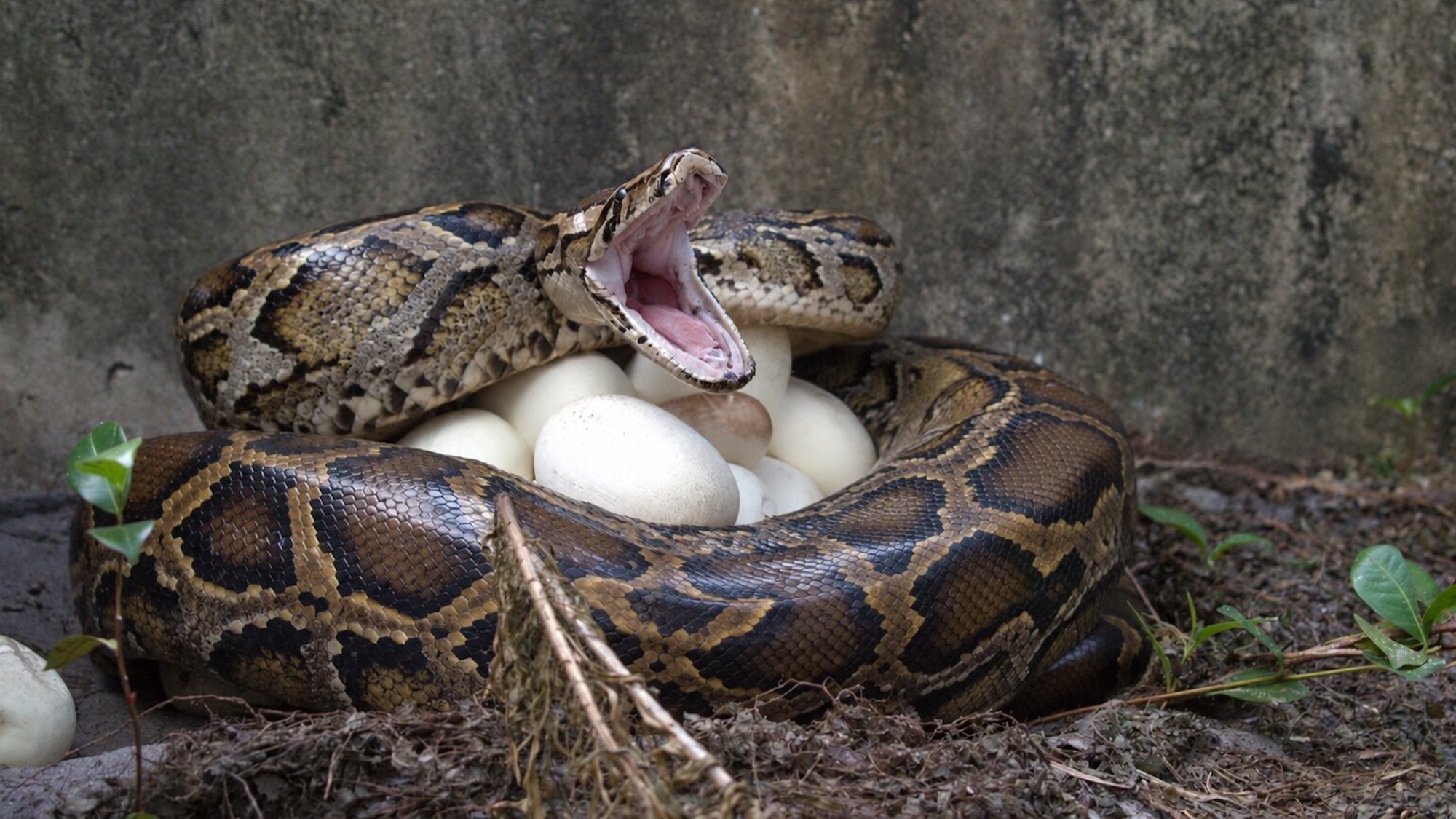
The Burmese python (Python bivittatus) is such a problem for Florida that it’s legal to hunt the massive invasive species throughout the year. The state even hosts an annual 10-day competition that challenges participants to bag as many snakes as possible. But a free-for-all approach may not be the best way to cull Florida’s estimated 100,000–300,000 of these predators. In a study published in the journal Ecological Applications, conservationists argue that if you really want to make a dent, you need to be more selective about your targets.
“Our previous work treated all Burmese pythons as contributing equally to the population,” University of Florida (UF) Croc Doc Wildlife Research Team ecologist Alex Romer said in a recent profile. “But removing the biggest female we’ve ever caught is very different from removing a tiny snake that might not survive next year.”
Romer and his colleagues analyzed data from South Florida Water Management District’s Python Elimination Program to develop a new system called the Weighted Removal Index (WRI). Points are awarded to a snake depending on various factors including its age, sex, and what time of year it may have been killed. For example, younger snakes don’t garner a higher index ranking because of their high mortality rate.Adolescent reptiles often don’t often survive long enough to breed, so a hunter’s efforts are best directed elsewhere. For the largest impact, researchers suggest pursuing mature female pythons.
“Every Burmese python removed is a win for the Everglades, but targeting large reproductive females is likely to reduce the population most effectively,” explained UF invasive ecologist Melissa Miller.
“The idea is that a big female might be worth 100 arbitrary ecological points, while a little snake might be worth five,” added Romer.
The team believes that this strategy could be particularly successful along regional borders of the python invasion. An adult female regularly lays around 70 eggs at a time, so removing them from these sites will slow their offspring’s expansion into new areas.
Their findings also pointed to a potentially unexpected conclusion. While Florida runs its annual python hunting challenge in the summer, organizers may want to consider rescheduling it during the winter. Data indicates that although fewer pythons are removed in months like January or February, their WRI ratings are much higher because they are mostly adults.
“Combining and plugging this knowledge into models…can be a game changer that can really make a difference in the battle to combat these invaders,” added biologist and study co-author Sergio Balaguera-Reina.
KioskNews shows a cleaned-up reading view extracted from the publisher’s page — the original always lives on their site, not ours.