Indian mathematician cracks 70-year-old maths problem, earns spot on TIME100 Next List
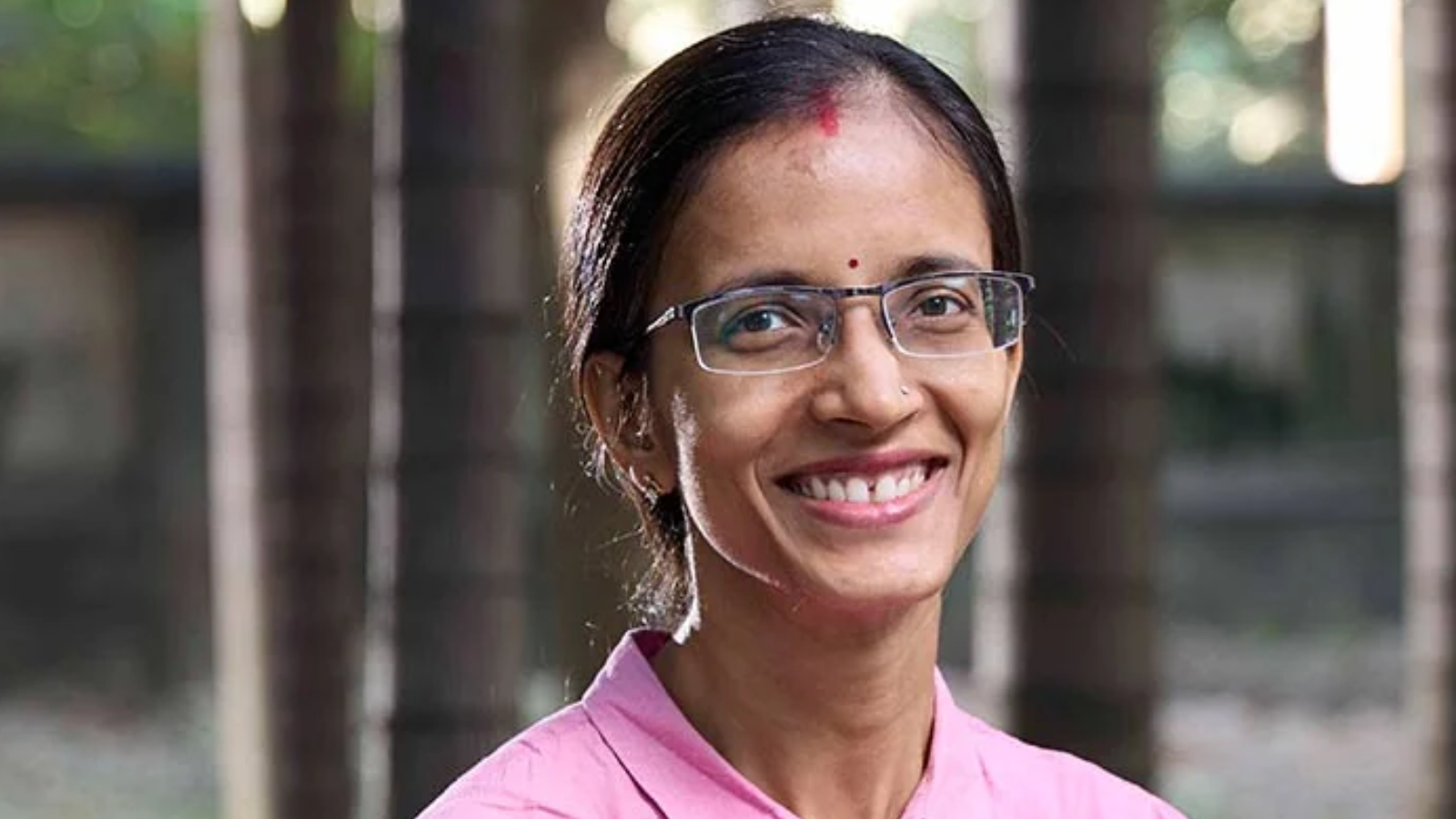
Indian mathematician Neena Gupta earns a place on the TIME100 Next list after cracking a 70-year-old mathematical problem with her groundbreaking research. (infosys prize)
AI Narration
Listen
00:00
Indian mathematician Neena Gupta, who solved a problem that had remained a puzzle for 70 years, has been named in the Time100 Next India List 2026.
A professor at the Indian Statistical Institute in Kolkata, Gupta first gained international recognition in 2014 for finding a counterexample to a version of the Zariski Cancellation Problem, which was first posed in 1949. The breakthrough brought her research in algebraic geometry into the international spotlight.
The problem posed a complex question: if two mathematical objects become structurally identical upon the addition of another dimension, does it necessarily mean they were identical to begin with? Gupta demonstrated that the answer could be no in the context of characteristic, using a three-dimensional affine variety first developed by mathematician Takanori Asanuma to construct a counterexample.
American mathematician Oscar Zariski introduced the problem, which is categorised under the branch of algebraic geometry.
Time magazine’s Time100 Next India List seeks to identify emerging Indian leaders shaping the country’s future across fields like business, arts, science, and sports.
In recognition of her contributions to modern mathematics, Gupta has received several prestigious honours, including the Shanti Swarup Bhatnagar Prize, India’s highest scientific award, in 2019, and the Infosys Prize in 2024.
In an interview after being conferred the 2024 Infosys Prize, addressing researchers, she said, “If you are passionate about something, then you should start focusing on the concept early.”
Story continues below this ad
In 2025, she was selected to deliver the prestigious Emmy Noether Lecture, an American Mathematical Society honour to celebrate the contributions of women mathematicians.
More as a hobby
Born in West Bengal, Gupta recalled in an interview with the Times of India that she practised mathematics more as a hobby than as a focus of her studies.
After a BSc (Honours) in mathematics from Bethune College in 2006, she joined the Indian Statistical Institute for her master’s degree in the subject in 2008. She completed her PhD in 2011 from the same institution, specialising in algebra under the supervision of Professor Amartya Kumar Dutta.
KioskNews shows a cleaned-up reading view extracted from the publisher’s page — the original always lives on their site, not ours.