KCA University opens 5th innovation week and Industry Summit

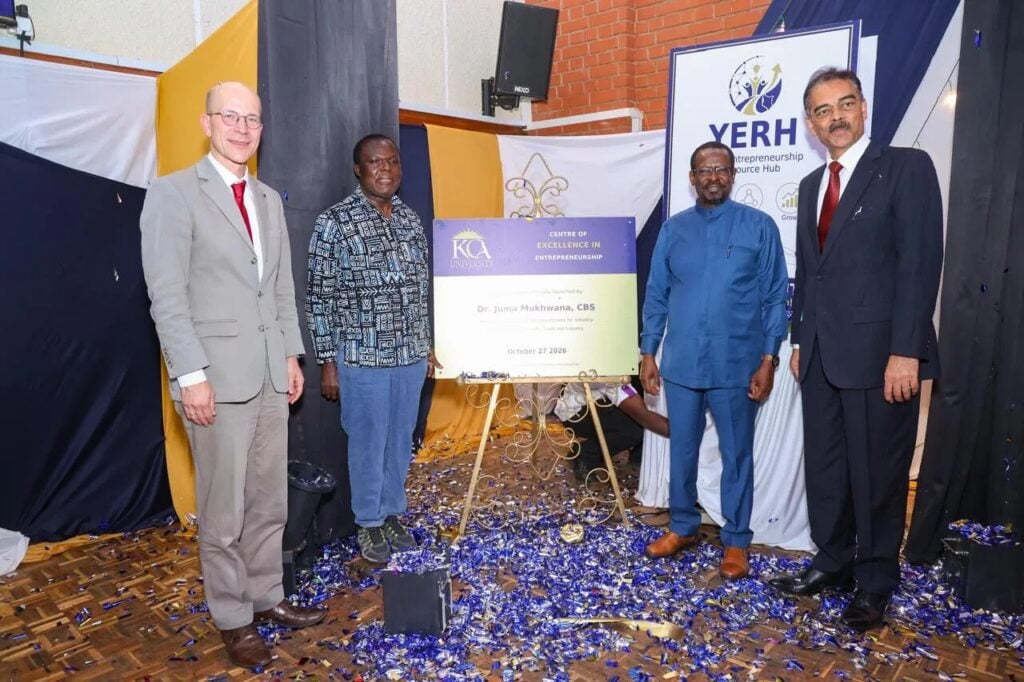
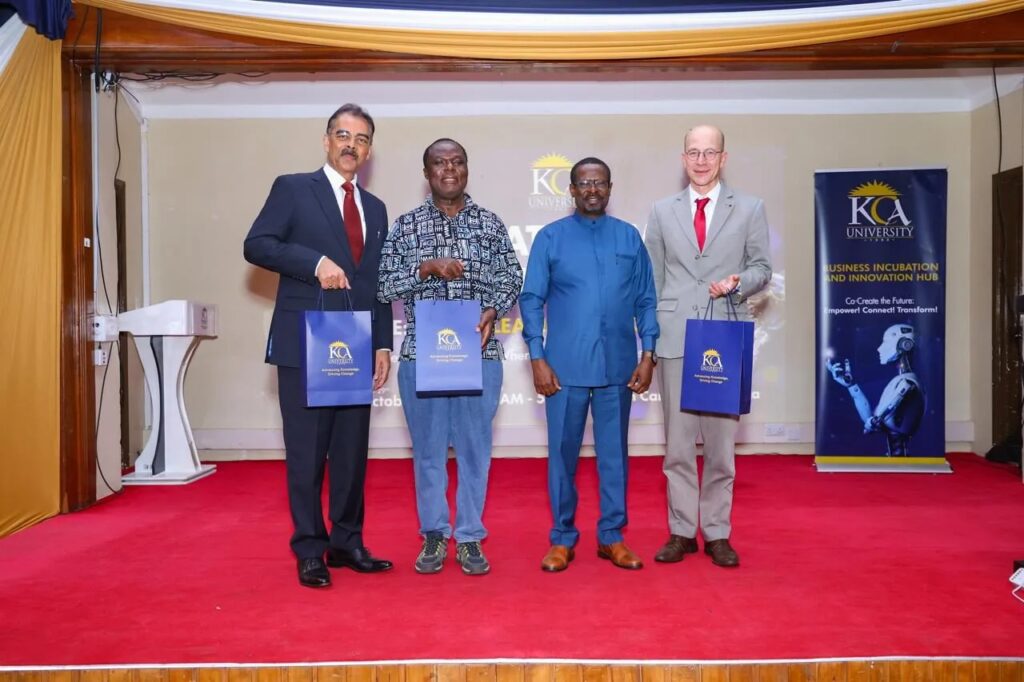
NAIROBI, Kenya, Oct 27 – Industry Principal Secretary Dr Juma Mukhwana and Bidco Africa Chairman Vimal Shah have urged Africa to stop exporting raw materials and start making its own products, as EU Ambassador to Kenya Andreas Peschke and KCA University Vice Chancellor Prof Isaiah Wakindiki pledged stronger support for young innovators.
The four spoke at the opening of the 5th KCA University Innovation Week and Industry Summit, held at the university’s Ruaraka campus under the theme Learn! Lead! Transform!
“No nation has become prosperous by consuming what other nations produce,” said Dr Mukhwana, who was the chief guest. “When we export raw materials, we import jobs.”

He noted that Africa has 1.4 billion people, about 18 percent of the world’s population, yet accounts for only around 3 percent of global manufacturing. “We export cotton and import clothes,” he said.
“Who will industrialise Africa? Africans must industrialise Africa. The solutions must come from you,” he told the students, challenging universities to turn research into commercial products, partner more closely with industry and produce entrepreneurs rather than job seekers.
Shah, who gave the keynote, said Kenya had no shortage of ideas. “The ideas are there. What we need is to become better at turning ideas into products, products into enterprises and enterprises into industries,” he said.
“A business begins with the real customer. Are they willing to pay for the value?” he posed, adding that innovation, not consumption, drives prosperity. “No country becomes prosperous by consuming. We need to innovate.”
With Africa’s population expected to reach 2.5 billion by 2050, he said the market was already waiting. “The demand is there. Consumption will keep happening. The question is, who is servicing the consumption?”
Prof Wakindiki said the university had secured more than Sh40 million in research grants, filed over 25 patent applications and supported eight startups in recent years.
“These are encouraging signs, but they also place a responsibility on us,” he said. “The quality of our journey will be judged by how well we connect research to users, and how consistently we stand with our innovators after the exhibition tents come down.”
He also cited EU-funded partnerships, including the Elevate AI project, which aims to equip more than 1,000 faculty and students in Kenya and Rwanda with artificial intelligence skills. “These partnerships are more than grants. They are bridges for knowledge,” he said.
Peschke said the summit came as the EU and Kenya celebrate 50 years of relations. “We have a strong partnership between the European Union and Kenya. EU support to entrepreneurship and to academic and scientific cooperation is important,” he said.
He pointed to programmes such as the Africa Mobility Scheme, which he said were designed to remove barriers facing Kenyan youth and help them support themselves.
“We are impressed by the spirit of entrepreneurship. This innovation week is very important, and whatever we can do as the European Union, we are going to do,” he said.
Student innovations on show include OmniSense, a remote equipment monitoring system; biodegradable diapers; a space tracking platform called Kessler Aegis; and Fortify AI, a business risk tool.
“The person who will build Kenya’s next great solution may be sitting next to you. It may be you,” Prof. Wakindiki told students.
KioskNews shows a cleaned-up reading view extracted from the publisher’s page — the original always lives on their site, not ours.