As the planet warms, cities like Bangkok could be increasingly inundated by deadly floods
In the humid tropics of Southeast Asia, afternoon thunderstorms roll through almost every day.
Daytime heat causes towering, fluffy cumulonimbus clouds to form and swell before unleashing torrential rain on cities such as Singapore, Hong Kong and Bangkok. In these places, drainage systems are designed to cope with short, heavy downpours of rain.
But the rains in Bangkok over the last week were far from typical.
September is the wettest month in Thailand’s bustling capital, with a monthly average of 344 millimetres usually spread across 18 rainy days. But just last week, roughly 300mm of rain fell in Bangkok over 48 hours, overwhelming the city’s drainage systems.
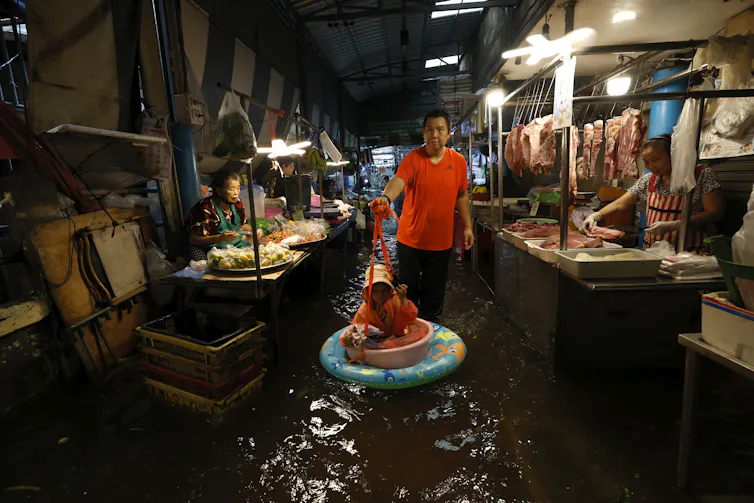
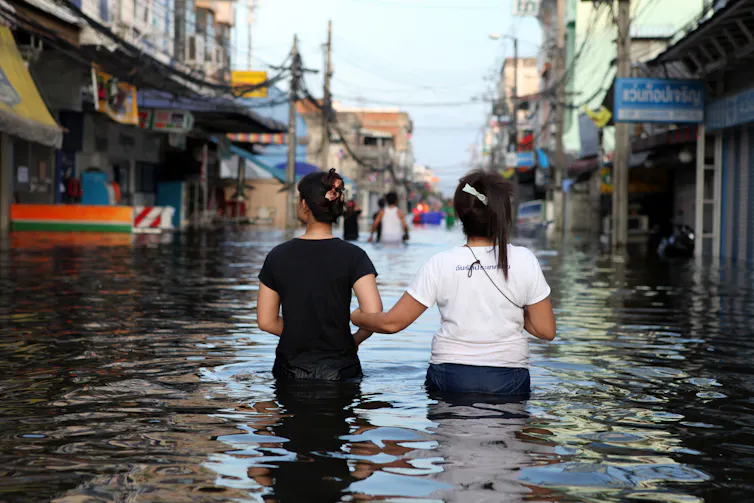
This extraordinary volume of water prompted authorities to declare a city-wide disaster zone. As stagnant, brown water has inundated the city, at least 31 people have died and thousands have been forced to evacuate.
What caused all this rain?
This sudden and extreme downpour was caused by a low-pressure system that stayed over the Bangkok region for about three days. In a low-pressure system, air rises and moisture in the air condenses to form clouds and rain. If a low-pressure system stalls, it can dump rain over the same location for days, leading to severe flooding.
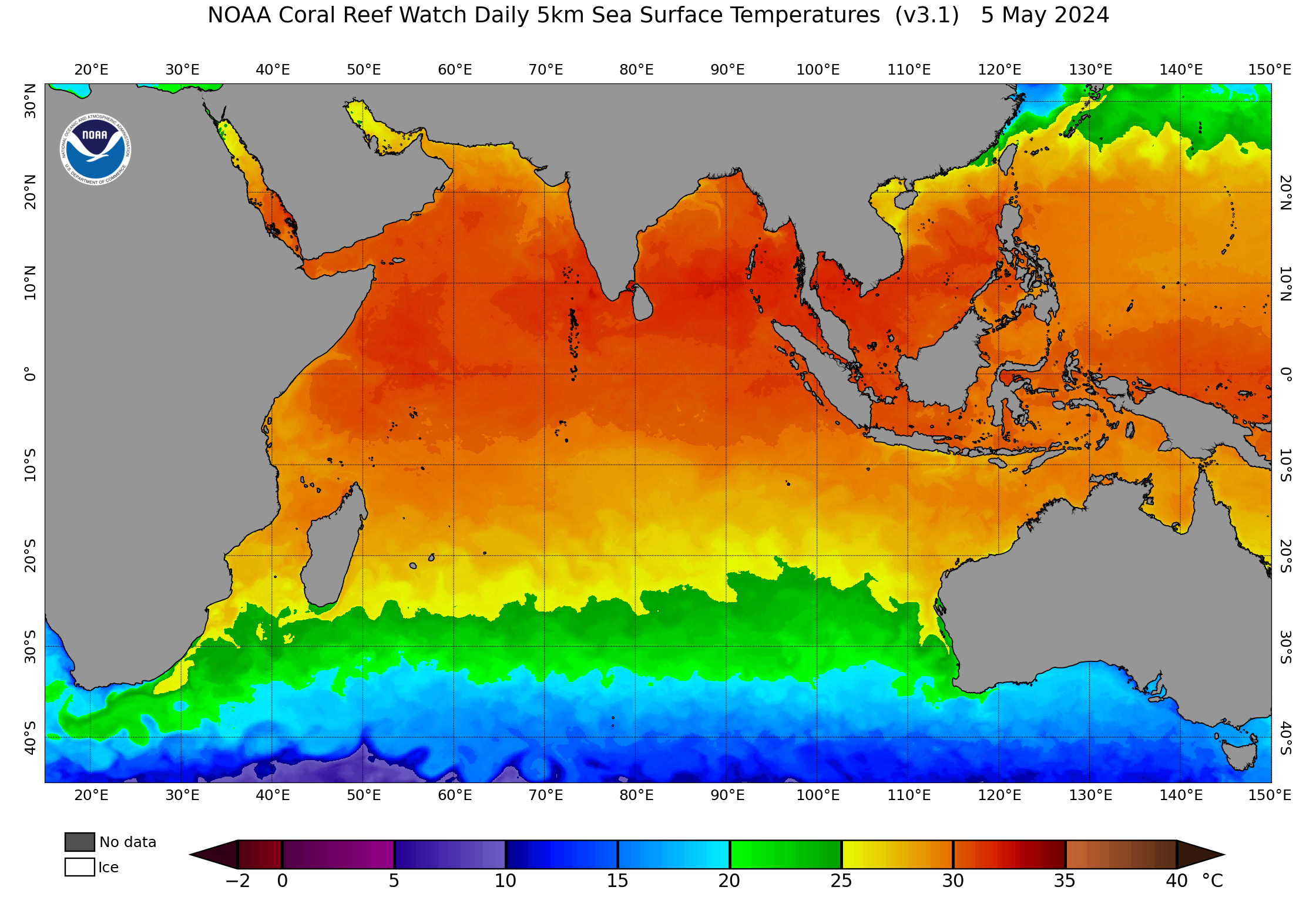
In the nearby Gulf of Thailand, sea surface temperatures are sitting close to 30°C, several degrees above the local average. These warm conditions provide ample moisture and energy for the storm to persist.
Thailand is no stranger to flooding. In 2011, more than 800 people died when high rainfall, multiple tropical storms, high sea levels and an early start to the monsoon season collided. This triggered widespread flooding that lasted months. World Bank figures show these floods caused an estimated US$46.5 billion in damage, with the local manufacturing industry worst hit.

Why is Bangkok prone to flooding?
Bangkok sits on a floodplain near the mouth of the Chao Phraya river, which drains into the Gulf of Thailand. The city is largely flat, without the natural topography to slow or redirect vast volumes of water.
Bangkok has also been sinking for decades. Extensive groundwater extraction in the mid-20th century caused the ground beneath Bangkok to progressively sink, dropping by more than 10 centimetres in 1988 alone.
Policy changes, such as groundwater pricing and extensive monitoring, have reduced this rate of sinking to 2-3cm per year. But as sea levels rise, this sinking coastal city is less able to drain floodwater into the Gulf of Thailand, heightening the risk of prolonged floods.
Bangkok is also rapidly becoming more urban, characterised by high rises and a booming population. Concrete is replacing spongy soils across much of the city, meaning the ground absorbs less water when it rains. The past 30 years of urbanisation in Bangkok have increased surface water runoff by 25% during bouts of extreme rainfall.
The fingerprint of climate change
It’s too early to know the exact effect of climate change on this specific rainfall event. However, the fingerprint of climate change is detectable in global extreme rainfall trends.
In Bangkok, research suggests extremely rainy days are getting even more wet, with the heaviest rainfall day of the year increasing by 6-12mm every decade.
Another study of the 2011 flood identified a strong increasing trend in pre-monsoon rainfall across Thailand. Most of Thailand’s rain happens in the monsoon months of May to October. This could prime the soils for flooding even before the heaviest rain occurs.
The atmosphere is able to hold more water as global temperatures rise, meaning future rainfall will likely be more intense than if humans weren’t warming the planet. Worryingly, Earth’s atmospheric water vapour reached a record high in August.
We don’t yet know if climate change will affect stalling low-pressure systems. But when these systems do form, we can expect more rain to fall.
What comes next?
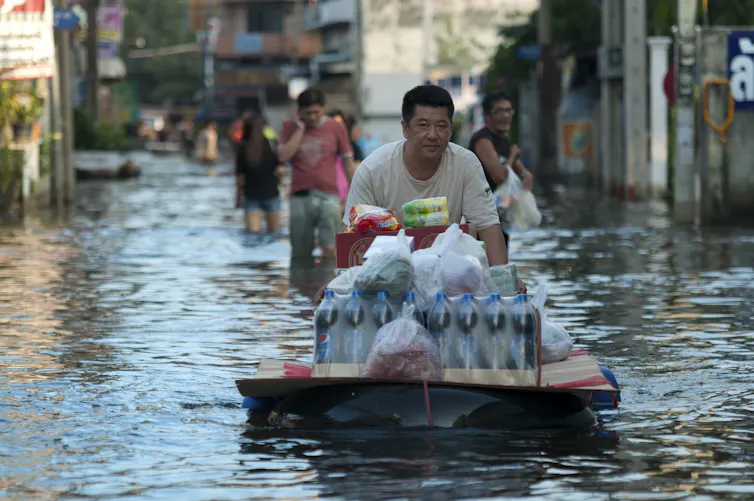
Forecasts suggest Bangkok is in for more rain over the next week. However, residents have already started the clean up and are getting on with everyday life, even creating a floating market to sell produce.
In the long-term, however, extreme floods will undoubtedly strike Bangkok again due to a combination of climate, geography and urbanisation.
Crucially, urban drainage systems must be designed to cope not just with present-day extreme rainfall, but future projections of intensifying rain. Urban planning that promotes green infrastructure and permeable pavements can reduce storm run-off and allow the ground to absorb more water.
Improving early warning systems is vital to protecting vulnerable residents, with some Bangkok locals reporting they didn’t receive phone warnings until the water was already waist-high. Investing in global weather observations and high-resolution models will provide better forecasts of extreme weather.
KioskNews shows a cleaned-up reading view extracted from the publisher’s page — the original always lives on their site, not ours.