PM solar rooftop scheme nears 7mn household installations; target of 10mn by March 27
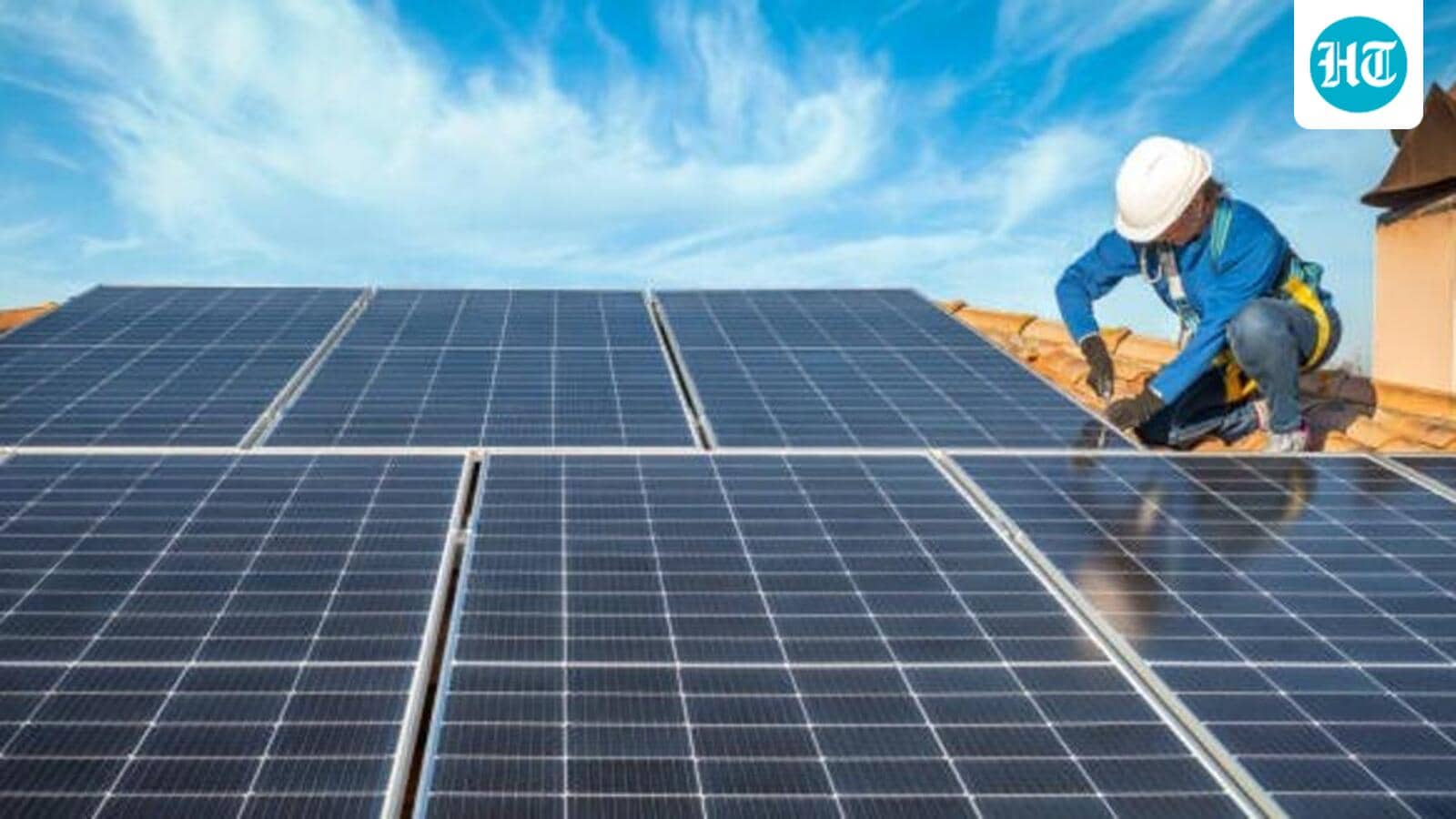
PM Surya Ghar: Muft Bijli Yojana was launched in February 2024 and gives subsidies up to ₹78,000 to households for installing a 3KW solar panel

The Centre’s flagship solar rooftop scheme, PM Surya Ghar: Muft Bijli Yojana, is nearing installations in seven million households, having released nearly ₹38,000 crore in subsidies across the country, the latest data from the Ministry of New and Renewable Energy (MNRE) shows.
The scheme, which has a target of covering ten million households by the end of March 2027, is on track, officials said, adding it is also gaining momentum with the help of a recently launched QR-based tool, meant to simplify installation for users. The tool has recorded over 4,50,000 clicks in the last three months, since its launch, data showed.
Reviewing the scheme earlier this month, Prime Minister Narendra Modi at the launch of the Bharat Renewable Energy (BRE) Summit and Expo 2026 in Delhi on November 2 had said the scheme was now covering nearly 1,00,000 new homes every six days. He also said the scheme had cut electricity bills by roughly 76%.
The latest data showed as of November 26, 6.91 million households have covered, with ₹37,989 crore released as subsidy. The total installed solar rooftop capacity across the country through this scheme stood at 20.2 GW till November 26.
The ministry had on August 20 this year also launched a QR-code based interactive tool to address any bottlenecks and simplify solar installation for households. Government data shows the QR-code portal has logged 4,57,561 scans in three months.
The QR-code, once scanned, requires the users to answer basic questions about their home, before generating a detailed breakdown within 60 seconds, which includes the exact kilowatt (kW) system size required, the average installation cost, the expected Return on Investment (ROI) period, and the cumulative electricity savings over a 25-year lifespan.
“The tool doesn’t stop at numbers, but it immediately connects the homeowner with a list of government-empaneled vendors in their district along with direct contact numbers, allowing them to book a rooftop inspection with a single tap,” said a government official, part of the MNRE.
Data showed till November 23 this year, out of the 4,57,561 total QR scans, 98,110 users went ahead to generate their customized solar plans, while 46,369 homeowners used the click-to-call feature to directly speak with certified local vendors nearby and initiate the installation process.
“In the single week between November 16 and November 23, 2026, the portal recorded 46,992 fresh scans, resulting in 8,442 new solar plans and 4,159 direct vendor calls in just seven days,” the ministry added.
ABOUT THE AUTHOR
Jasjeev Gandhiok is an Assistant Editor with Hindustan Times, where he covers environment, climate change, the clean energy transition and wildlife at the National Bureau. Gandhiok has over a decade of experience in journalism and is based in Delhi. He has reported extensively on Delhi and the National Capital Region (NCR). This includes the region's air pollution woes, a polluted Yamuna and on urban wildlife still thriving in the region. He joined HT in October 2021. Prior to that, he had five-year stint at The Times of India in Delhi, where he also covered Delhi, with a focus on environment and wildlife. Gandhiok has covered some recent events around the Capital too, ranging from the farmers' protests, the northeast Delhi riots and the CAA-NRC protests, reporting from the ground on all of these. He also travels across the country to report on how environment and climate change impact everyday life, while also writing on endangered species. His reports in 2019 on toxic leachate from Delhi's landfills led to the National Green Tribunal (NGT) taking suo motu cognisance and ultimately asking the state government to start bio-mining to flatten and remove all three landfills in the capital. He also closely tracks the implementation of government policies on climate, renewable energy and environmental protection. His focus remains on impactful, public-interest journalism which explains how environmental decisions affect people's everyday lives.
Get Latest News, breaking headlines, and top India News, and today real-time updates from across the nation. Stay informed on politics, government policies, crime, Today Weather, and major developments on Hindustan Times
KioskNews shows a cleaned-up reading view extracted from the publisher’s page — the original always lives on their site, not ours.