Thailand, China push rail links to Malaysia and Singapore following Anutin-Xi talks
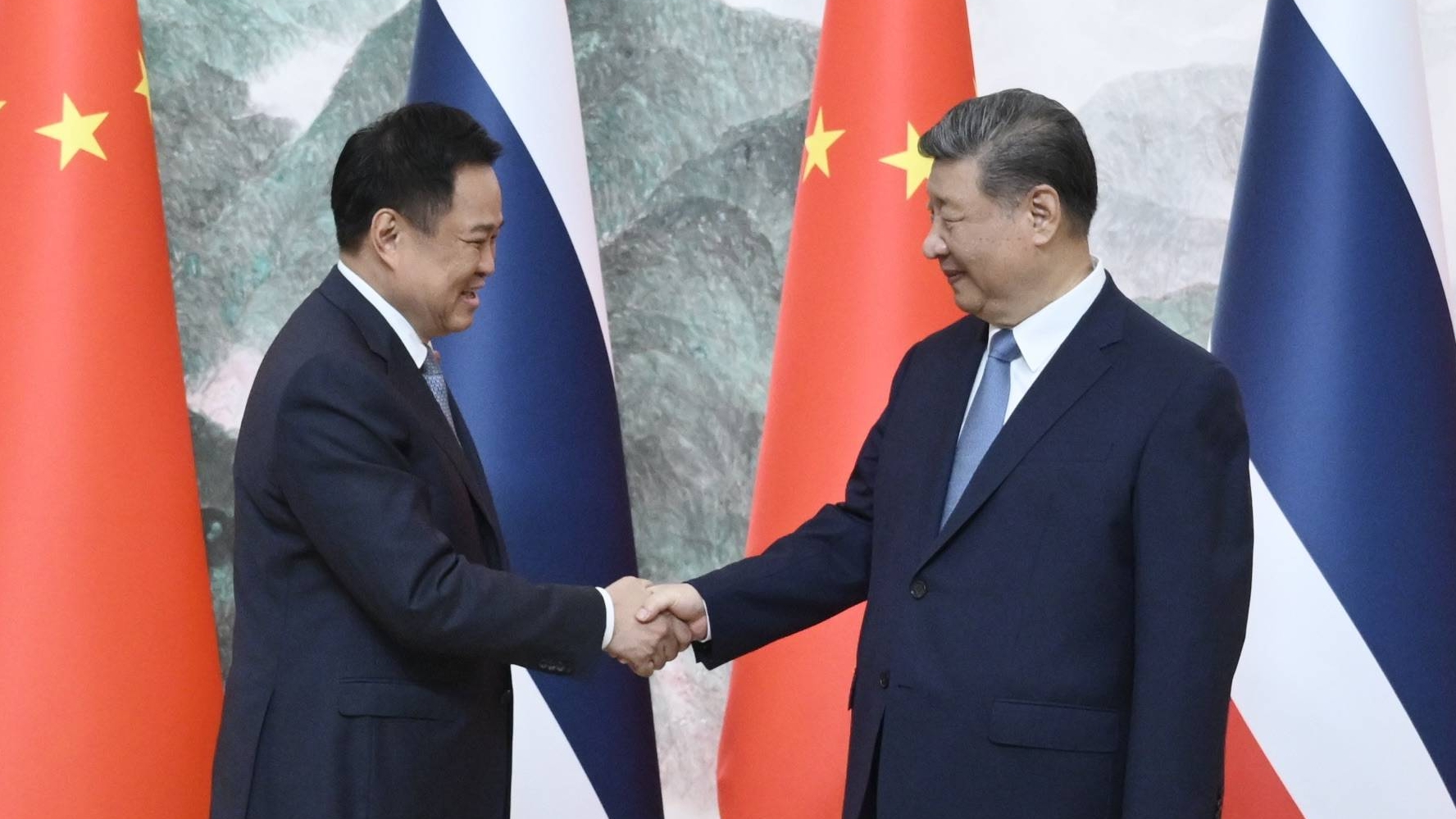
Prime Minister Anutin Charnvirakul and Chinese President Xi Jinping have agreed to accelerate the development of rail connectivity linking China, Laos and Thailand with Malaysia and Singapore, as part of efforts to strengthen regional transport and economic cooperation.
The agreement was discussed during a full bilateral meeting between the two leaders on 20 November, following the 33rd APEC Economic Leaders’ Meeting, according to government spokesman Ekkapob Pianpises.
The talks aimed to deepen the Thailand-China comprehensive strategic cooperative partnership and build on discussions with Chinese Premier Li Qiang, who paid an official visit to Thailand last week.
Both sides agreed to speed up the development of rail connections extending from China through Laos and Thailand to Malaysia and Singapore.
Key projects include the second Nong Khai-Vientiane railway bridge and the Chiang Khong-Nateuy-Mohan railway route, which are intended to strengthen cross-border transport links and regional connectivity.
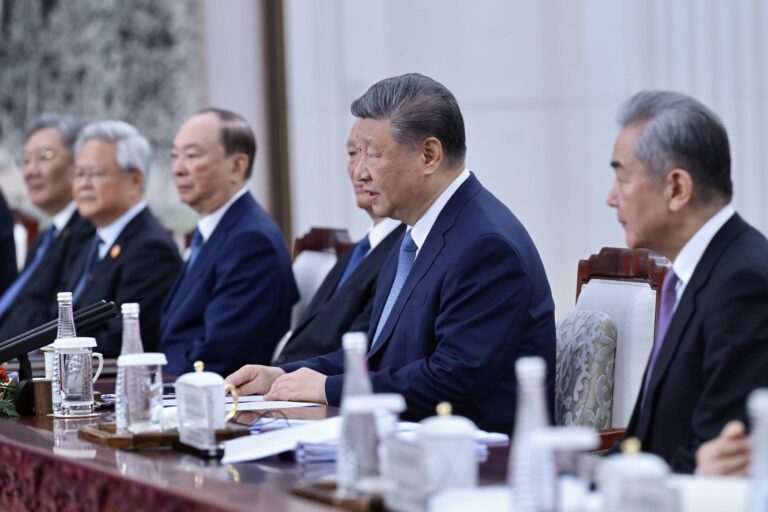
The leaders also discussed expanding economic cooperation, with both countries supporting high-quality Chinese investment in Thailand, particularly in digital technology, clean energy, space technology and electric vehicles.
They agreed to promote more balanced trade, expand access for Thai products through geographical indication (GI) registration and online platforms, and advance plans for China to purchase 500,000 tonnes of Thai rice.
China pledges cooperation on cross-border river pollution
Anutin also raised concerns over transboundary water pollution affecting the Sai, Kok, Ruak and Mekong rivers, which has had an impact on the environment and local communities.
Xi reaffirmed that China does not support activities that damage the environment and expressed readiness to cooperate with Thailand in addressing toxic contamination in the rivers.
China also pledged technical support to strengthen water quality inspections, monitoring and systematic efforts to tackle pollution.
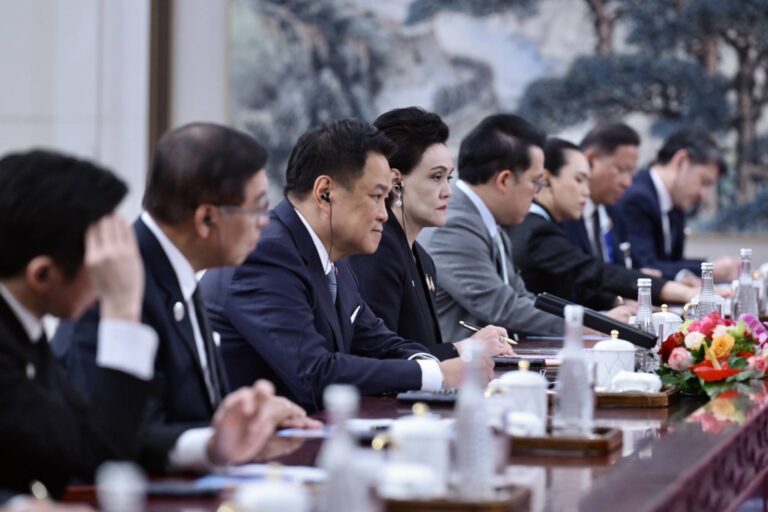
Anutin proposed raising the issue at the Mekong-Lancang Cooperation (MLC) Leaders’ Meeting in Guilin, China, in December.
Joint efforts against online scams
On security, the two leaders agreed to strengthen cooperation against transnational crime, particularly online scam networks.
Anutin stressed that Thailand places the highest priority on the safety of tourists of all nationalities and is ready to work with China to provide accurate information and restore confidence among Chinese visitors.
The two leaders also discussed regional and international cooperation, including safe and accessible artificial intelligence, efforts to support peace in Myanmar and Thailand’s commitment to resolving disputes with Cambodia through peaceful dialogue in accordance with international law.
Thailand also expressed support for China’s role in biodiversity conservation and confirmed plans to proceed with domestic steps towards joining the Agreement on Biodiversity Beyond National Jurisdiction (BBNJ).
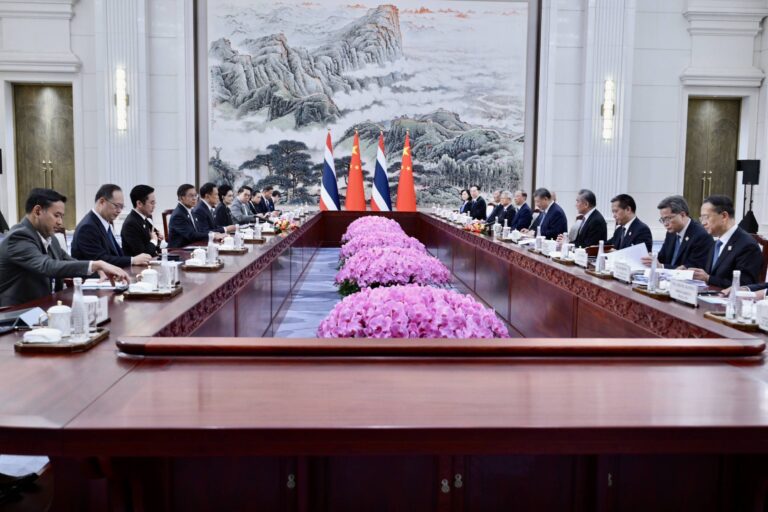
The Thai government will also consider joining the International Organization for Mediation (IOMed) and has requested China’s support for Thailand’s bid to have traditional Thai dress, known as Chud Thai, inscribed on UNESCO’s list of Intangible Cultural Heritage of Humanity.
Ekkapob said the meeting reflected the close relationship between Thailand and China, with both leaders committed to delivering concrete results in environmental protection, economic development, security and regional peace.
KioskNews shows a cleaned-up reading view extracted from the publisher’s page — the original always lives on their site, not ours.