Iron Bear reveals US$2.6B upside in Canadian iron ore giant
ASX-listed Iron Bear Resources has given its mammoth Canadian iron ore project a serious financial makeover, adding US$2.6 billion (A$3.9B) to its projected post-tax value without changing the underlying commodity price assumptions.
The updated prefeasibility study (PFS) for the company’s flagship Iron Bear project in Newfoundland and Labrador has lifted its post-tax net present value (NPV) from US$9 billion (A$13.5B) to US$11.6 billion (A$17.4B), representing a hefty 29 per cent increase.
Importantly, the improved economics have not relied on any adjustment to the underlying iron ore price assumptions. Instead, the company has squeezed additional value from its mine plan, processing circuit, construction schedule and waste management strategy.
The result is a post-tax internal rate of return (IRR) climbing from 15.2 per cent to 17.9 per cent, while upfront capital costs have fallen five per cent from US$4.2 billion (A$6.3B) to US$4 billion (A$6B).
Annual production has also received a handy 12 per cent boost, rising from 22.9 million tonnes to 25.9 million tonnes of premium iron ore products.
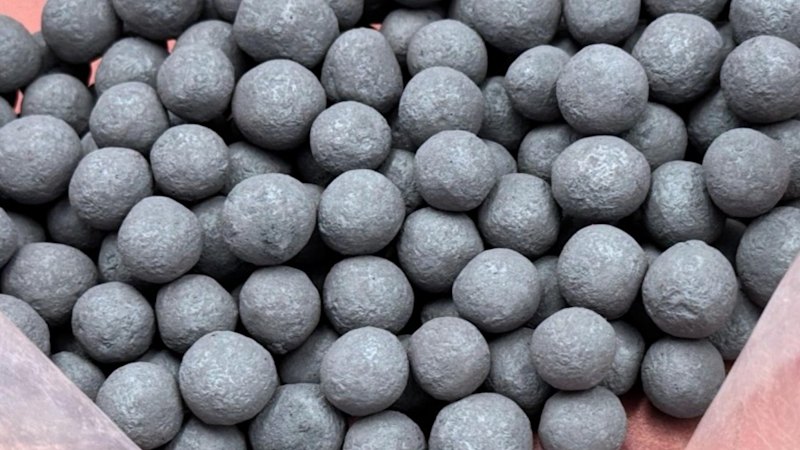
The production mix includes 7.3 million tonnes of high-grade blast furnace concentrate and 18.6 million tonnes of direct reduction (DR) pellets annually, targeting the growing market for cleaner steelmaking.
Five key engineering improvements drove the upgrade, led by a processing plant overhaul that reduced capital requirements and improved operating efficiency.
A revised crushing and grinding circuit added US$524 million (A$786M) to the project’s NPV, while improved plant throughput contributed another US$915 million (A$1.37B) to the bottom-line results.
An optimised mining schedule, designed to bring higher-grade ore forward and generate revenue sooner, added a further US$630 million (A$945M) while the company also shaved time off its construction schedule, bringing commissioning of the third processing train forward by a year to boost the valuation by a further US$291 million (A$437M).
Underpinning the numbers is a substantial 3.3-billion-tonne probable ore reserve grading 29.1 per cent iron, sitting within a broader 13.6-billion-tonne mineral resource grading 30.03 per cent iron.
The updated mine plan envisages a 40-year operating life, supported by existing rail infrastructure linking the project to the export port of Pointe-Noire.
The company’s planned premium products are expected to command prices above conventional iron ore benchmarks, particularly its DR pellets, which are used in lower-emission steelmaking processes.
Iron Bear’s financial modelling assumes a long-term 65 per cent iron benchmark price of US$120 per tonne, translating into forecast selling prices of US$152 per tonne for blast furnace concentrate and US$212 per tonne for DR pellets.
The upgraded economics come at an intriguing time for Iron Bear, which recently regained full control of its Canadian giant after Brazilian mining heavyweight Vale elected to withdraw from a farm-in agreement. Vale had already poured US$18 million (A$27M) into advancing the project, bringing considerable technical expertise to the table.
Iron Bear has emerged from the split holding all the cards, free to pursue new strategic partners, offtake agreements and financing arrangements. And the latest US$2.6 billion uplift in project value has only strengthened its hand, giving the company considerably more firepower as it looks to attract the heavy hitters needed to bring the project to life.
The sheer scale of the prize is difficult to ignore. Iron Bear’s 13.6-billion-tonne resource contains more iron than Rio Tinto’s celebrated Simandou deposit in Guinea, while its 3.3-billion-tonne probable ore reserve is roughly five times the size of the reserve base at Champion Iron’s operating Bloom Lake mine in Canada. The project also sits less than 35 kilometres from an established heavy-haul railway linking it to the deep-water port of Sept-Îles, giving the company a valuable infrastructure advantage as it looks to turn its giant resource into a producing mine.
Another ace up Iron Bear’s sleeve is access to low-cost renewable hydropower from Churchill Falls, which is expected to power the entire operation and help keep both operating costs and carbon emissions firmly in check.
The timing of the update could also work in Iron Bear’s favour. Recent Canadian legislation has opened the door to fast-tracked approvals for projects deemed nationally significant, a coveted designation the company is pursuing.
Attention now turns to advancing permitting, environmental approvals and financing, including a planned environmental impact assessment registration in the first quarter of 2027. The company estimates it needs about US$50 million to reach a decision to mine, followed by the bigger task of securing US$4 billion in development funding.
For Iron Bear, the latest study has strengthened the financial case for a project of considerable scale. The next challenge will be turning those impressive numbers on paper into a funded mining operation.
Is your ASX-listed company doing something interesting? Contact: mattbirney@bullsnbears.com.au
KioskNews shows a cleaned-up reading view extracted from the publisher’s page — the original always lives on their site, not ours.