CRÉATION AFRICA: GuguByGugu uses mohair to fuse luxury streetwear with a rich African heritage
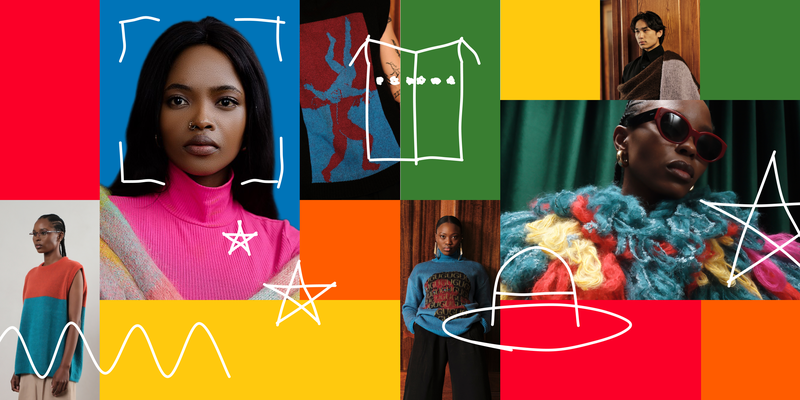
Gugu Peteni was a little girl when she discovered two things: her grandmother knew how to sew, and her mother’s linen cupboard contained useful fabric.
During December holidays in Eastern Cape, Peteni would sit beside her grandmother, threading her needles for her because her eyesight was failing, and watch her sew. Back home in Port Elizabeth, now Gqeberha, Peteni wanted clothes for her dolls. Her mother said there was no money for them.
So Peteni improvised. She quietly cut pieces from the back of her mother’s curtains stored in an old linen cupboard, where she hoped they would not be noticed, and made tiny dresses.
“My mom wasn’t very happy,” she recalls.
In hindsight, it was the start of GuguByGugu.
From cutting curtains to becoming a fashion designer
Peteni grew up in a big, extroverted family with four siblings, including a twin sister. It was a loud, imaginative household where, she says, children were allowed to dream.
She went on to study fashion and textiles at Nelson Mandela University and completed an honours degree in fashion, graduating cum laude. Then, in her third year, she encountered a fibre that would eventually become central to her career: mohair.
“I had no idea what mohair was,” she says.
A university programme introduced students to knitting with mohair and to the Angora goats from which it comes. Peteni was hooked. Knitting, which she had associated with blankets and a fading skill, suddenly looked like fashion.
After university, she accepted what was supposed to be a three-month internship at Mohair South Africa’s headquarters in Gqeberha. She was promoted and stayed for three-and-a-half years.
It was, she says, “the best decision I’ve ever made”.
Farm to fashion
The job taught her not only about knitting but about the entire industry – farming, agriculture, spinning and production – and about the extraordinary fibre being produced in her home province and used by international luxury houses.
“Why isn’t anyone talking about this?” she remembers thinking.
Peteni had always expected to run her own business. Eventually she felt she had outgrown her surroundings and wanted to test herself in the wider fashion industry.
But GuguByGugu was not born from a carefully plotted business plan.
While she was working as an in-house designer, people began asking to buy her creations. One sale led to another. Then came packaging, stickers, a card machine and financial books.
“I had a business before I realised I had a business,” she says.
The company was registered in December 2019, although Peteni regards 2020 as the year it formally became a business.
Today GuguByGugu’s use of mohair is about more than producing luxury knitwear. Peteni wants consumers – and other African designers – to understand the value of a fibre grown locally.
That thinking sits behind Gugu the Goat, a playful campaign built around the Angora goat and the brand’s “farm to fashion” philosophy.
“We wanted to establish ourselves as the mohair champions,” she says.
Peteni wants more of the value created from mohair to remain in South Africa rather than the raw material leaving the country to become finished luxury products elsewhere.
Sustainability and craftsmanship
Her pitch to an international customer is equally direct: GuguByGugu offers traceability, human craftsmanship and ethical production.
“If I sell you a sweater, I can tell you which goat that sweater comes from.”
But producing locally is difficult. Natural fibres are expensive, spinners often require bulk orders that small brands cannot easily absorb, and South Africa has limited manufacturing capacity for specialised natural-fibre garments.
“It’s a numbers game at the end of the day,” she says.
Sustainability, for Peteni, is not simply about natural fibres. She talks about the people behind a garment — artisans, manufacturers, illustrators and others involved in making it — and about ensuring that production is ethical.
She is wary of sustainability becoming a fashionable label.
“There’s no shortage of quick, fast, cheap clothes,” she says. What interests her instead is producing clothing that lasts and is made with intention.
Her understanding of luxury has also been shaped by taking the brand abroad. In Paris, Peteni saw how disciplined and structured established fashion markets are centred on seasons, collections and buyers.

She also encountered another challenge: the expectation that African fashion should look a particular way – highly printed, colourful and overtly narrative.
Peteni rejects that limitation.
“Me being African is African by birth. I don’t need to add anything else in order to justify my Africanness.”
For her, African luxury can simply be contemporary Africans making exceptional products in their own visual language.
Création Africa has forced another shift – this time in how she thinks about herself as an entrepreneur.
Peteni says one of her biggest mistakes was creating entirely from passion. If she imagined a blue-and-black jacket with feathers, she made it without first asking what the feathers cost, how many potential buyers existed or whether her customer wanted it.
“I was creating for Gugu and not creating for the end user who’s buying it.”
She says Création Africa has helped her move from a purely creative mindset towards a “creative and entrepreneurial mindset”.
The lesson has been fundamental: “Creativity is not sustainable without a system.”
It is a long way from a child snipping pieces off the back of her mother’s curtains.
But the impulse is recognisable.
Peteni still wants to make beautiful things. Now she is determined to build a business capable of carrying them into the world. DM
Our writing about Création Africa is made possible in partnership with the French Institute of South Africa (Ifas). Création Africa is an initiative of the French Ministry of Europe and Foreign Affairs, Ifas and the Embassy of France in South Africa, Lesotho and Malawi.
KioskNews shows a cleaned-up reading view extracted from the publisher’s page — the original always lives on their site, not ours.