Supreme Court censures Delhi government for public safety failures amid rising sexual offences
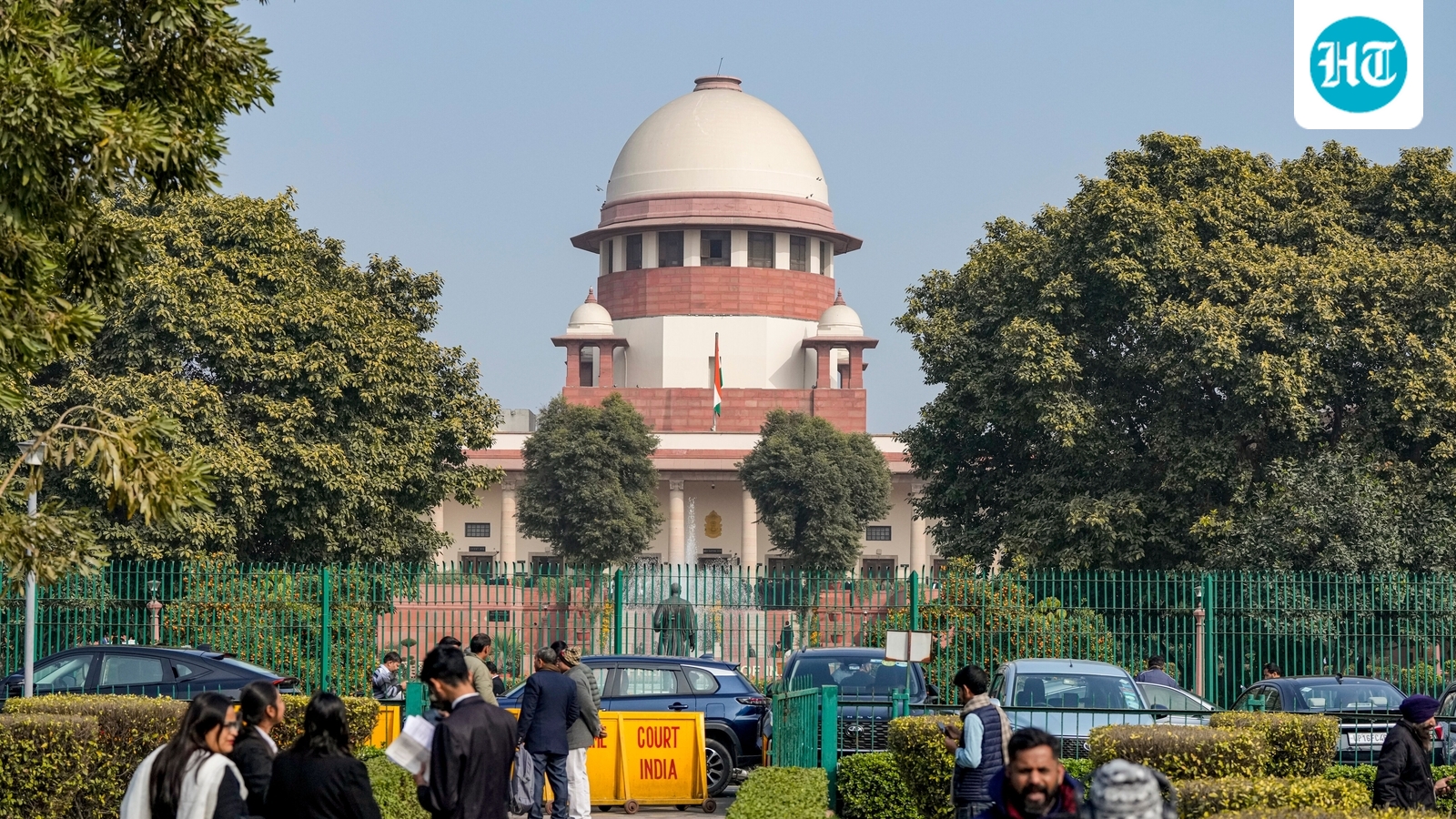
It ordered an audit of public spaces by the police, aiming to identify vulnerabilities and enhance security measures, with a report due by October 5.

 Prefer HTon Google

The Supreme Court on Monday pulled up the Delhi government and police for a “systemic failure” to guarantee basic public safety, taking suo motu cognisance of recent sexual offences across Delhi-NCR and ordering the Commissioner of Police to immediately audit public spaces in the Capital, observing that parks, roads, and public places cannot be permitted to become “zones of high risk” to citizens.
The court directed the Commissioner to constitute dedicated teams in every police district, headed by officers not below the rank of deputy superintendent of police, to inspect parks, isolated stretches, transport hubs, markets, areas around educational institutions and other vulnerable locations for gaps in lighting, surveillance, patrolling and access control.
The audit report must be submitted to the Supreme Court by October 5, with citizens also allowed to flag locations lacking adequate lighting or CCTV coverage. A bench of justices JB Pardiwala and K Vinod Chandran took note of reports of three recent sexual assaults on minors --at Aastha Kunj park near LSR College, in Swaroop Nagar and inside a bus travelling from Greater Noida to Delhi -- and said the incidents, alongside other recent reports of sexual offences across Delhi-NCR, required more than expressions of solidarity.
“What is required is a measurable response, with responsibility and accountability fixed upon the authorities entrusted with prevention of crime, maintenance of public order and protection of vulnerable persons,” the bench said.
Also Read | Delhi gang-rape accused dined out after act, washed clothes to remove proof: Cops
The court said parks, roads, buses, metro stations, subways, footbridges and other public spaces “cannot be permitted to become zones of high risk” because of “grossly inadequate illumination, poor surveillance, lax patrolling, or other preventable administrative deficiencies”.
The police teams have been asked to identify locations where poor lighting, lack of surveillance, insufficient patrolling, abandoned structures, poor access control or other deficiencies may increase the risk of crime. The police must also report the patrolling and security arrangements to be deployed at identified public parks and other vulnerable areas, particularly during evening and early morning hours.
The court’s intervention followed news reports on the recent incidents, including the alleged gang rape of a 17-year-old at Aastha Kunj Park. Referring to the victim’s “harrowing” account, the bench called the incident a “stark reminder” of the vulnerabilities faced by women and children in spaces that ought to be safe and accessible. It noted with regret that persistent complaints of women and girls facing sexual harassment in the area had failed to prompt increased vigilance by the police or local administration before the alleged assault.
Also Read | ‘Nothing more urgent than this’: CJI on Delhi gang-rape convict’s plea
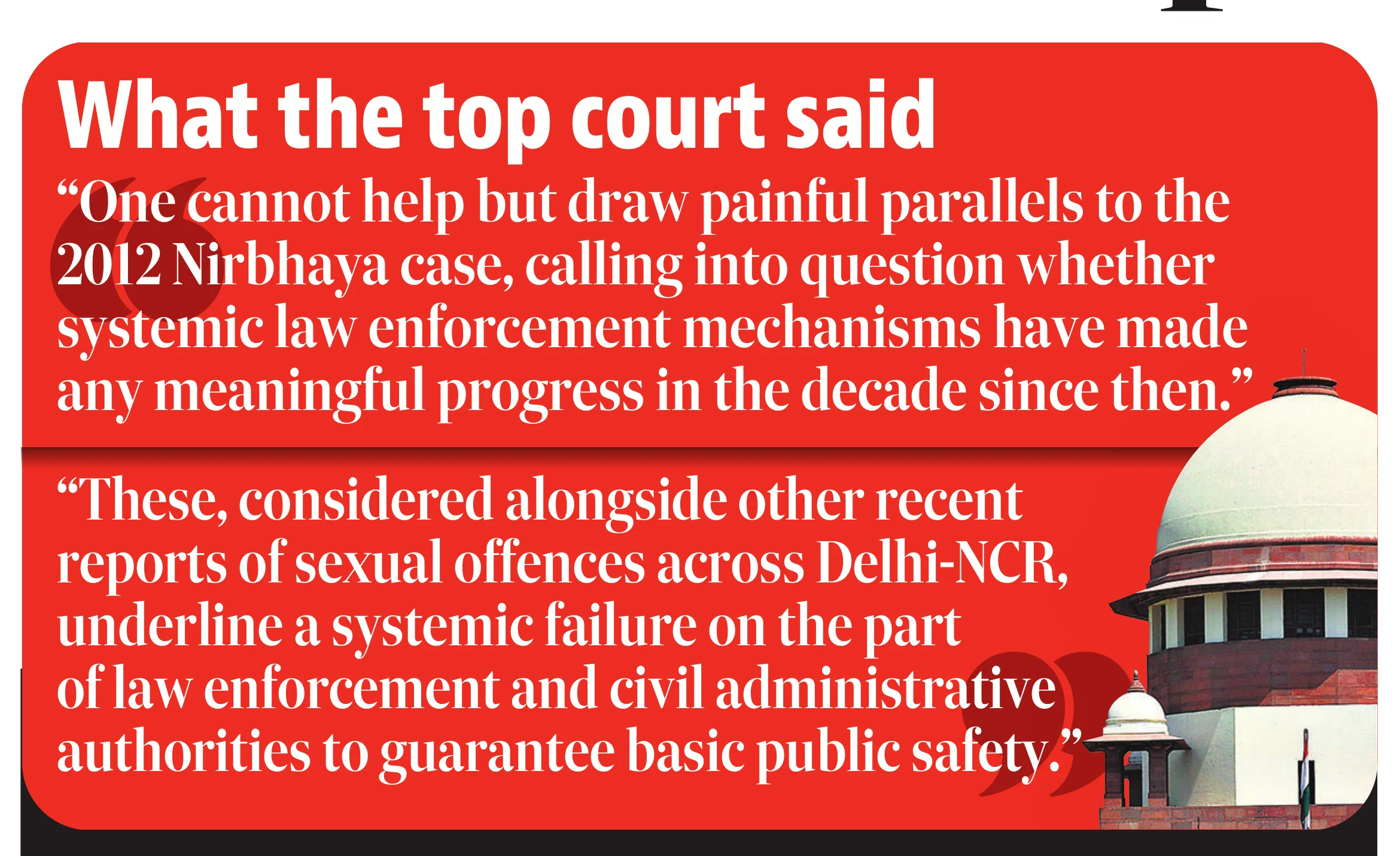
The bench also drew a direct comparison with the brutal 2012 gang rape and murder case in New Delhi. “One cannot help but draw painful parallels to the 2012 Nirbhaya case, calling into question whether systemic law enforcement mechanisms have made any meaningful progress in the decade since then,” it said.
The court said the right to live with dignity free from violence was a fundamental guarantee under Article 21 of the Constitution. “Where basic measures of public safety remain compromised, no individual, irrespective of age, gender, or sexual identity, can navigate public spaces with a sense of security,” it said, adding that the primary obligation of the State was to maintain public spaces that are “safe, accessible, and secure for all”.
The court appointed senior advocate Liz Mathew as amicus curiae and sought a comprehensive status report on measures adopted to ensure the safety of women and children. The report must detail how the National Database on Sexual Offenders (NDSO) and Investigation Tracking System for Sexual Offences (ITSSO) have been used by the police over the past five years, whether prescribed timelines have been followed, and programmes undertaken under Mission Shakti.
“A mechanism intended to protect women and children can serve its purpose only if it is accessible, functional, adequately staffed, capable of responding promptly and subject to continuing institutional oversight,” the bench said.
Also Read | Delhi's LSR Students March Demanding Justice In Kalkaji Gang-Rape Case | HT India
The Supreme Court also issued notice to the Registrar General of the Delhi High Court seeking information on the functioning of Fast Track Special Courts and Exclusive POCSO Courts in Delhi and the average time taken to dispose of such cases. It asked the high court to spell out steps being taken to ensure that trials are concluded expeditiously, preferably within one year.
KioskNews shows a cleaned-up reading view extracted from the publisher’s page — the original always lives on their site, not ours.