US wraps up military mission in Iraq, giving Baghdad room to strengthen China ties
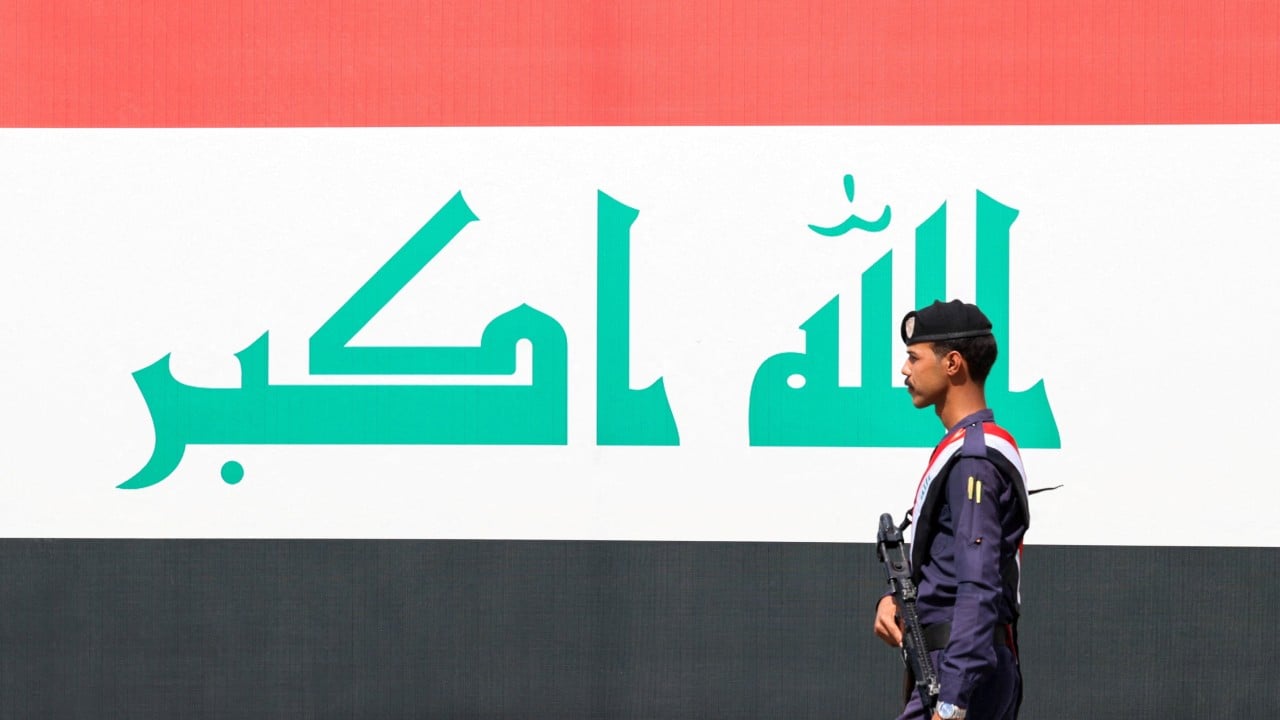
The US has ended its military mission in Iraq, a move analysts said could give Baghdad more room for diversified partnerships and indirectly benefit China’s energy and commercial interests.
But they cautioned that the shift was unlikely to create a power vacuum for Beijing to fill, with China lacking both the ambition and capacity to take on the US security role.
The United States formally ended its Operation Inherent Resolve mission in Iraq on September 30, completing a withdrawal agreed on in 2024 under the administration of former US president Joe Biden.
The mission, launched in 2014 to fight Islamic State, has been replaced by an Iraqi-led security effort, while Washington has said it will continue targeted training and intelligence support.
The move caps a turbulent two-decade US military presence that began with the 2003 invasion, which ousted Saddam Hussein and empowered a Shiite-led government.
Washington withdrew its forces in late 2011, only to return less than three years later to fight Islamic State.
For China, the significance of the withdrawal may lie less in replacing the US than in the greater room it could give Iraq to diversify its foreign relationships.
China is not looking to replace the US or inherit its role as Washington scales back its presence
Li Weijian, a researcher at the Shanghai Institutes for International Studies, said the diminished US involvement could give Iraq more autonomy in dealing with external powers.
“A reduced US presence in Iraq and a scaling back of its Middle East posture actually benefits nations like Iraq that are seeking a more balanced diplomacy,” Li said.
He said Iraq and other Arab states in the region had already been seeking to lessen their reliance on the US – beyond just the security sphere – potentially creating more willingness to cooperate with China.
“US dominance has failed to bring genuine peace to the region,” Li said, adding that “China welcomes multilateral cooperation and diversified diplomacy”.
China has long had economic interests in Iraq, particularly in its energy sector, alongside infrastructure projects in the country. Li said those interests did not depend on the US withdrawal.
He said China had been working with Iraq for decades and that many Chinese projects would continue regardless of the US presence.
“China is not looking to replace the US or inherit its role as Washington scales back its presence,” Li said.
Jesse Marks, founder of Rihla Research and Advisory, said it was still too early to determine whether the US move represented a broader withdrawal of American forces from the region.
“The current drawdown is as much a political decision as it is a practical one,” Marks said. “Ending that mission does not necessarily mean ending the broader US security relationship with Iraq.”
The US withdrawal therefore does not necessarily amount to a major opening for Beijing, according to Marks.
“Beijing will keep pursuing energy and commercial deals in the absence of a larger US military presence, but it will not fill a US security role. At least not now,” he said.
Washington’s influence in Iraq would continue to rest primarily on diplomacy and security ties rather than competition with China over infrastructure or energy, he added.
Kenneth Katzman, a senior fellow at the Soufan Centre, a New York-based think tank, echoed that view.
“China does not envision a security role in Iraq,” Katzman said, citing Beijing’s lack of force-projection capabilities and ambition to take on such a role.
Instead, he said, China’s interests were concentrated on energy, including securing supplies and investing in Iraq’s large energy industry.
“China might play a role [in] helping Iraq get its oil out and developing its oil, but a security role? No,” Katzman said.
The withdrawal comes as Baghdad tries to balance close security and political ties with both Washington and Tehran – a rarity in the region.
Pro-Tehran factions have long demanded an end to the US presence, with Iraqi militias stepping up attacks on US forces in Kurdistan following late-February strikes on Iran by the US and Israel.
The US withdrawal has also raised concerns about the ability of Iraqi forces to contain Islamic State remnants and manage the influence of Iran-backed armed groups.
For China, greater Iranian influence or renewed instability would not necessarily be beneficial, Marks said.
“China’s economic interests benefit most from a stable Iraqi state capable of protecting energy infrastructure and maintaining predictable relationships with multiple external partners,” he said.
KioskNews shows a cleaned-up reading view extracted from the publisher’s page — the original always lives on their site, not ours.