SWS: 55% of adult Filipinos follow former President Duterte's ICC case developments
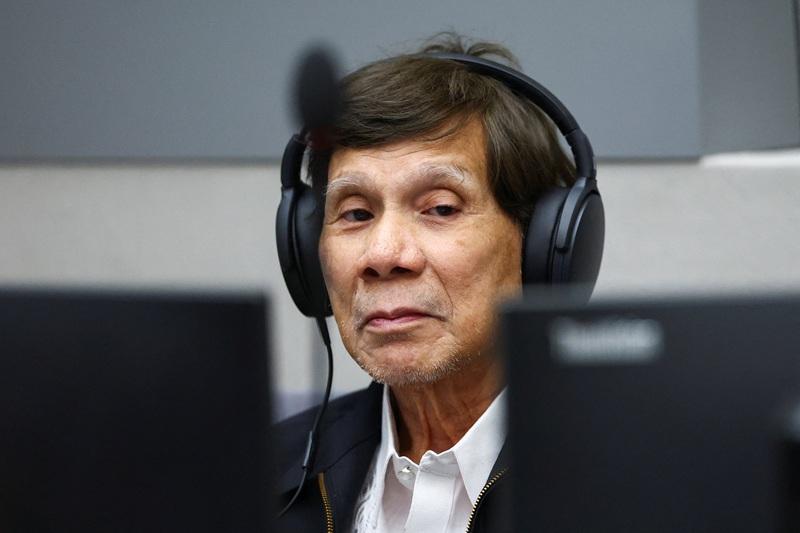
Only 55% followed the news about the latest developments on the International Criminal Court (ICC) case against former President Rodrigo Duterte, according to the latest Social Weather Survey (SWS).
The national SWS of September 21-27, 2026, found 55% of adult Filipinos following the reports about the motion filed at the ICC by Duterte's lead counsel Peter Haynes asking that the prosecution be ordered to refile the Document Containing the Charges against him.
At least 8% followed the reports very closely, 25% somewhat closely, and 21% just a little. Another 28% did not follow them at all, while 17% heard about it only during the interview.
To recall, the motion that was filed by Hayes on August 31, 2026, argued that the charges were framed too vaguely and imprecisely, violating the former President’s right to be fully informed of the specific charges against him before the trial.
According to the survey, the 55% who followed the reports in September 2026 was lower than the 72% in June 2026, 75% in March 2026, and 80% in November 2025 who followed earlier news about the case.
Each survey asked about a different development: the former President’s detention at the ICC and the postponed hearing on the confirmation of charges (November 2025), the hearing on the confirmation of charges held on February 23-27, 2026 (March 2026), the ICC case after Pre-Trial Chamber I confirmed the charges on April 23, 2026 (June 2026), and the motion of his lead counsel (September 2026).
Those who said they did not follow the reports at all rose from 14% in November 2025, 17% in March 2026, and 20% in June 2026, to 28% in September 2026.
Those who heard about it only during the interview rose from 6% in November 2025 and 8% each in March and June 2026 to 17% in September 2026.
The ICC Trial Chamber III is scheduled to begin the trial on November 30, 2026.
Survey background
The Third Quarter 2026 Social Weather Survey was conducted from September 21 to 27, 2026, using face-to-face interviews of 1,500 adults (18 years old and above) nationwide with 600 in Balance Luzon (or Luzon outside Metro Manila) and 300 each in Metro Manila, the Visayas, and Mindanao.
The sampling error margins are ±3% for national percentages, ±4% for Balance Luzon, and ±6% each for Metro Manila, the Visayas, and Mindanao.
The survey items reported here were non-commissioned. They were done on SWS’s own initiative and released as a public service.
Net confidence in a fair trial by the ICC
At least 41% percent said they have much confidence that the ICC will conduct a fair trial while 26% have little confidence, for a net confidence score (% much confidence minus % little confidence, correctly rounded) of +16.
At least 15% have very much confidence, 26% have somewhat much confidence while another 17% have somewhat little confidence, and 9% have very little confidence. The remaining 33% were undecided.
Net confidence is similar to June 2026, but lower than in 2025
The survey showed that the net confidence score of +16 was similar to the +17 (44% much, 27% little) in June 2026.
It was higher than the +11 (39% much, 27% little, correctly rounded) in March 2026, but lower than the +22 (47% much, 24% little, correctly rounded) in November 2025 and the +21 (47% much, 26% little) in September 2025.
The March 2026 survey asked about confidence that the ICC is conducting a fair trial; the other surveys asked about confidence that it will conduct a fair trial.
Net trust in the ICC
Among the 93% aware of the ICC, 39% have much trust, while 30% have little trust, for a net trust rating of +10, classified by SWS as moderate.
Meanwhile, 11% have very much trust, 28% have somewhat much trust, 18% have somewhat little trust, and 12% have very little trust. The remaining 28% were undecided, and 3% did not know or refused to answer.
Net trust in the ICC was a moderate +14 (42% much, 28% little) in September 2025 and a neutral +9 (38% much, 28% little) in March 2026.
Following the ICC case is lowest among the less educated
Following the reports about the motion was 61% in Metro Manila, 56% in Balance Luzon, 55% in the Visayas, and 50% in Mindanao.
Following the reports about the motion rose with education: it was 38% among non-elementary graduates, 48% among elementary graduates, 56% among junior high school graduates, 63% among those with some senior high school up to some college, and 66% among college graduates.
Net confidence in a fair trial is highest in Balance Luzon
Net confidence that the ICC will conduct a fair trial was highest in Balance Luzon at +21, followed by Mindanao at +17, Metro Manila at +9, and the Visayas at +6.
By education, it was +11 among non-elementary graduates, +17 among elementary graduates, +18 among junior high school graduates, +16 among those with some senior high school up to some college, and +10 among college graduates.
Net trust in the ICC is lowest in Mindanao
Net trust in the ICC was a moderate +16 in Balance Luzon, a moderate +14 in Metro Manila, a neutral +7 in the Visayas, and a neutral -4 in Mindanao.
Net trust in the ICC varied little by education
Those who followed the case closely trust the ICC more and are more confident of a fair trial with net trust in the ICC was a moderate +23 among those who followed the reports very closely, a moderate +16 among those who followed them somewhat closely, a neutral +4 among those who followed them just a little, a neutral -4 among those who did not follow them at all, and a moderate +23 among those who heard about it only during the interview.
It was a good +39 among those with much confidence that the ICC will conduct a fair trial, a neutral +3 among the undecided, and a poor -29 among those with little confidence.
Net confidence in a fair trial was +44 among those who followed the reports very closely, +23 among those who followed them somewhat closely, +11 among those who followed them just a little, +4 among those who did not follow them at all, and +14 among those who heard about it only during the interview.
Socio-demographic characteristics of respondents
Applying census weights and correctly rounded, 13% of the respondents were from Metro Manila, 45% from Balance Luzon, 19% from the Visayas, and 23% from Mindanao.
Fifty-seven percent were from urban areas, and 43% were from rural areas.
Male and female respondents were sampled alternately, giving a 1-to-1 ratio.
By age group, 19% were youth (18-24), 25% were intermediate youth (25-34), 20% were middle-aged (35-44), 15% were 45 to 54 years old, and 21% were 55 years old and above.
By education, 10% had at most some elementary education, 25% either finished elementary or had some junior high school education, 30% either finished junior high school or had some vocational education, 25% either attended some senior high school, completed senior high school or vocational, or attended some college, and 10% either graduated from college or took post-graduate studies. — BAP, GMA News
KioskNews shows a cleaned-up reading view extracted from the publisher’s page — the original always lives on their site, not ours.