Link health risks to pollution plan, not just AQI: WHO chief Swaminathan
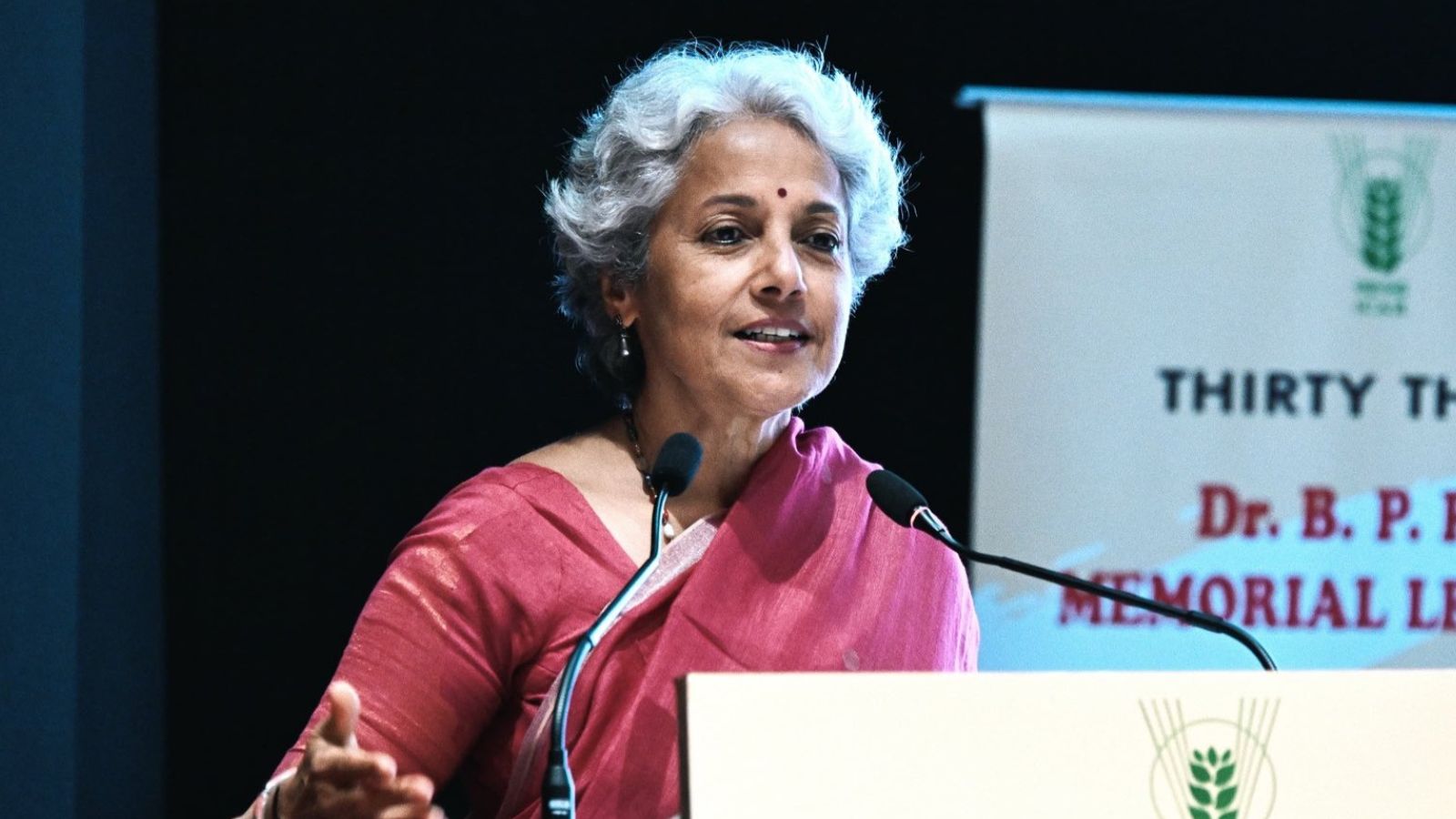
India’s clean air strategy needs to move beyond monitoring pollution levels to understanding and communicating their health consequences, says Dr Soumya Swaminathan, public health activist and former chief scientist at the World Health Organization (WHO).
She believes thea National Clean Air Programme (NCAP) must correlate specific health impacts with individual pollutants and make the risks more visible to the public. “At present, the Air Quality Index (AQI) is calculated based on the highest concentration among the eight pollutants being monitored. However, this approach needs to change because different pollutants have different impacts on human health. They cannot be treated as equivalent. For instance, elevated levels of PM2.5 have different health implications from PM10, ozone or carbon monoxide. Each pollutant requires its own health-based benchmark, accompanied by a corresponding health advisory tailored to its specific effects,” Dr Swaminathan says.
The health advisories should reflect the specific pollutant and the population groups most vulnerable to its effects. Although the health impacts of air pollution are already well documented, new evidence continues to emerge. For example, major studies published in 2026 have highlighted the relationship between PM2.5 exposure and dementia. According to Dr Swaminathan, the scientific evidence base is continually expanding. “We are learning more about the different ways air pollution affects the human body, the mechanisms through which these effects occur and the long-term consequences of exposure. PM2.5 triggers inflammation in the body, and once systemic inflammation develops, it can affect multiple organs and bodily functions,” she says.
She also highlights the neurological impacts of air pollution, particularly on children. A study by the Institute of Economic Growth examined children aged 2–11 years and found that higher PM2.5 exposure during the preceding 12 months was associated with poorer performance in mathematics and reading.
“There is also emerging evidence linking air pollution to childhood stunting. The study found that a one-standard-deviation increase in PM2.5 exposure was associated with approximately a five-percentage-point increase in the prevalence of stunting. This is particularly concerning for India, where childhood stunting remains a significant public health challenge, with prevalence at around 30%, according to national family health survey estimates. Despite improvements in nutrition and other interventions, air pollution could be one of the factors preventing us from making faster progress in reducing stunting,” Dr Swaminathan cautions.
Prenatal exposure to air pollution has been linked in several Indian studies to adverse birth outcomes, including low birth weight and preterm births. A study from London published in 2026 found that children growing up in areas that had experienced improvements in air quality following stricter pollution-control measures showed faster lung growth. This shows that reducing air pollution can have measurable and positive effects on children’s long-term respiratory health.
Overcoming data silos, building Covid-like response to air pollution
One of the most important steps is to bring together climate and health data, which currently exist in separate systems. This fragmentation makes it difficult for policymakers to clearly understand and communicate the health consequences of air pollution. “For example, if we were to integrate daily pollution data with hospital admission records, we could examine trends in heart attacks, asthma attacks and strokes alongside PM2.5 concentrations in a city over a 12-month period. Such an analysis could reveal clear relationships between changes in pollution levels and increases in specific health conditions. This would help establish the immediate and longer-term health burden of air pollution and provide policymakers with stronger evidence to guide interventions,” she says.
Story continues below this ad
Adapt national clean air programme to local contexts
India already has several national programmes that are implemented by states and contextualised according to their specific needs. The same model can be applied to clean air action. “Individual cities and states should be able to prioritise interventions based on their most significant sources of pollution. For example, vehicular emissions may be the primary source of pollution in some cities, while agricultural residue burning may be a major contributor in others. In rural areas, the burning of biomass for household cooking remains an important source of both indoor and outdoor air pollution, particularly affecting women who continue to rely on wood and other solid fuels,” says Dr Swaminathan.
Since the National Clean Air Programme 2.0 has not yet been released publicly, it presents an opportunity to develop a comprehensive, science-based roadmap for the next ten years. “It must also establish clear accountability mechanisms at both national and state levels. Air pollution is a cross-sectoral challenge involving transport, energy, agriculture, urban development, waste management and public health. While action is required across all these sectors, there must be a clearly designated authority responsible for coordinating implementation,” she recommends.
Mobilising climate finance for clean air
With climate change increasingly being recognised as a public health crisis, including in discussions around COP31, there is a strong case for mobilising greater climate finance for air pollution control. “The World Bank has already extended substantial financial assistance to states such as Haryana, Punjab, Uttar Pradesh and Bihar. These investments provide an important starting point, but additional climate finance will be needed, alongside sustained domestic government investment. Transport should be among the highest priorities for clean air action, as vehicular emissions are a major contributor to urban air pollution. Without significant investment in accessible and efficient public transport, it will be difficult to achieve meaningful reductions in pollution,” Dr Swaminathan says.
KioskNews shows a cleaned-up reading view extracted from the publisher’s page — the original always lives on their site, not ours.