Katie lost her baby and could have died. Now a world-first treatment offers hope from this serious pregnancy illness
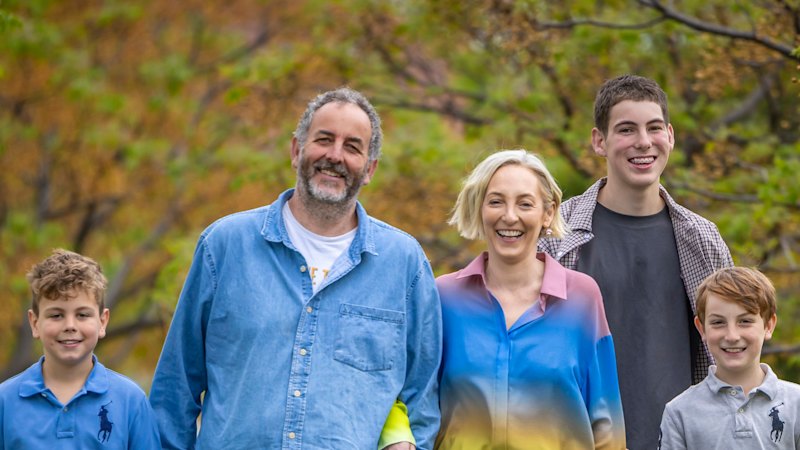
Sitting at work, 36 weeks pregnant with her first child, Katie James wasn’t feeling great but decided to plough on.
“I kept working,” she said. “I packed up my laptop and said, ‘See you guys’, thinking I’d be still working for another month.”
Just hours later, she was gravely ill with the life-threatening condition pre-eclampsia, and gave birth by emergency caesarean to her little son, Lennox.
Until she got it, James hadn’t really heard of the most common serious medical disorder of pregnancy, one that causes the mother’s blood pressure to spike and damages blood vessels, reducing blood flow to major organs including the kidneys, liver and brain.
It kills an Australian woman a year, causes still births and neo-natal deaths and can cause survivors long-term cardiovascular damage, raising the risk of heart attack or stroke.
Despite being potentially deadly, no medication exists to cure pre-eclampsia, blamed largely on a lack of funding to female-specific medical conditions. In 2024, only 1 per cent medical research money went to women’s illnesses other than cancer.
“A baby dies every minute, globally, from pre-eclampsia, and a mother dies every 10 minutes,” says Dr Nicola Yuen, chief medical officer at the Royal Women’s Hospital, Melbourne.
“[But] women’s health research has always been really poorly funded, and pregnancy research even more so … lack of investment globally in women’s health is why it has taken us so long to get anywhere with the burden of disease from pre-eclampsia.”
Professor Shaun Brennecke, one of Australia’s leading pre-eclampsia experts and the hospital’s director of pregnancy research, has not seen any advances in treatment in 40 years of practice.
However, both are optimistic this may finally change if the hospital’s trial of a new drug invented by US group Comanche Biopharma proves as effective as they hope.
The drug, CBP4888, uses RNA technology to target and reduce the placenta’s overproduction of the protein that causes blood vessel damage. Australia has been chosen to trial it as local clinicians were the first in the world to be able to measure levels of the protein.
Were this available when James was pregnant, it may have prevented her illness advancing to the point where, by the time she reached her doctor, she had HELLP syndrome, causing her liver and kidney function to drop. This condition brings a 25 per cent chance of maternal death.
She was immediately given a general anaesthetic for surgery, spent three days in intensive care and another week in hospital as doctors stabilised her blood pressure.
Thankfully, baby Lennox was fine, but James was not so lucky when – having been told by her midwives this was unlikely to hit her again – the condition returned during her next pregnancy.
“I was very aware of the signs, and got to 28 weeks and three days before starting to feel unwell again … my urine sample looked like Guinness, my head was throbbing, and I felt horrendous,” says James, who works for construction giant Metricon.
After being rushed to the Royal Women’s by ambulance, James delivered Ivy by emergency caesarean, weighing just one kilogram.
“When she was delivered, everyone in that room was so happy and so excited,” said James. “She was breathing on her own, everyone was rapt, and it was so lovely to hold her because I didn’t get to hold Lenny for a couple of days, I was still quite unwell.”
As James was again placed in intensive care, a brain scan of baby Ivy tragically revealed a severe brain bleed. She only lived for three days – just enough time for her four-year-old brother to meet and bathe her.
After two such horrendously fraught pregnancies, James’ obstetrician advised the couple they should not try to expand their family. But hospital staff advised her to meet Professor Brennecke, who ran a trial involving aspirin as a preventer for women at high risk of pre-eclampsia.
Brennecke supported James through two healthy pregnancies (sons Edmund and Monty) that were blessedly complication-free. He says if the new drug is found to be successful in the Phase 1b trial he is overseeing, it could help women worldwide avoid what the family went through.
“I’ve spent my career focused on caring for women with pre-eclampsia and researching the subject, and this is the most important and dramatically significant event and trial that I’ve had the good fortune to be involved in,” he said.
The trial is examining the dose of the new drug and will take two to three years, after which international studies will follow. Brennecke is pleased the manufacturer will make it affordable and accessible in low and middle-income countries, should it prove as safe and effective as he hopes.
“It’s not just a pregnancy problem because if a baby is born premature it can have lifelong health impacts, and we know mothers who had particularly severe, early onset pre-eclampsia have increased risk of cardiovascular disease and early death,” he said.
“If you can come up with a cure it will have a profound impact on maternal and perinatal health and the health of women long term.”
Dr Elisha Broom, a Queensland fetal medicine specialist not linked to the trial, said seeing development of the first treatment for pre-eclampsia is promising.
“Even for mothers who don’t have severe pre-eclampsia, we’re talking hospitalisation, pre-term birth, low birth weight,” she said. “So it’s really encouraging having something that might support and treat women before we say, ‘enough’s enough, and it’s time to pull the pin because we’re concerned about the mother’s outcomes’.”
“It’s [also] incredibly encouraging to see some actual research funding involvement in women’s health trials, there is such a paucity of research in women’s health and there has been for such a long time.”
Start the day with a summary of the day’s most important and interesting stories, analysis and insights. Sign up for our Morning Edition newsletter.

KioskNews shows a cleaned-up reading view extracted from the publisher’s page — the original always lives on their site, not ours.