Pink, pretty, and protective. A dumbo octopus is here with a message from the deep-sea.
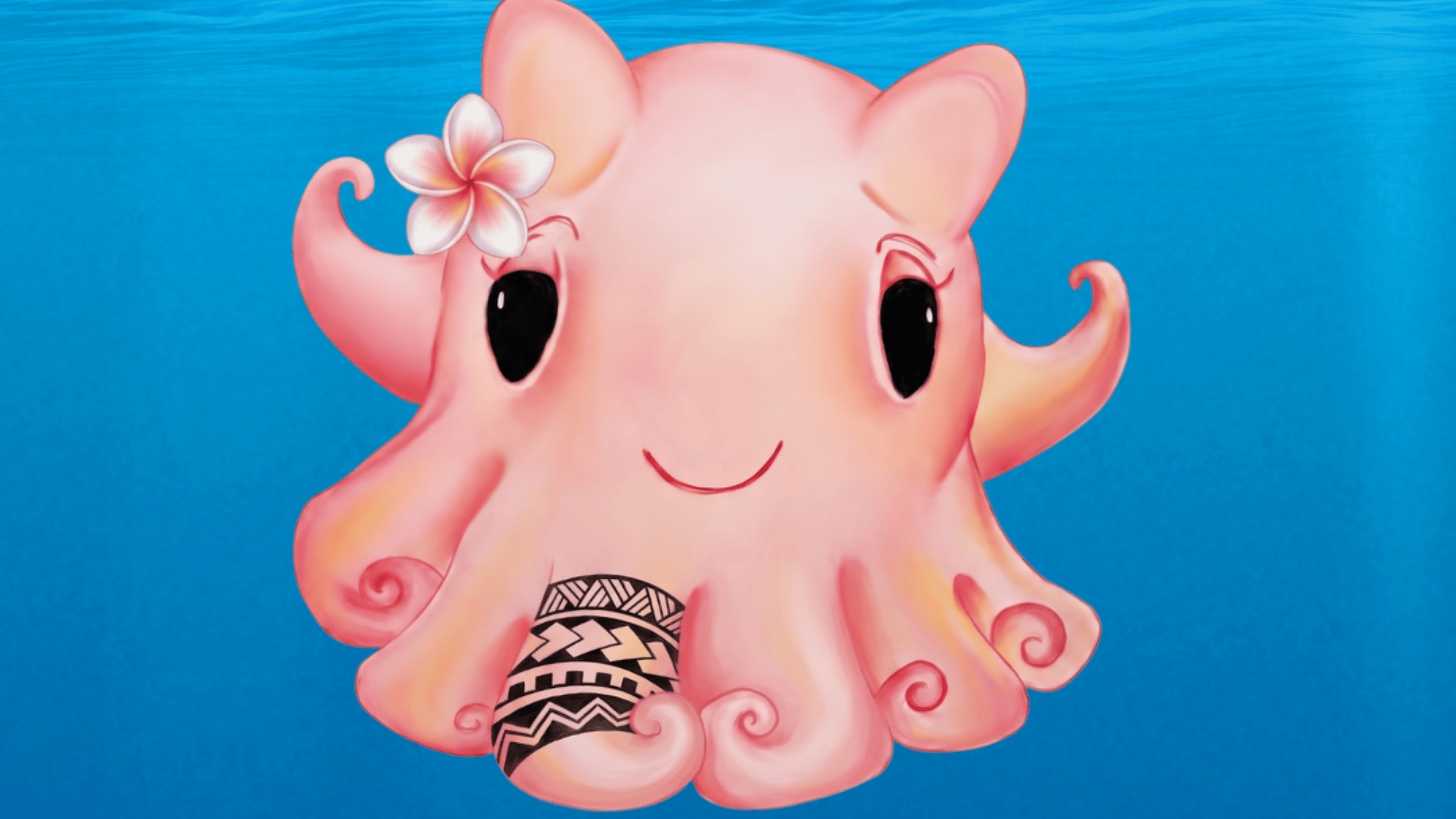
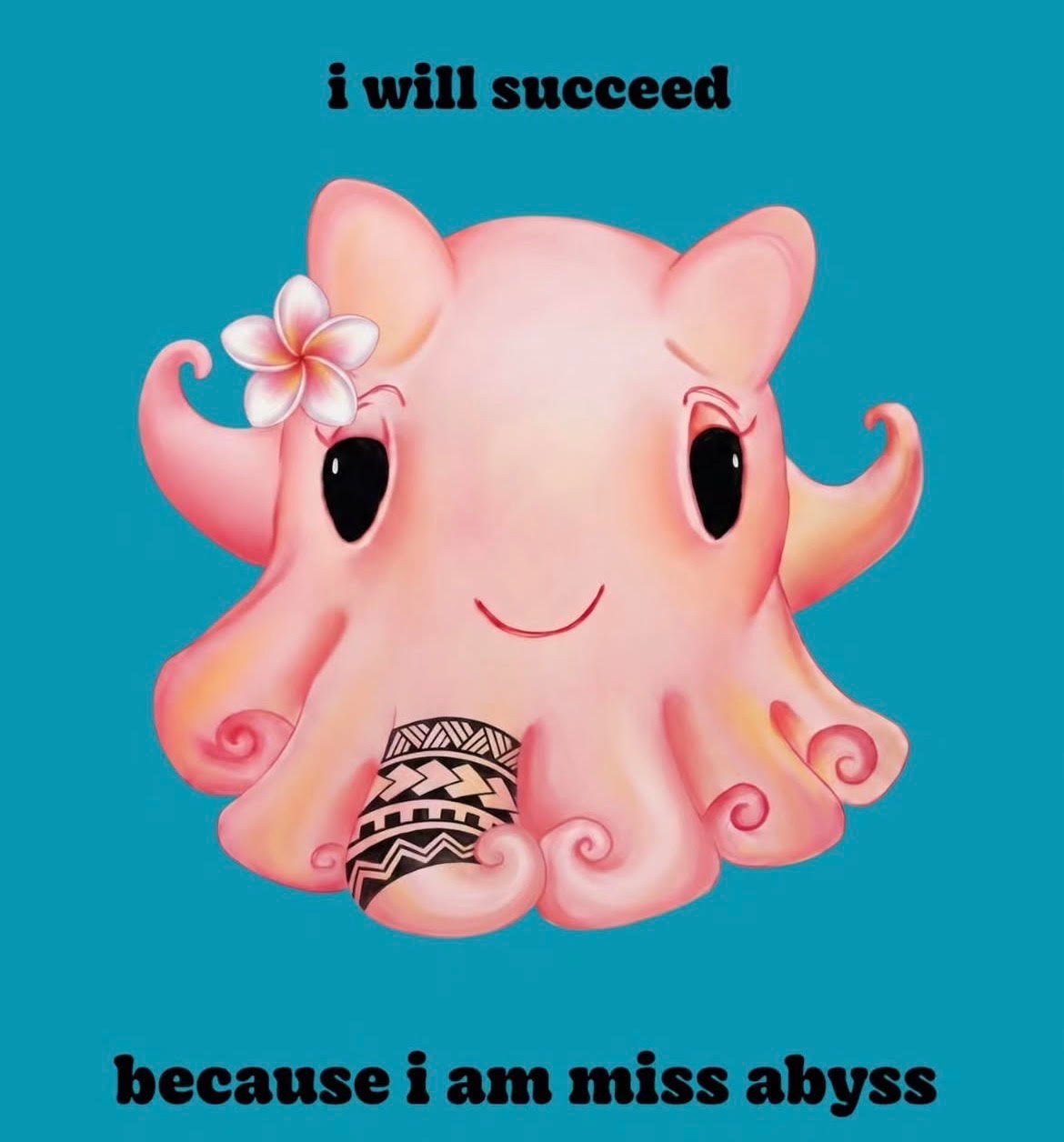
She’s bubblegum pink with a permanent little smile. She sports a pretty flower on her head sports a black tattoo on one of her eight arms. But don’t let this dumbo octopus’ adorable exterior fool you. Miss Abyss is here on serious business.
“Miss Abyss is a dumbo octopus from the deep-sea, and she is on a journey all across the country looking for allies to support her to help defend the deep-sea,” Angelo Villagomez, a research fellow at the Center for American Progress (CAP), tells Popular Science.
While Miss Abyss herself is an octopus illustrated by CAP research associate Jasia Smith, dumbo octopuses (genus Grimpoteuthis) are very real cephalopods. They live on the ocean floor, and many species can be found at extreme depths of 9,800 to 13,000 feet and are only about 8 inches tall.
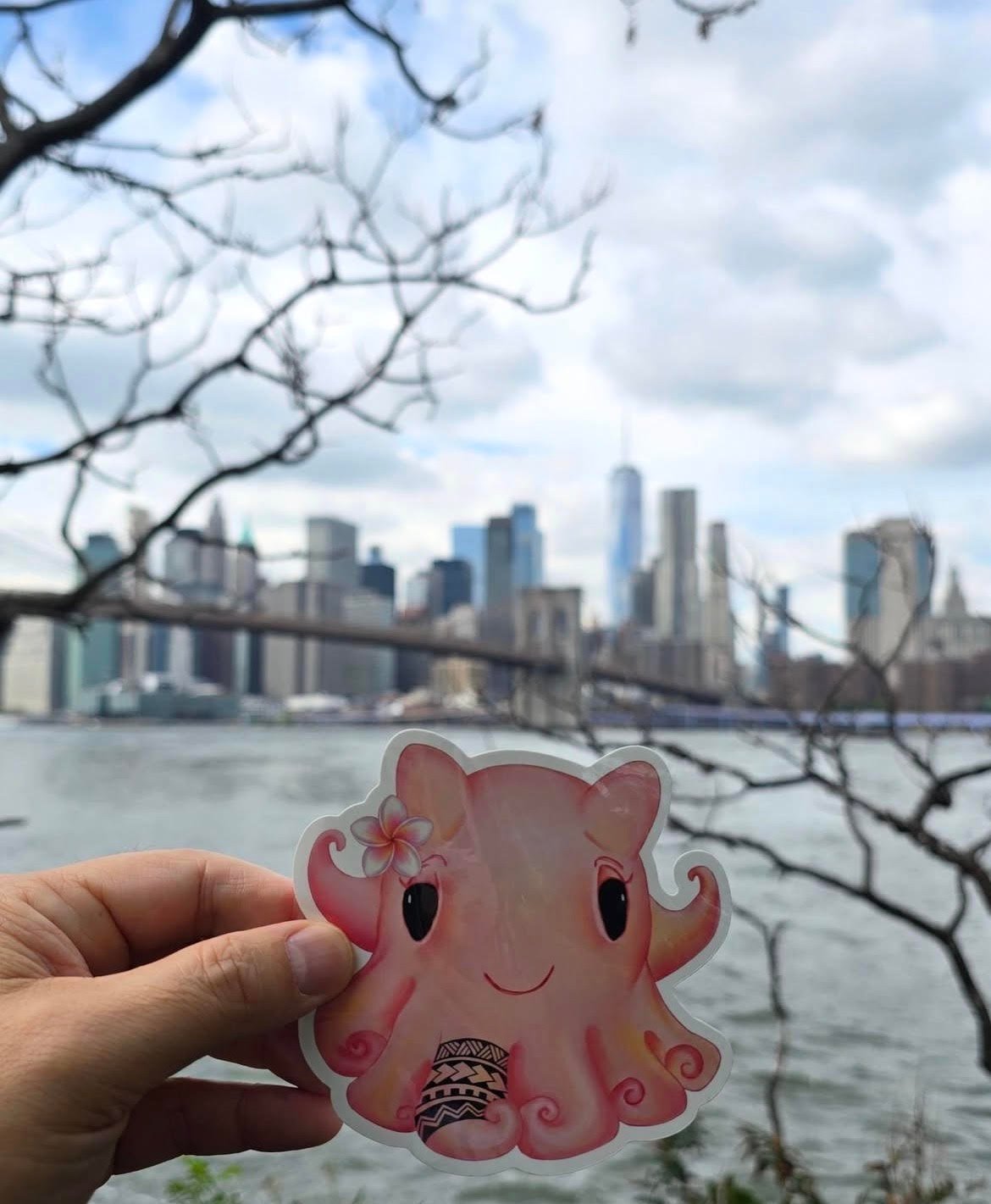
CAP’s’ Miss Abyss campaign is using the dumbo octopus to raise awareness about protecting public waters from deep-sea mining using the Flat Stanley method. Based on the children’s book Flat Stanley, children are are asked to take pictures of a paper doll in places near where they live for a popular school project. For Miss Abyss, supporters are asked to print out a picture of her and then take a photo or video of her in a place that represents their state or home and share it on social media. Supporters are also encouraged to sign CAP’s petition.
“One of the most popular things in the United States is our public lands and our public waters,” Villagomez says. “We’re creating a fun and engaging way for people of all ages to be creative and basically showcase their support.”
What is deep-sea mining?
Deep-sea mining is the extraction of mineral resources including manganese, nickel, cobalt, copper, and rare earth elements from the ocean floor. Proponents of future deep-sea mining say that these and other minerals could help speed up the development of clean energy technologies. The global demand for nickel, cobalt and rare earth elements needed for digitization and decarbonization may double by 2040 to meet carbon emissions goals. Some also see the deep-sea as a safer alternative to mining on land.
But the process could cause destruction to a critical ecosystem that we still do not know much about. As of April, only 28.7 percent of the global seafloor has been mapped. A 2025 report commissioned by the National Ocean Protection Coalition found that in the next 15 years, the economic, environmental, and technical challenges associated with deep-sea mining would make its profitability or commercial success highly unlikely. Waste discharge from deep-sea mining could also reduce food availability for the species that live there.
On November 12, 2025, the Bureau of Ocean Energy Management (BOEM) announced a Request for Information and Interest (RFI) for leasing land off the Northern Mariana islands for mining. While the comment period ended on January 12, organizations from Guam and the Northern Mariana Islands and their national partners collected over 60,000 petitions, letters, and comments opposing the plans to allow deep sea mining near the Mariana Trench.
On August 17, BOEM announced a Proposed Leasing Notice (PLN) and a 60-day comment period that outlines the terms and conditions of the potential sale. The date for the lease sale is currently set for December 16, 2026.
“Some of the least disturbed coral reef ecosystems on the planet are on these isolated Pacific islands in the U.S. Pacific territories,” says Villagomez. “I think part of the human spirit is knowing that there are places that are unexplored, that there are things on our Earth that are still yet to be discovered.”
As a result, roughly 31 million acres near American Samoa and 69 million acres near the Mariana Islands’ outer continental shelves could go up for auction. The U.S. federal government has also proposed lease sales to advance deep-sea mining near Alaska and Virginia.
“We’re not talking about a small [mine on land] where it’s one open pit,” says Villagomez. “It’s as far as the eye can see in every direction.”
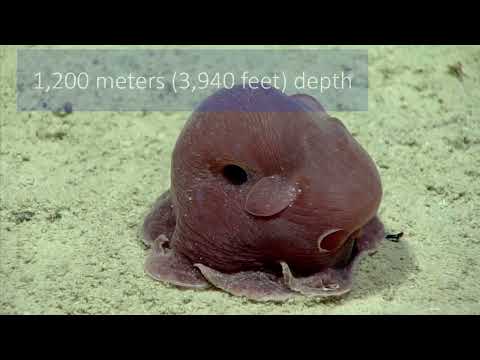
Dumbo octopus swimming
Environmental and indigenous rights
In addition to the environmental risks, deep-sea mining also presents an Indigenous sovereignty issue. The ocean is a sacred part of the identity, spirituality and traditions of the Chamorro and Refaluwasch people of the Marianas, and other communities of American Samoa.
“I am Indigenous Chamorro, born in Guam, but my family is from Saipan. I grew up knowing that I lived next to the Mariana Trench,” Villagomez says. “I remember being out fishing with my dad, and he would then tell dad jokes, like ‘Oh you see the mountain there? It’s the tallest mountain in the world because it stretches all the way down to the Mariana Trench.’”
That was not just a dad joke. At 6.8 miles below sea level, the Mariana Trench is deeper than Mount Everest is tall (5.5 miles).
Mining in the deepest parts of the ocean may not yield minerals companies want. CAP says that the proposed areas in the Marianas do not even have nodule fields of significant commercial value, and alleges that the mining is a pretext for testing prototype equipment for future operations elsewhere.
“This is a really new environmental issue. Up until about a year ago, deep sea mining was science fiction, so the types of people who would be organized on this if it was a public lands issue are not necessarily as organized,” says Villagomez. “So we’re going out there gathering allies, not just pictures of people with Miss Abyss, but also as that collective power to bring to conservation.”
Oh the places she’ll go
Since launching in August, Miss Abyss has already visited about 20 states, gone backstage at a Spin Doctor’s concert, sat beneath the Brooklyn Bridge, and visited the Grand Tetons.
Miss Abyss has also met oceanographer Dawn Wright. Nicknamed “Deepsea Dawn,” Wright is the first Black American and 27th human to dive to the bottom of the Mariana Trench. In July 2022, she dove the 6.8 miles below sea level to Challenger Deep at the southern end of the trench.
“She’s [Wright] just a great ambassador to the deep-sea herself,” says Villagomez. “So to see Miss Abyss and DeepseaDawn together was great.”
While Miss Abyss travels the globe for support, the team at CAP continues working at the policy level. The courts could intervene and stop the lease sales, but the situation remains fluid and uncertain. In the meantime, Miss Abyss will continue her journey on social media.
And as for where Villagomez would like to see Miss Abyss continue to pop up? “I would love for her to visit our national parks.”
KioskNews shows a cleaned-up reading view extracted from the publisher’s page — the original always lives on their site, not ours.