‘I’m scared about my future’: young people on the stress and desperation of jobseeking

“I had to quit and move back in with my parents because I had developed ME/chronic fatigue syndrome. I am now housebound and cannot look after myself. Although I cannot prove it, I strongly believe that prolonged period of high stress played a big part in the decline of my health.”
When Celeste, 24, graduated from the University of Edinburgh last year she spent two months applying for more than 100 jobs in the Scottish capital “just getting rejected or not hearing back at all from applications, 90% of which were waitressing positions”.
“It was a really desperate time,” she says. “I was paying rent all of that time, and it was one of the most stressful times of my life.”
Celeste had been doing part-time work in cafes since the age of 14 and eventually got full-time work in one, which she described as “very high pressure with terrible hours”.
She was feeling unwell before taking on the role, and became increasingly sick until she left to move back in with her parents in Dorset.
She had a health assessment for ME/CFS in August this year, but says it could be three to six months before she receives a formal diagnosis.
Once she has that, she can start to get more support, including being put on a course to “teach me how to manage my energy” and put in touch with employers “who understand ME and already employ people like me”.

She says the wait for a diagnosis is “frustrating”. Meanwhile, her application for a personal independence payment (Pip) has been rejected. She has appealed, but a decision on that could take up to a year and a half, she says, adding that she is relying on her parents to support her.
Describing a typical day, she says: “I don’t really go out very much. My mum sometimes takes me to a forest nearby. She pushes me around in a wheelchair, and I can draw for about 20 minutes, and then get too tired and have to stop. It’s mainly just resting.”
She hopes once she receives the formal diagnosis she can get on a path to finding employment, but until then, she is trying to think of ways she can work, given her condition.
“I’m still trying to figure out how,” she says. “There must be something I could do.”
‘The job market is a lottery’ – Lenny, 26
“I feel like I’m a Neet, but the difference is I’m a Neet who has experienced work. There are different levels to it. You can have Neets who have worked before, but aren’t working now. Neets who haven’t worked at all, or Neets who have gone to school or gone to university but just haven’t found a job since they’ve left.”
Lenny, 26, is describing his experience of being Neet – not in education, employment or training. While Alan Milburn’s youth joblessness review is focused on Neets aged 16-24, other economic bodies such as the OECD apply it up to age 29.
He has been unemployed for the past three years, but before then he had worked for two years as a customer assistant at a DIY store, before leaving to take a break for mental health reasons. “I’ve experienced work, I’ve experienced being on the payroll and clocking in, so for me, going into work wouldn’t be unfamiliar.”
“Years ago, you could go into a shop and hand in your CV,” says Lenny, who lives with his parents and siblings in Birmingham. “Not that they would necessarily give you a job, but still it was a bit more personal. Now everything’s online and you end up waiting for them to get back digitally.”

Lenny, who describes himself as Black British Caribbean, decided against further education after finishing college in 2019, where he gained BTec level 2 in business studies and in music.
He did not pass English or Maths GCSE. “I did retake them twice, but I think after the second time, I just wanted to go into employment.”
From 2023 to 2025, he was on universal credit. After that, he started doing the odd gardening jobs while receiving some financial support from family.
Over the past three years, he has applied for “maybe 30 or 40 jobs” in different fields, including warehouse work, delivery driving and retail. Ideally he would like a manual job or work based outside.
after newsletter promotion
He is also looking at agencies, but says there are drawbacks to this.
“I find sometimes you apply to them and then they’ll send you on an induction,” he says. “Then you get to the induction and there’s no work available, and it’s like: ‘We’ll call you if there’s work. So sometimes it can be hit or miss.”
He adds: “The job market is a lottery. How many jobs can you apply for without feeling miserable about your prospects? Maybe the lucky number is 100, 200, or 300? Well, as big as those numbers sound, you still don’t get a job. It’s ridiculous.”
‘I want to give back and contribute to society’ – Frances, 25
“I have just started receiving universal credit. I feel unbelievable guilt given my academic and general life chances, but I can’t even seem to get seasonal work as a retail assistant or bar worker.”
Frances, 25, says her inability to get a job despite excellent qualifications has left her “despairing and depressed”.
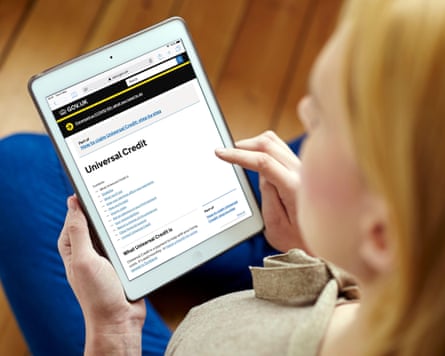
After graduating in English, she completed a master’s at the Courtauld Institute of Art. She has hopes of working in outreach and learning roles in museums and galleries and charities, but as well as focusing on those fields, she is applying for jobs in coffee shops and hospitality.
“I have been volunteering for two years at, among others, the National Trust and as a tour guide,” she says. “I have worked multiple shift jobs at uni, and I have cleaned for my relatives.
“Since spring, I have been job hunting, turning out application after application. I am on number 77 as of today. I have received two interviews so far, but wasn’t successful. One of them didn’t even let me know I had been unsuccessful, despite a three-hour interview with tasks. I had to contact them to find out which was really poor.”
Frances lives at home with her parents in London and says she is aware she is “lucky” as they helped her with university costs, so her student loan is £50,000. Recently, she has had to get support, albeit reluctantly.
Reflecting on her current status she says she “just wants a job”. “I am not looking to earn loads of money,” she says. “I just want to work, I want to give back and contribute to society. I’m scared about my future.”
‘The longer you are out of work, the harder it is’ – Nathan, 25
“Sometimes you see applications where it’s entry-level work for entry-level pay and they’re asking for several years of experience. It’s really stupid. Sometimes I’m just like, ‘Why am I even trying?’ It just feels like I get nowhere.”
After graduating from a magazine journalism degree at the University of Gloucestershire in 2023, Nathan hoped to find work in the media. Instead, he moved back in with his parents near Preston and has struggled to find paid employment beyond three weeks cleaning university halls.
The 25-year-old has continued writing voluntarily for a vintage car magazine. But despite applying for jobs in the media, retail, teaching support and almost anything else he can find, paid employment has remained elusive.
For much of this year, he has pursued another possibility – a career as an officer in the armed forces. “My family actually has a history of serving. My grandpa was a Royal Engineer and my uncle was in the air force. Then there’s the stability of the career. You learn skills that you can transfer into civilian life afterwards and, for someone my age, the salary is huge.”
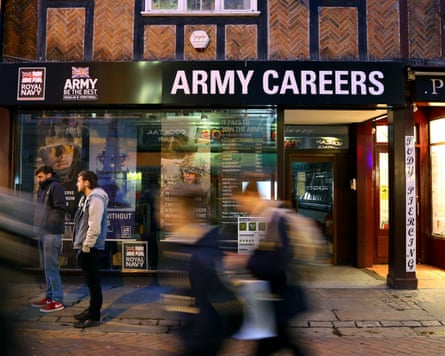
Unfortunately, he was declared permanently medically unfit owing to recently being prescribed a topical steroid for eczema. While the automatic ban on recruits with eczema was lifted in 2024, those who have required treatment can still be rejected on medical grounds. If Nathan does not need to use the cream again by April 2028, he can pick up his application then.
This setback, coming on top of a run of rejections, has taken its toll. Nathan, who is autistic, describes the repeated cycle of application and refusal as a series of “body blows”. He has been experiencing anxiety attacks and started seeing a therapist.
“It feels like the longer you are out of work, the harder it is,” he says. “I include all the volunteer work I do on my CV … but it’s not a job. I’ve been thinking of trying to find some more formal volunteer work in a charity shop.”
He’s not just motivated by boosting his CV. “If anything, I want to do it to help boost my mood. I spend a lot of time on my own and although I normally do enjoy my own company, I still need to be seeing people and getting out of the house.”
KioskNews shows a cleaned-up reading view extracted from the publisher’s page — the original always lives on their site, not ours.