Forget Tracker, ABC’s 120-Episode Drama Is TV’s Best Lone-Wolf Survival Series


Cher Thompson is a Senior Staff Writer at Screen Rant, where she covers everything from explosive reality TV moments to cast interviews about the twists and turns of scripted dramas. With a background in creative writing, marketing, and teaching, Cher knows how to spot both the storytelling genius and the guilty pleasures in pop culture. Her work blends wit with insight, making readers feel like they’re chatting with a friend who just happens to know way too much about TV.
Sign in to your ScreenRant account
Tracker has spent the past few years establishing itself as the best modern lone-wolf procedural, using a survivalist at its core in the same way one of ABC's long-running shows did in the past. Built around Justin Hartley's Colter Shaw, the CBS series follows a professional bounty hunter as he travels from case to case and relies on his instincts, survival skills, and investigative prowess to get him through the most difficult of situations. With a format that's resonated with viewers, Tracker has become the most recent in a long line of similar shows to build into the lone-wolf archetype.
The appeal of the lone-wolf survivalist show is easy to understand, as a solitary lead character can move around without too many strings attached, which gives them the opportunity to encounter a new mystery week after week. While these characters often face personal danger without support systems in place, which can be difficult for them to get through, they're usually the types of characters that viewers enjoy most. The CBS hit isn't pulling the archetype from thin air, but instead creating its own version of a long-running style that found massive success decades earlier with ABC's 1960's hit, The Fugitive.
A drama that combined survival storytelling, serialized character stories, and week-to-week procedural cases, The Fugitive aired over 60 years ago, but it still remains one of the greatest lone-wolf series of all time. With a genuine legacy to uphold, the CBS series is always paying homage to its roots.
ABC’s The Fugitive Is Levels Above Tracker As A Survival Crime Procedural
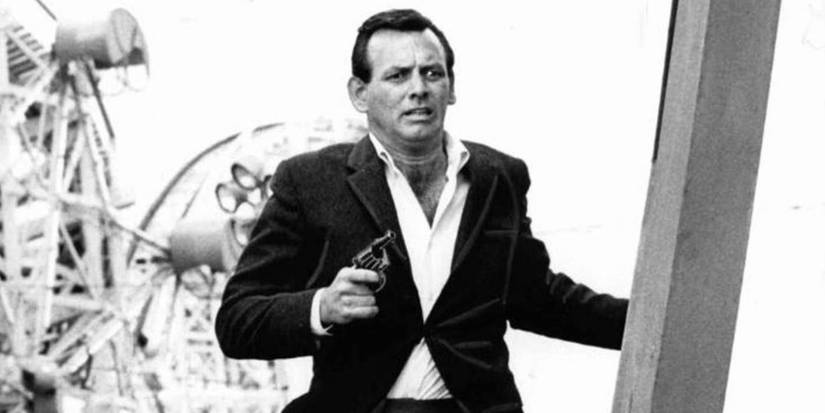
Premiering in 1963, The Fugitive followed Dr. Richard Kimble (David Janssen) after he was wrongfully convicted of murdering his wife. Following a train wreck during his transfer to prison, Kimble escaped custody and began a cross-country journey to find the man he believed to be the real killer. With a premise that distinguished the series from the traditional crime dramas of the time, The Fugitive was able to stray away from the case-of-the-week crime solving style of procedural and move into a more serialized format, with Kimble pursued by the law as he constantly adapted to new and shifting circumstances.
Question 1 of 3
Kimble survived from town to town while attempting to clear his name, which led to very different stories. Every episode placed him in a new environment, forcing him to adapt to unfamiliar circumstances while avoiding capture. That structure gave the series remarkable flexibility. One week, Kimble worked on a farm. Another week, he found employment in a hospital, factory, or small town. Each stop introduced new characters and conflicts while advancing the larger narrative of his search for justice. The format allowed The Fugitive to function as a procedural, a thriller, and a character study all at the same time.
Tracker Builds On Foundations The Fugitive Laid 60 Years Ago

While The Fugitive was a very different series than Tracker, they come from the same central place, which proves just how influential the original ABC series was. Like Richard Kimble, Colter Shaw moves from location to location, encounters new supporting characters each week, and solves problems through resourcefulness rather than institutional authority. The mobility of the show's central protagonist allows the series to explore different communities and conflicts while maintaining a consistent character. The differences between the shows lie in purpose, with Colter seeking cases while Kimble searches for answers, but their formulas have proven to work well with viewers.
The Fugitive also helped demonstrate that audiences would invest in long-term serialized storytelling, which Tracker has benefited from in the modern age. TV in the early '60s largely relied on self-contained episodes that could be watched in any order. In contrast, Kimble's story encouraged viewers to return week after week to see whether he moved closer to proving his innocence. Tracker excels as a modern procedural, but only because The Fugitive's combination of survival, drama, and emotional stakes was able to place it in a league of its own. Over 60 years later, The Fugitive is still inspiring the genre.
-

The Fugitive
- Release Date
- 1963 - 1967-00-00
- Network
- ABC
- Directors
- Jerry Hopper, Walter Grauman, Alexander Singer, William A. Graham, James Sheldon, Don Medford, Robert Butler, Gerald Mayer, Abner Biberman, Ralph Senensky, Ida Lupino, James Goldstone, Leonard Horn, Joseph Sargent, Richard Donner, Lewis Allen, Andrew McCullough, Christian Nyby, Gerd Oswald, Joseph Pevney, Robert Ellis Miller, Barry Morse, William Hale, William D. Gordon
- Writers
- Daniel B. Ullman, Harry Kronman, Philip Saltzman, Jack Turley, Don Brinkley, Oliver Crawford, Lee Loeb, Sam Ross, Stuart Jerome, Al C. Ward, Stanford Whitmore, Barry Oringer, Leonard Kantor, Robert C. Dennis, Richard Levinson, Peter B. Germano, William Link, Michael Zagor, Hank Searls, E. Arthur Kean, Anthony Wilson, Paul Lucey, John D.F. Black, George Fass
-

Barry Morse
Lieutenant Gerard
-
David Janssen
Richard Kimble
-

Gus
-
William Conrad
Narrator
-
Colter Shaw travels across the country making his living by collecting missing persons rewards, utilizing sharp instincts and expert tracking skills. With help from a small support team, he works alongside private citizens and law enforcement while staying one step ahead of violent suspects.




KioskNews shows a cleaned-up reading view extracted from the publisher’s page — the original always lives on their site, not ours.