Beijing pledges to back Taiwan’s pro-unification ‘patriots’ as it marks key anniversary
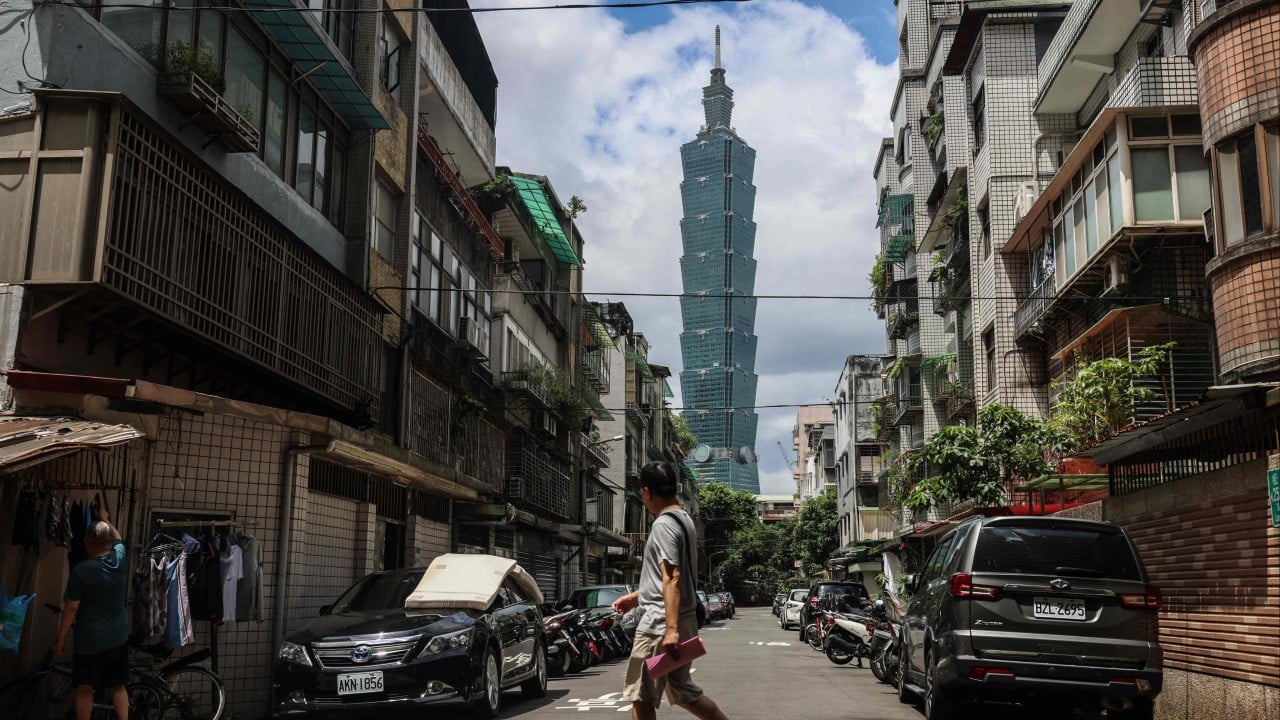
Mainland China’s state media and armed forces staged a concerted publicity campaign on Sunday to mark “Taiwan Restoration Day”, the anniversary of the end of Japanese rule.
October 25 was formally established by Beijing as an official memorial date last year on the 80th anniversary of the island’s return to Chinese rule.
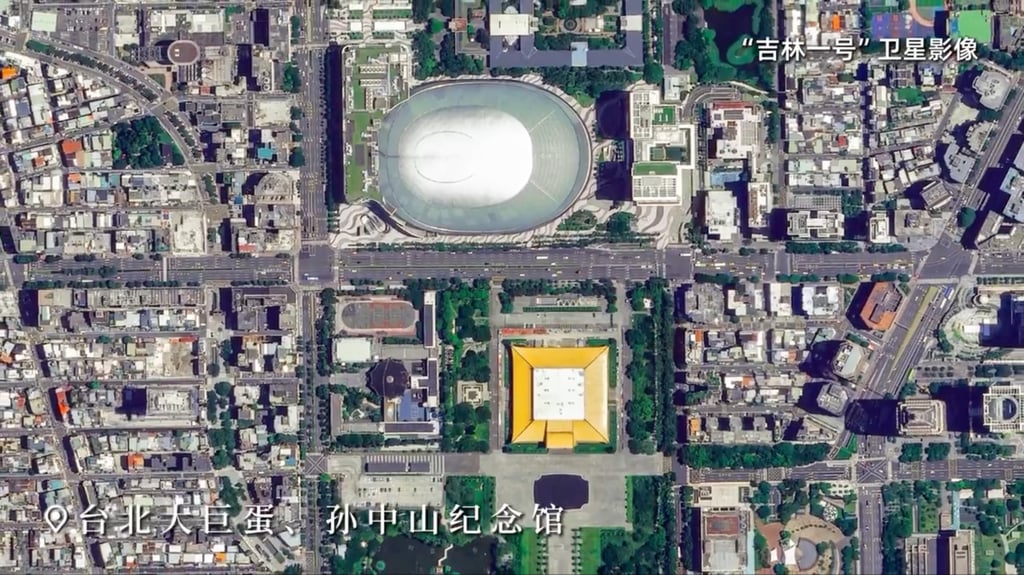
State broadcaster CCTV released a 42-second video clip featuring aerial views of Taiwan captured by the commercial Jilin-1 satellite constellation, overlaid with the caption: “This is the Taiwan province of China.”
The video zoomed in on major landmarks, such as the Taipei Dome, the Port of Taipei, the National Palace Museum and the Chiang Kai-shek Memorial Hall.
It also showcased well-known natural features including Mount Jade, Sun Moon Lake, the Tamsui River, Hualien’s Qingshui Cliff and coastal wetlands in Tainan and Chiayi.
CCTV said “every [Taiwanese] street is clearly visible” from orbit and closed with a message that read: “The yearning to return remains unchanged; reunion will come in time.”
Meanwhile, state news agency Xinhua published an article headlined “The Treasure Island Regains Light” that included President Xi Jinping’s previous comments on cross-strait relations and the historical context of the 1945 handover from Japanese colonial rule.
He added the “historical and legal facts that Taiwan is part of China and both sides belong to one China cannot be changed”, before concluding “the motherland must be reunited, and will inevitably be reunified”.
02:55
Taiwan concludes annual war games, including preparing for PLA sea blockade
People’s Daily, the Communist Party’s mouthpiece, used its social media accounts to call for greater cultural and national alignment across the Taiwan Strait. It urged people to “firmly strengthen their identification with the Chinese nation, Chinese culture, and the great motherland,” while honouring those who fought against the Japanese.
Meanwhile, the People’s Liberation Army Eastern Theatre Command, which oversees the Taiwan Strait, published a graphic on social media that read: “Return home”.
As well as a call to “defend territorial integrity”, it said the 1945 handover was an “irrefutable link in the chain of historical and legal facts” confirming Chinese sovereignty over Taiwan.
Japan took control of the island in 1895 and remained in charge until October 25, 1945. In recent years, Beijing has increasingly used that anniversary to reinforce its legal claim over Taiwan.
Meanwhile, the ways in which Taipei has marked the event have varied over time and governments.
Beijing regards Taiwan as part of its territory and has never renounced the use of force to reunite it with the mainland.
Most countries, including its main international partner the United States, do not recognise Taiwan as an independent state, but Washington is opposed to any attempt to take the island by force and is legally committed to supplying it with weapons.
The ruling, independence-leaning Democratic Progressive Party (DPP) has traditionally downplayed the significance of the October 25 anniversary, while the opposition Kuomintang (KMT) and other members of the mainland-friendly camp – known as the pan-blue coalition – attach more importance to it.
Nowhere is the political temperature higher than in the marquee race for the Taipei mayoralty.
Incumbent KMT mayor Chiang Wan-an – widely seen as a potential future presidential contender – faces a fiercely contested re-election bid against DPP challenger Puma Shen Pao-yang.
The race has tightened considerably in recent weeks with polls indicating that Shen, who is best-known for his work on civil defence and countering Beijing’s “cognitive warfare”, has closed the gap on the incumbent.
Veteran Taiwan politician James Soong Chu-yu marked the occasion by calling for peaceful resolutions to cross-strait issues and warning people not to repeat the mistakes of the past.
Soong, the chairman of the pan-blue People First Party, noted that China sacrificed more than 20 million lives to defeat Japan and recover lost territories, including Taiwan.
True restoration, Soong argued, required self-reliance and the protection of core values, ensuring that the people lived in a society that was “free, democratic, and prosperous”.
Meanwhile, former KMT chairwoman Hung Hsiu-chu attended a commemoration seminar in the mainland province of Fujian, where she stressed that remembering the return of the island must go hand in hand with safeguarding peace.
23:45
Highlights of China’s military parade marking the 80th anniversary of Japan’s WWII surrender
She called on both sides of the strait to adhere to the “1992 consensus” – an informal agreement that there is only one China, but the two sides may disagree about what that means – oppose Taiwanese independence and restart dialogue.
Hung strongly criticised the DPP, accusing it of governing under the name of the Republic of China while severing its historical links with the mainland.
“Without the joint resistance of the entire Chinese military and people, there would be no restoration of Taiwan,” Hung said, adding that the shared historical memory of resisting Japanese rule should not be divided simply because the two sides were not yet unified.
KioskNews shows a cleaned-up reading view extracted from the publisher’s page — the original always lives on their site, not ours.