Russia’s secrecy after a mysterious plague lab death raises global alarm
That, in essence, is Russia’s official line following the death of a plague lab worker in Siberia. And it may be justified. After all, there is no verified information to suggest the risk of a Russian epidemic, let alone another feared global pandemic after one that’s still raw in minds worldwide. And it’s never been verified that it was even plague at all.
But that central mystery is partly what’s caused so much unease from the White House, the World Health Organization and many Western experts.
The concerns are threefold. A full week after the death of the worker at the Irkutsk Anti-Plague Institute of Siberia and the Far East, officials still have not specified the underlying illness that killed her, saying only it was “pneumonia of unknown origin.” Meanwhile they have triggered a widespread set of countermeasures, indicating they are taking whatever has happened seriously. And hanging over all this is the historical context of Moscow’s biological weapons program, which it denies still exists, and its record of covering up disasters that could imperil other nations.

04:45
“It is the Russian reaction to this that has been out of proportion and raises serious concerns,” Dr. Tom Inglesby, the director of the Johns Hopkins Center for Health Security in Maryland, told NBC News. “Why aren’t Russian authorities just being concrete and direct?”
Scant information
Coloring all of this is the painful memory of what happened when China — another opaque, authoritarian regime — suppressed and withheld information in the early weeks of the Covid pandemic.
Right from the start, information released by Russian officials has been incomplete or hazy.
Alexey Tsydenov, head of neighboring Russian republic of Buryatia, initially said that the woman had “died of plague,” before updating his post to add the word “possibly.” Then the governor of Irkutsk itself, Igor Kobzev, said she had died from a “pneumonia of unknown origin.”
Russian President Vladimir Putin’s spokesman, Dmitry Peskov, has been asked every day by NBC News and other media outlets for information and updates. But he has revealed little, instead referring reporters to Rospotrebnadzor, Russia’s consumer and health watchdog, which is handling the case.
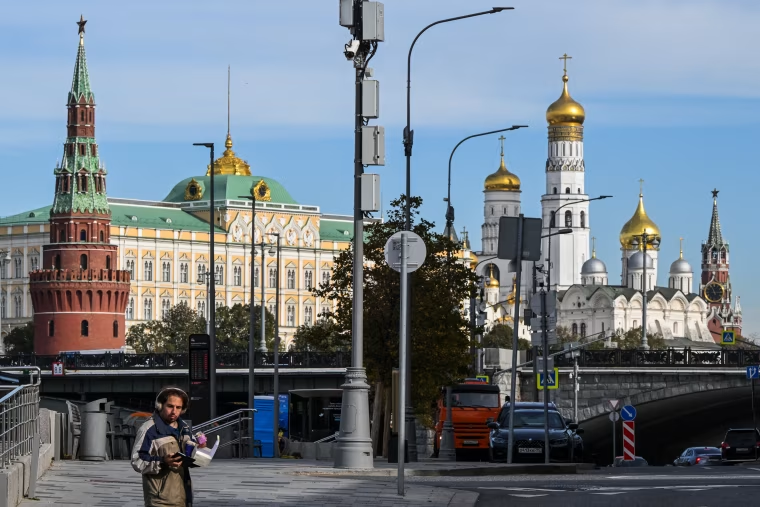
“It is their official statements that should be relied upon— rather than paying heed to various rumors, speculations, and the like,” he said. “Rospotrebnadzor employs highly qualified professionals in this field, so let us heed their official statements.”
Rospotrebnadzor said that tests on the woman found no infectious pathogens related to her work. It also said she had been fully vaccinated and “possessed immunity against the dangerous infections she worked with.” On Thursday, it said that it had completed medical observation of all her contacts and found no dangerous pathogens.
The WHO meanwhile said that no cases of plague had been reported to it by Russian officials in Irkutsk oblast.
And yet the central detail has not been released or explained: the underlying illness that caused the woman’s pneumonia.
On Monday, a State Department spokesperson said it was asking for more information from the Russian government after “reports of a fatal case of suspected pneumonic plague” in Irkutsk oblast. And Wednesday it sent the Kremlin a diplomatic demand known as a démarche for more details. Peskov told NBC News later that day he was not aware of this request.
Asked if the death was caused by a “bioweapon,” President Donald Trump said “we don’t think so” but “we’re going to find out soon enough.” He added that Russia is “saying it’s very much under control.”
The United Nations health agency too has asked Russia for more information, both on the lab tests conducted on the woman who died, and on its widespread public health countermeasures.
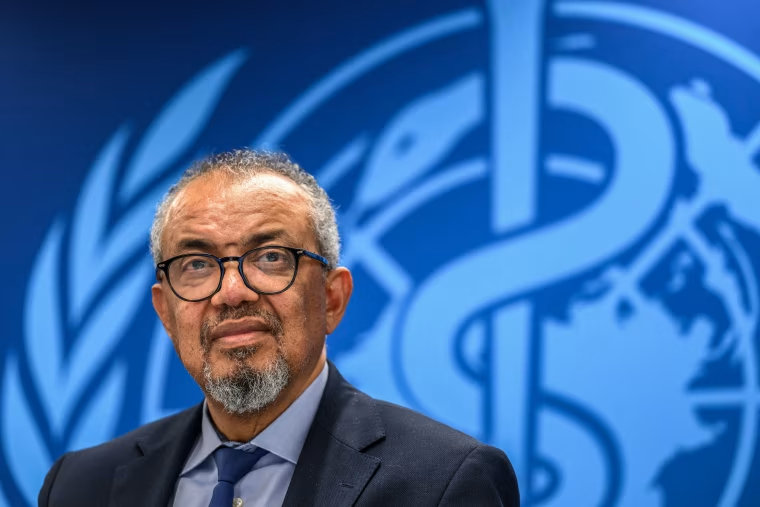
“As we don’t yet have the full picture of this event, we are not able to conduct a full risk assessment,” WHO Director-General Tedros Adhanom Ghebreyesus told a press conference Wednesday.
If it’s not the plague, “what is it then?” Inglesby asked. “Why not just state clearly what they have found in the investigation?” He added that “so few facts have surfaced that it’s hard to speculate on what is going on, but the Russian reaction to it is concerning and opaque.”
The shifting rationale behind officials’ statements raise the question of whether “the Russian government was trying to cover up the details of what had happened,” said Gregory Koblentz, director of the biodefense graduate program at George Mason University in Virginia.
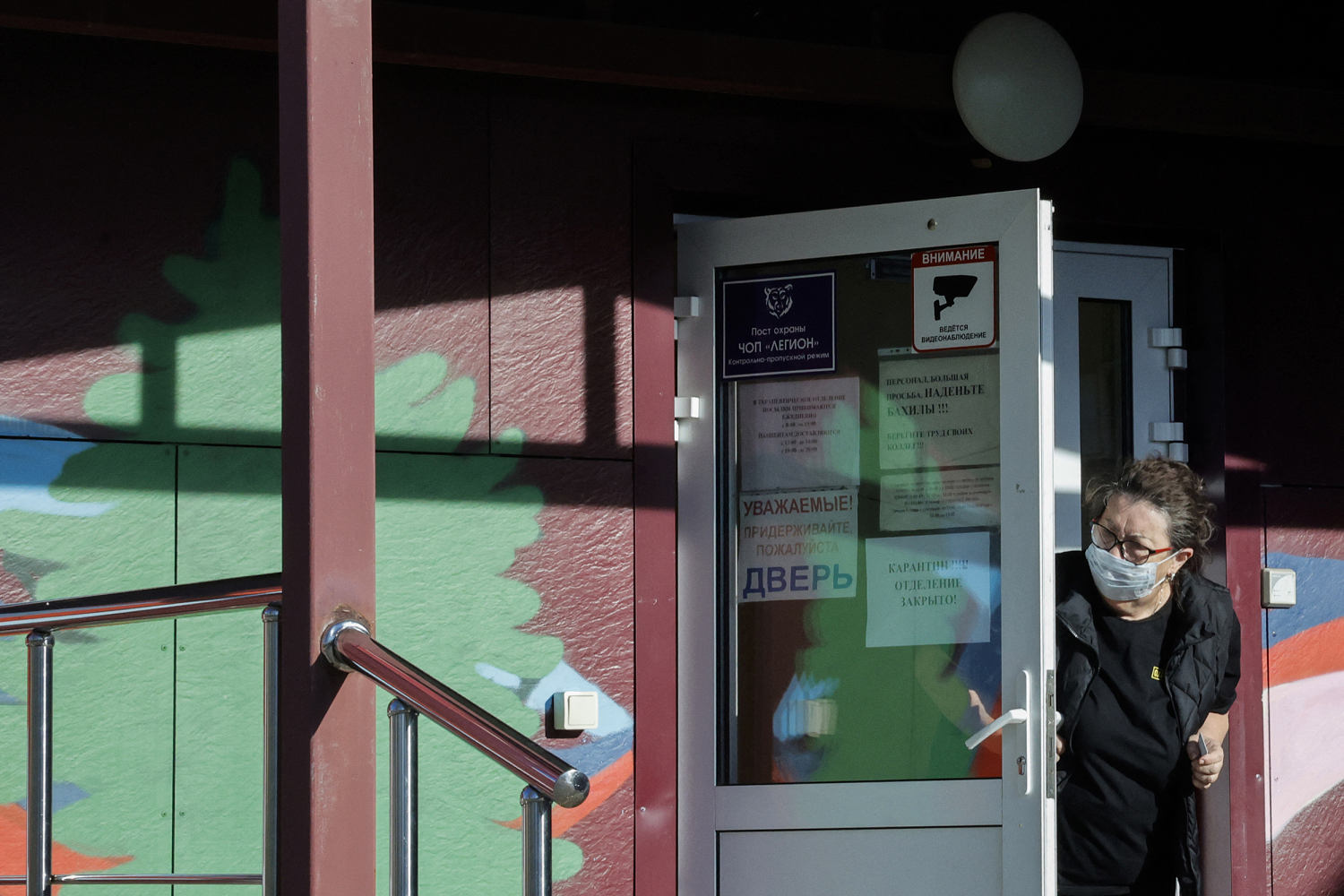
Clearly, whatever the woman died of was concerning enough to trigger a widespread raft of countermeasures by officials. On Friday, Maksim Modin, mayor of the Shelekhov municipal district near the border with Mongolia, said that the inpatient facility where the worker is said to have been treated had been closed for quarantine. Russian media cited officials saying that nearly 200 people who had been in contact with the woman had been placed under precautionary medical observation. The head of the country’s consumer and public health watchdog, Anna Popova, was dispatched to the region, according to regional officials.
Kobzev, the local governor, said Thursday that these countermeasures had concluded. Still the response in general has raised eyebrows.
“Monitoring roughly 190 well people is not infection control in any form I’d recognize,” said Dr. Amesh A. Adalja, a senior scholar at the Johns Hopkins Center for Health Security. One explanation is that “authorities didn’t know what pathogen they were dealing with,” he said. “And if you can’t name the organism, you can’t target it, so you default to containing people instead of treating them.”
The shadow of history
If this were any other country, all this might be viewed differently. But Moscow has priors.
It’s not just the Soviet-era 1986 coverup of Chernobyl nuclear reactor explosion and meltdown. In 1979, Soviet officials blamed contaminated meat for killing 66 people in what is now Yekaterinburg. In fact, they died from the accidental release of anthrax from a military facility.
The Soviet Union also ran a vast biological weapons program, hidden behind a network of civilian institutes known as Biopreparat. These weapons involved plague, anthrax and smallpox, according to a 1992 Pentagon briefing.
The “large anti-plague research complexes” in Irkutsk and elsewhere “were given special funding for weapons-oriented genetic research,” according to a 1999 memoir by Ken Alibek, a former senior official in this biological weapons program.
Far from being dismantled, the program has only “continued and evolved” by Russia, which is “extensively modernizing Soviet-era biological warfare infrastructure” that could support it, a State Department report said last year. The Kremlin has long denied this, and in any case there is no public evidence to suggest Irkutsk is part of this program.

This precarious global landscape of biological labs conducting research with little oversight or verification is what makes experts jumpy.
The U.S. had its own offensive biological weapons program until 1969. And like Russia, it is a signatory to the Biological Weapons Convention, which bans the development and stockpiling of such arms. But more than 50 years after entering into force, the treaty still lacks a formal mechanism to verify compliance.
Former Centers for Disease Control and Prevention Director Dr. Tom Frieden told NBC News this week that public alarm over the Russian plague lab “is aimed at the wrong target.”
“What should concern them is how little stands between the world and the next pathogen to get loose,” said Frieden, now president and CEO of Resolve to Save Lives, a global nonprofit organization focused on international healthcare threats. “It’s as if we fight fires better but don’t prevent them,” he said. “Fund lab safety, spillover prevention and public health systems, or the next pandemic will be deadly, costly — and preventable.”
KioskNews shows a cleaned-up reading view extracted from the publisher’s page — the original always lives on their site, not ours.