A US Mercenary Group, A Fragile Peace And Global Race For Critical Minerals

In the Democratic Republic of Congo, a private American military contractor whose name is associated with one of the most notorious episodes of the Iraq War is now operating alongside government forces fighting a powerful rebel movement which is backed by neighbouring Rwanda.
Erik Prince, the founder of the now-defunct private security company Blackwater and a prominent supporter of US President Donald Trump, has secured a role in Congo through his company, Vectus Global. Some of its many responsibilities are the security of mining operations and the collection of government revenue, including support for Congolese military operations against the M23 rebel group, which has seized territory across the country's mineral-rich eastern provinces.
Advertisement - Scroll to continue
A September ambush in South Kivu, over 2,000 km east of the capital Kinshasa, left about 20 people dead or wounded, according to reports from the news agency Reuters and the New York Times, including Congolese personnel and foreign contractors working with Prince's company. Among those injured was Tim Kennedy, a former US Green Beret and Ultimate Fighting Championship (UFC) fighter. A former member of New Zealand's Special Air Service was among those killed.
READ | Exclusive: Inside An American Mercenary Group Accused Of War Crimes In Gaza
This incident has raised questions about the nature of the relationship between the Congolese government and the foreign security firm it has hired.
Advertisement - Scroll to continue
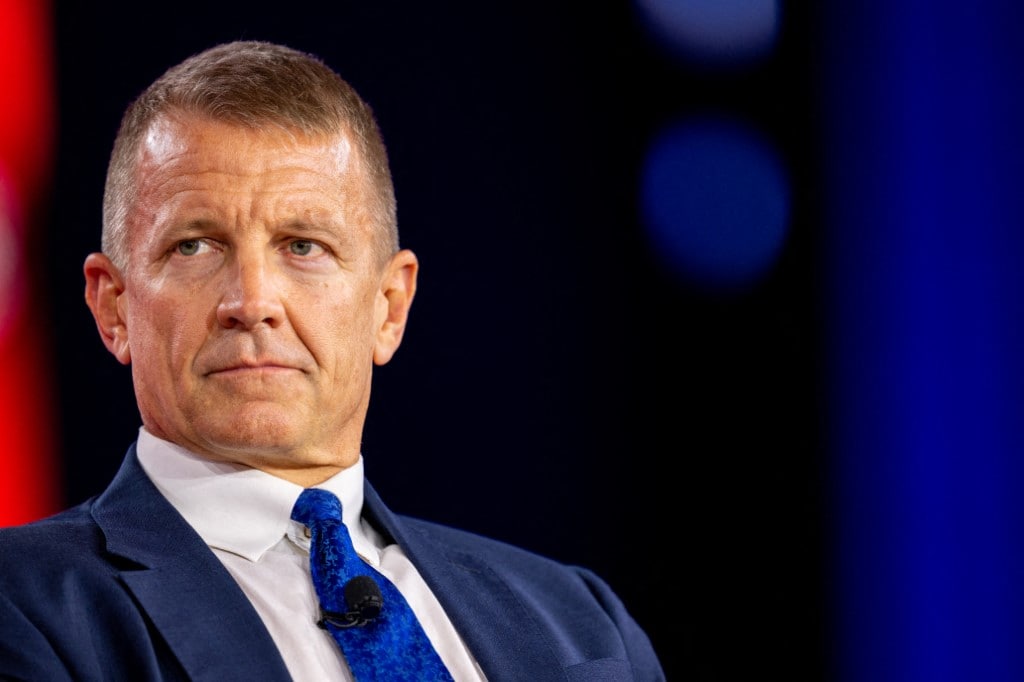
Erik Prince, founder of notorious American private security contractor Blackwater.
Photo Credit: AFP
Washington seeks to reduce China's dominance in the supply chains for minerals essential to batteries, electric vehicles, electronics and other modern industries. Congo posseses enormous deposits of copper, cobalt, tantalum and other commercially valuable resources. The country has endured decades of corruption, foreign intervention and armed conflict, with communities in the east often bearing the consequences of competition over the resources beneath their feet.
What Is A US Mercenary Group Doing In Congo
According to Reuters, the attack took place on September 17 in South Kivu, where Erik Prince's personnel were operating in support of the Congolese government. The report, citing sources working with the government, said about 20 people were killed or wounded. The dead included at least seven Congolese nationals and a former member of New Zealand's Special Forces, while those injured included Kennedy and another foreign contractor, the report added.
READ | Exclusive - American Mercenaries In Gaza: Who Controls Them, What They Do
A separate account published by The New York Times reported Kennedy's evacuation after he was shot several times during intense fighting in the eastern highlands.
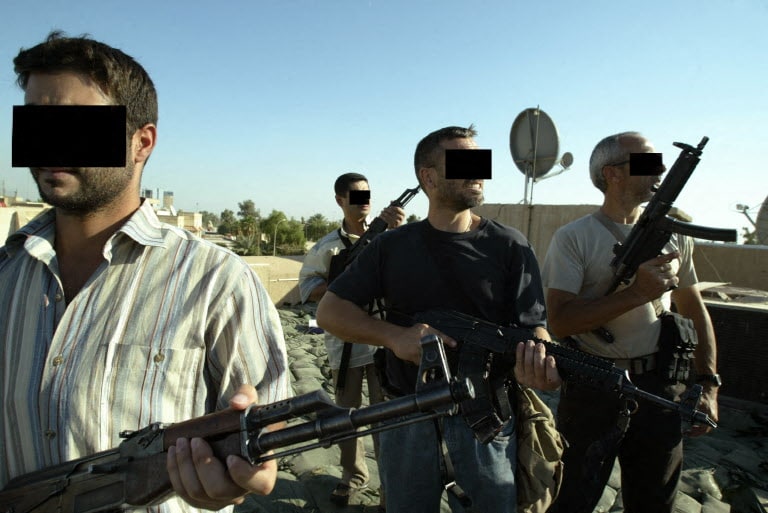
Iraqi and foreign mercenary members of a private security company, stand on the rooftop of a house in Baghdad, 18 September 2007. Iraq declared today it will review the operations of all security firms working in the war-ravaged country following a deadly shootout involving private US contractor Blackwater.
Photo Credit: AFP
Erik Prince's initial mandate in Congo was to help secure the country's mineral wealth and improve the collection of government revenue. The country's mineral deposits have been exploited for decades by a combination of domestic political networks, foreign companies and armed groups. Although mining provides economic opportunities, the government has struggled to ensure that the proceeds are collected transparently and used to improve public services, infrastructure and living standards.
The problem is especially acute in the east, where armed groups have fought for control of territory, mining areas and trade routes. Minerals can generate revenue for those who control them, while the prospect of acquiring valuable deposits can encourage armed actors to seize or retain territory.
In late 2024, Prince signed a wide-ranging contract with the government of Congo's President Felix Tshisekedi to provide security and mining-related services. A former US official who worked on regional diplomacy told The New York Times that the contract was worth hundreds of millions of dollars over five years, although it was unclear how much had been paid.
Prince's personnel supplied drones and mercenaries to support Congo's efforts against the M23, and the company's activities extended into taxation and revenue collection. The precise size of the Vectus deployment remains unclear, as do the full terms of its authority and the division of responsibilities between its personnel and Congo armed forces.
The company did not respond to NDTV's request for comments on the matter.

Iraqi and foreign mercenary members of a private security company, stand on the rooftop of a house in Baghdad as a US Blackhawk helicopter flies over, 18 September 2007. Iraq declared today it will review the operations of all security firms working in the war-ravaged country following a deadly shootout involving private US contractor Blackwater.
Photo Credit: AFP
In January and early February, according to Reuters, Prince's forces deployed to Uvira, over 2,500 km east towards the Rwanda border after Washington helped broker an arrangement under which Rwanda-backed rebels were expected to withdraw from the strategically important town in South Kivu.
Prince founded Blackwater, the private military company that became notorious following the killing of Iraqi civilians by its personnel in Baghdad in 2007. Some former Blackwater employees involved in that incident were pardoned by Trump in 2020.
The Paradox Of Congo's Mineral Wealth
Walter Dorn, Professor of Defence Studies at the Royal Military College of Canada and the Canadian Forces College, told NDTV that Congo's resources have become a source of vulnerability because neighbouring countries and domestic political elites have repeatedly sought to benefit from them at the expense of the population.
"The Congo's mineral wealth could be a source of tremendous power, but instead it has been a source of great vulnerability, given that its neighbours prey upon its vast mineral wealth. Especially the Eastern Congo is a place where being rich makes you poor. Easy access to artisanal mines means that many people can gain the riches, and neighbouring countries are willing to fight for it. Rwanda in particular has used violence to exert control over the 'Wild East' of the DR Congo to expand access to minerals. Major case of corruption for the Congo's 'conflict minerals', alongside blood diamonds," Professor Dorn told NDTV.
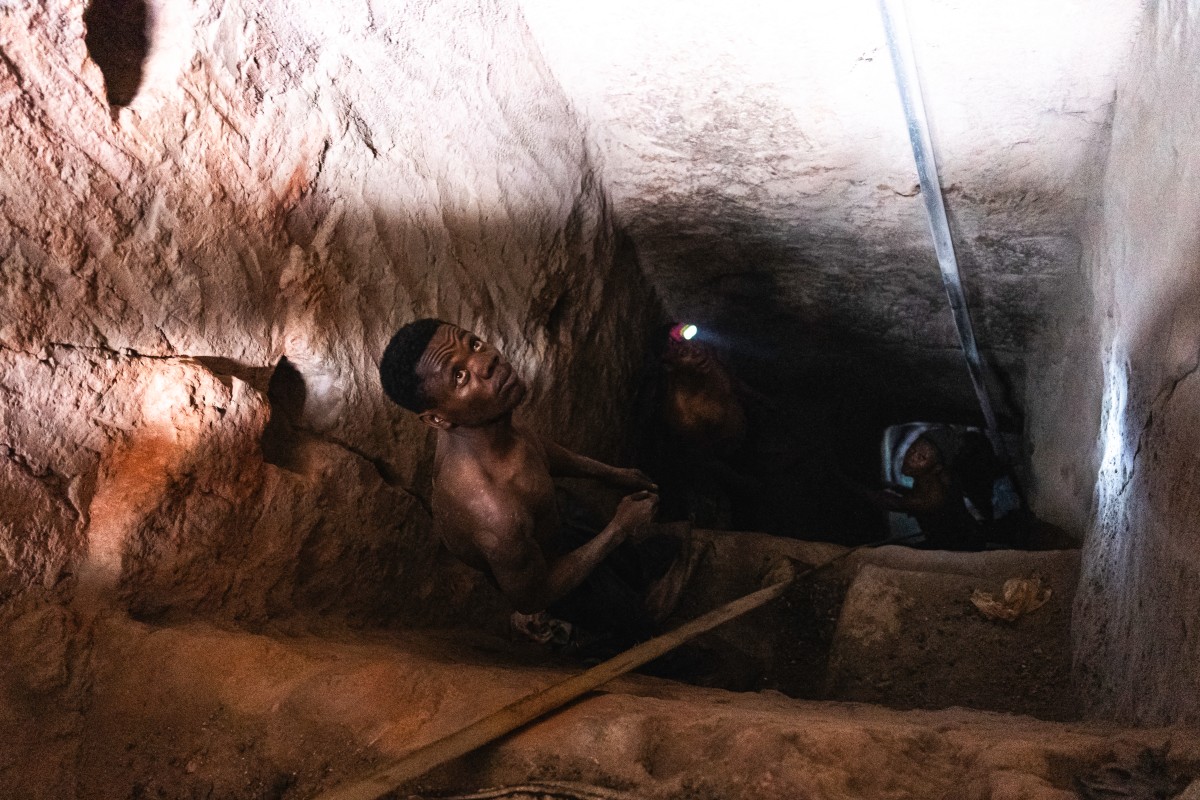
Artisanal miners pass bags of copper ore to one another in a human chain inside the 110-metre-deep mine shaft in Kolwezi.
Photo Credit: AFP
Similarly, Philippe Le Billon, Professor at the School of Public Policy and Global Affairs and the Department of Geography at the University of British Columbia, pointed to the interaction between foreign interference, domestic tensions, weak governance and armed groups.
"DRC is not as wealthy as it is often reported, at least compared to major oil exporters. Even for minerals, the reserves are large, and DRC dominates at least one market (cobalt), but it has faced many challenges in seeking to capture revenues, from (neo)colonialism to corruption, predatory foreign companies and conflicts (some with much deeper roots than resources). The main reason remains the mix of foreign interference and domestic tensions and misgovernance. Resource revenues in some regions have further exacerbated the issue by funding armed groups," Professor Le Billon told NDTV.
"The so-called paradox of plenty or resource curse is well documented and mostly associated with weak institutions, which is largely the case in DRC given the incentives and power relations at play," he added.
Is Congo Really A Rare-Earths Power?
Congo is a major producer of cobalt and copper and possesses significant deposits of tantalum-bearing minerals. These materials are essential to important industrial applications, but cobalt, copper and tantalum are not rare-earth elements in the pure geological sense.
"Congo's only dominance in terms of global production is cobalt, which is thus widely identified as critical but is not, per se, a rare earth mineral," said Professor Le Billon.
Rare earths comprise a specific group of 17 elements used in applications that include certain permanent magnets, electronics and advanced technologies. Critical minerals, by contrast, are a category defined by their economic importance and the risks associated with their supply.
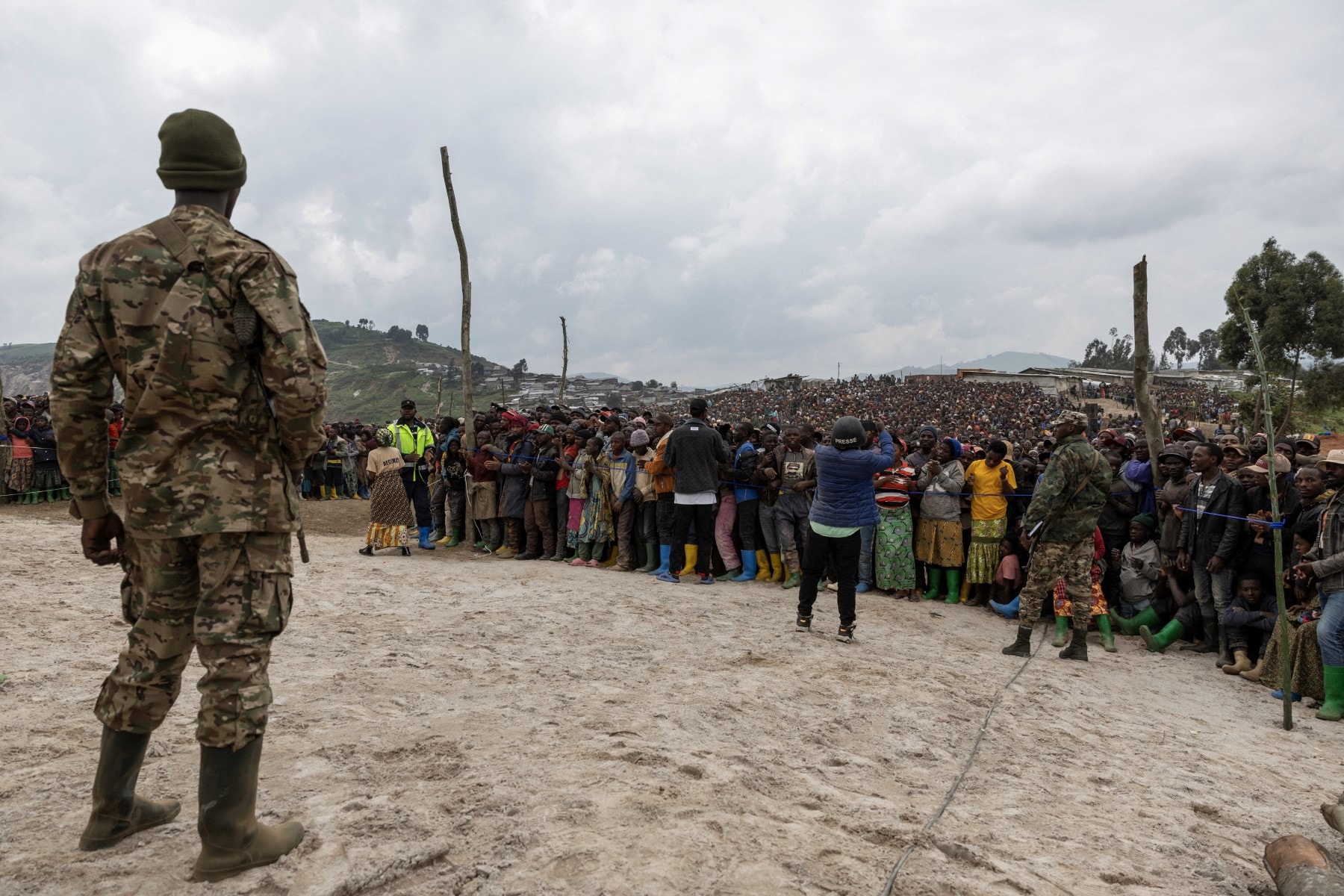
Miners gather during a M23 movement rally at the mine in Rubay on March 5, 2025. Ravaged by conflict for 30 years, eastern DRC is believed to hold between 60% and 80% of the world's reserves of coltan, an essential mineral for manufacturing electronic equipment. UN experts say that the Rubaya deposits bring in around $800,000 per month to the M23, thanks to a tax of $7 per kilogram levied on the production and trade of coltan.
Photo Credit: AFP
Cobalt is considered a critical mineral because of its role in battery production, among other applications. Copper is indispensable to electrical systems and electrification, while tantalum is used in electronic components.
"Congo has long been a minerals powerhouse, going back to before independence. In fact, the large Belgian mining company Union Miniere did not want to give up control of mines in Katanga province to the Central Government, so it backed a secessionist government in Katanga. In Congo today, the geopolitical rivalry is getting more intense, but China has had a major head start," said Professor Dorn.
The American Strategy
Washington's interest in Congo is part of an effort to diversify access to critical minerals and reduce dependence on supply chains in which Chinese companies have established substantial positions. Asked whether the United States was trying to secure Congo's minerals or weaken China's control over the supply chains built around them, Professor Dorn said both objectives were being pursued.
"The United States is trying to secure Congo's minerals, while at the same time trying to weaken China's strong control of mining in the country (about 70 per cent). The Trump administration is seeking to weaken the deals China has with the Congolese government and the access routes it has created. However, many of the roads and other infrastructure that China supported could be used by the United States. So there are possible win-win outcomes. But the Trump Administration sees the world through the perspective of competition and not cooperation. But China is much further advanced than the US in securing critical minerals in the DRC and in Africa as a whole," Professor Dorn said.
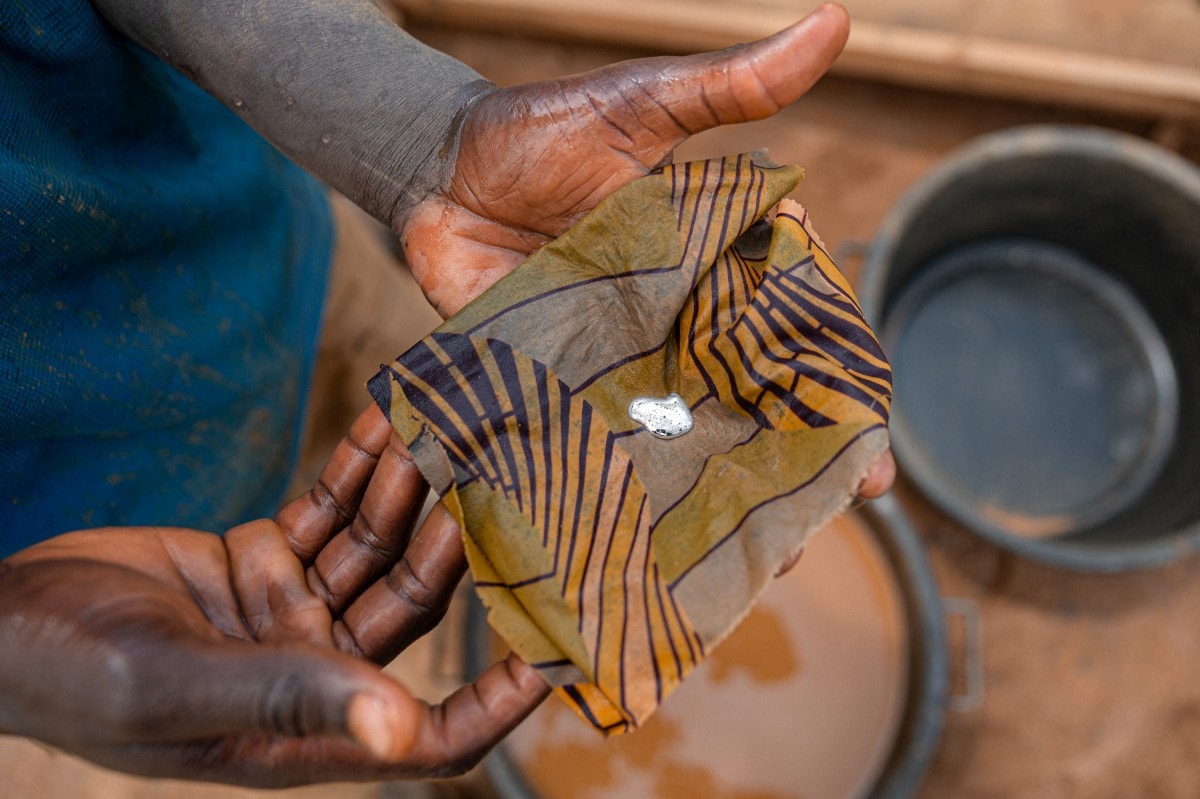
Samuelle Sebi, an artisanal miner, holds a concentrate containing gold particles recovered after the final sorting and concentration stages at an artisanal mine in Mongbwalu, Ituri province.
Photo Credit: AFP
Chinese companies have invested heavily in mining assets and related infrastructure across Africa. Their involvement has given them a big presence in the extraction and processing of materials that are important to modern manufacturing. The US by comparison is seeking to expand its position in a sector where Chinese companies already have established commercial relationships.
'Peace For Minerals'
In December 2025, according to The New York Times, the US and Congo signed an agreement intended to improve American access to the country's mining sector. Congolese officials privately described the arrangement as a "peace for minerals" deal, reflecting the perception that diplomatic support for ending the conflict was linked to Washington's commercial ambitions.
Asked when a security partnership becomes a mechanism for securing preferential access to natural resources, Professor Dorn said, "Trump wants a cut of the mineral wealth for his role in brokering a peace deal, but the reality is that the deal was very weak and did not hold. So it is hard for the US to make that case, particularly as Rwanda, through the M23, controls the capitals of North and South Kivu. China is doing much better through its 'mines-for-infrastructure' agreements, which are more concrete (literally) than Trump's false and faulty agreements."

A picture taken on July 5, 2005 shows contractors of the US private security firm Blackwater securing the site of a roadside bomb attack near the Iranian embassy in central Baghdad. Iraq has filed a lawsuit against private security firm Blackwater in a US court and will file another in Iraq, Prime Minister Nuri al-Maliki said on January 4, 2010, amid fury over an American court dropping charges against five Blackwater guards.
Photo Credit: AFP
"The growing role of private military contractors reveals that the Congolese government cannot rely on its own security forces. The FARDC is unable to push back the M23, so the government feel obliged to hire companies like Vectus Global. But those companies don't abide by international standards, and may themselves seek a cut of the mineral wealth without respecting Congolese legislation," Professor Dorn told NDTV.
"There have been many such attempts in multiple countries and under various models. I cannot comment on the specifics," added Professor Le Billon.
Goma and Bukavu are two cities which the M23 captured in its rapid advance in early 2025. The M23's control over important urban centres and surrounding territory has complicated the Congolese government's efforts to reassert authority in the east. It has also made the operating environment more dangerous for contractors and companies whose work depends on secure transport routes and access to mining areas.
"It is the primary motivation, seconded perhaps by Trump's desire for a Nobel prize and his multiple attempts to get a deal even if momentarily," Professor Le Billon told NDTV.
Can Congo Build An Alternative To China?
Reducing dependence on China would require a sustained investment programme, a functioning framework and a political commitment to ensure that mineral revenue benefits the country rather than a narrow group of decision-makers.
"The Congo would need a long-term strategy and be committed to less corrupt practices. The leaders would have to stop lining their own pockets in the short term, so the people can benefit in the long term. Because the US has strong legislation regarding corruption abroad and stronger due-diligence requirements for its industries, many Congolese leaders would prefer to deal with the Chinese, even though they tend to bring in their own expatriate labourers," Professor Dorn said.
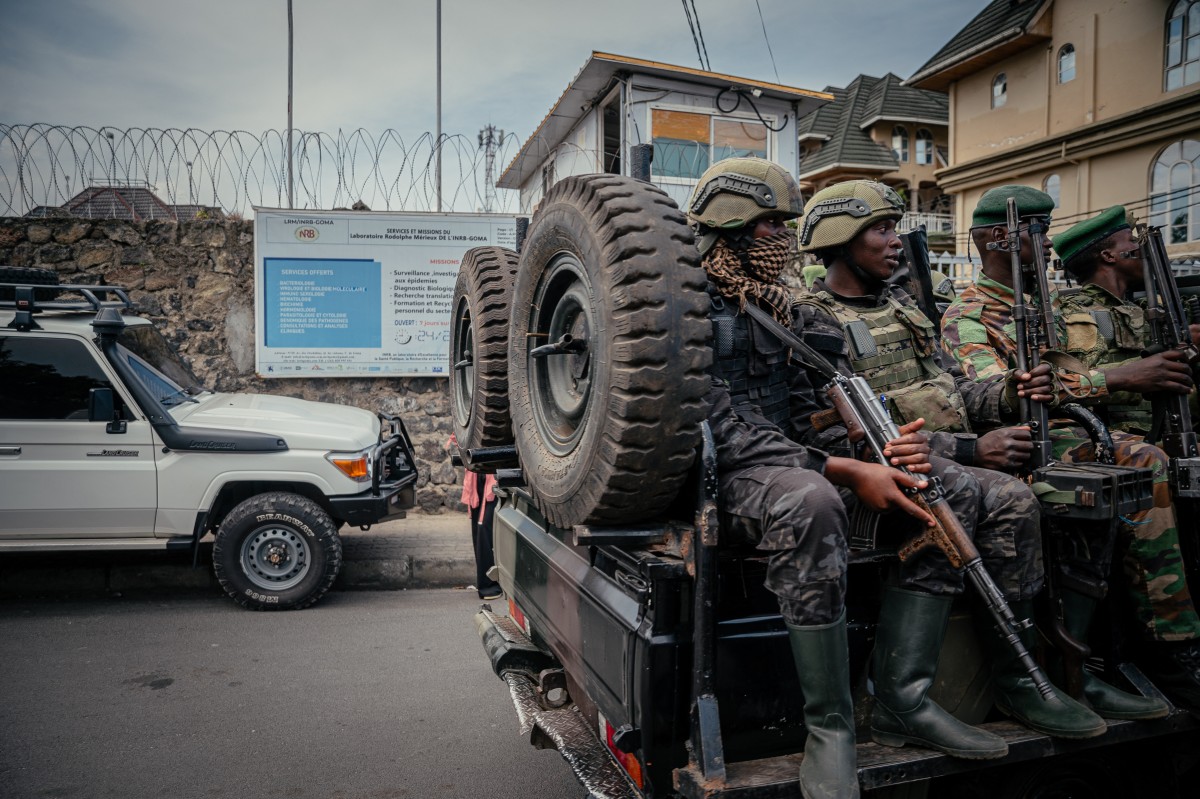
FC/M23 soldiers provide security for the movement's authorities at the Rodolphe Mérieux Laboratory, National Biomedical Research Institute (INRB) in Goma, on May 19, 2026 during their guided visit to the laboratory responsible for analyzing and handling suspected Ebola cases.
Photo Credit: AFP
Competition can improve a government's bargaining position if several companies are prepared to invest and if officials can compare their offers transparently.
"If the competition is regulated and fair, then everyone benefits. But in the Congo, politicians are corrupt, and the local people see little of the benefit. In fact, they often feel stuck between powerful players who often prey upon the mineral wealth. As I mentioned, it is a case where being rich makes you poor," Professor Dorn told NDTV.
"Cannot generalise, but most people would point at some individual Congolese, Chinese companies, and a few Western ones," added Professor Le Billon
A Colonial History That Has Never Entirely Disappeared
The Congo's mineral wealth was central to its colonial economy, and disputes over control of mining revenues became an important feature of its early post-independence politics. The secession of Katanga in 1960 was particularly consequential. The province contained major mineral deposits, and the new Congolese government faced a challenge to its authority when the region's secessionist leadership sought to separate from the central state.
Patrice Lumumba, Congo's first prime minister, became a central figure in the struggle over the country's future. His confrontation with domestic rivals and foreign powers, followed by his assassination in 1961, became one of the defining episodes of the post-colonial period.
"It is the same story of foreign domination and internal infighting. The Cold War had the added layer of a struggle between Communism and Capitalism, and now all sides are capitalistic, but in the form of crony capitalism, not the free market. The UN and its peacekeepers, particularly Indian peacekeepers, played a constructive role in preventing the secession of the mineral-rich Katanga province. The UN currently has a mission, based in Kivu, but it is less capable than it was in the first half of the 1960s. Still, it is an important presence that does occasionally use force, and it provides a set of eyes and ears for the international community," Professor Dorn said.
Belgian interests were central to the country's colonial mining economy, while American involvement became particularly consequential during the Cold War. Chinese companies have since established a substantial position in the mining sector, while European firms and governments continue to play a role and American interest is growing.
The United Nations continues to maintain a peacekeeping presence in eastern Congo through its mission in the country, known as MONUSCO. Its role and capabilities have evolved, and its ability to influence the conflict is constrained by the security situation and the political choices of the parties involved.
KioskNews shows a cleaned-up reading view extracted from the publisher’s page — the original always lives on their site, not ours.