Compound vs recurve archery: How are the two disciplines different
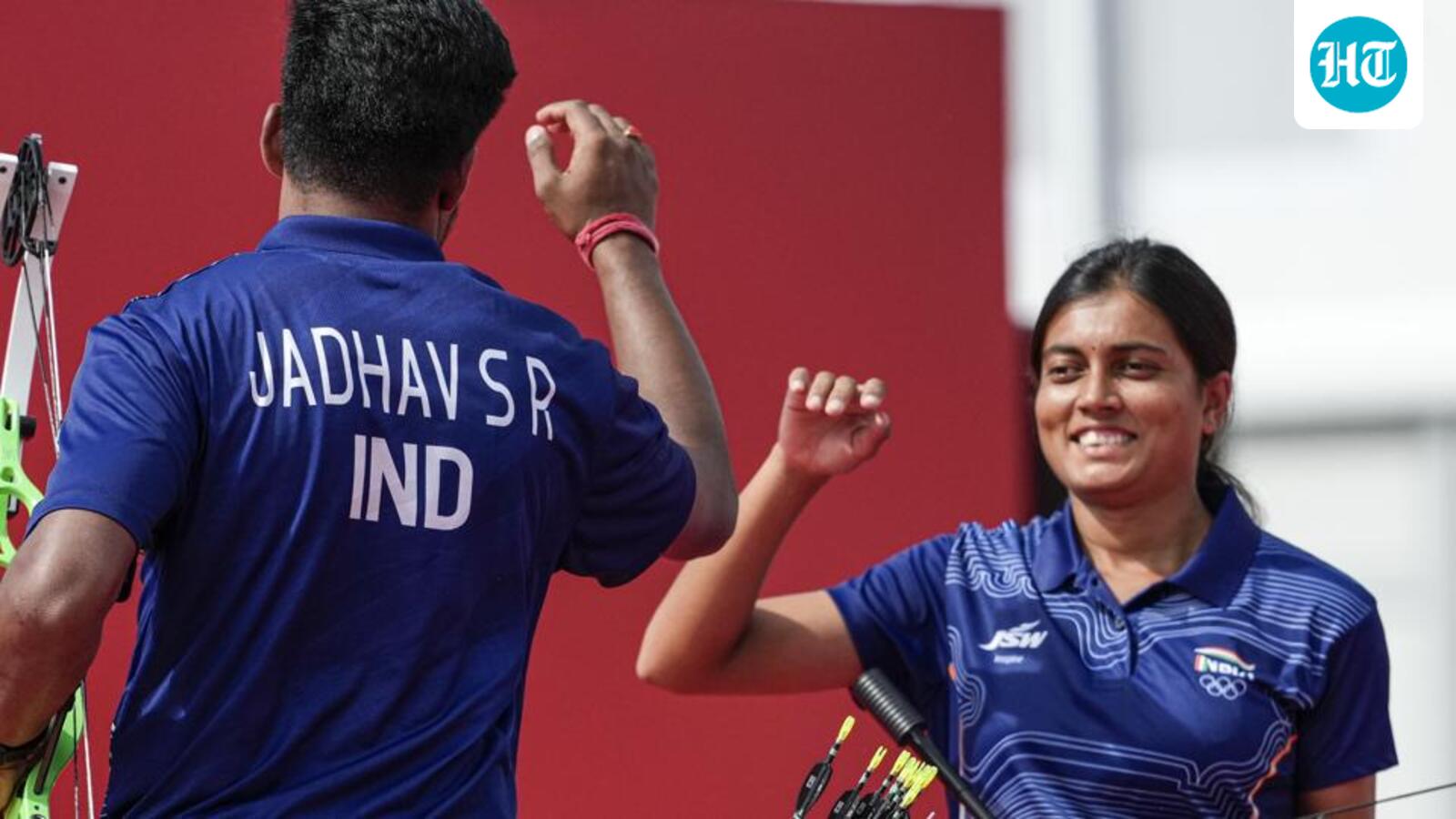
Mumbai: Chikitha Taniparthi and Sahil Jadhav clinched India’s second gold in archery by winning the mixed compound event at the ongoing 2026 Asian Games in Aichi-Nagoya, Japan, on Wednesday.
This was not the first time a mixed compound archery team from India had won a gold medal at the Asiad. But what Chikitha and Sahil achieved in addition to winning gold was earn direct passage to where no compound archer had ever been before — the Olympic Games.
For the first time, compound archery will be making an appearance at the Olympic Games at the 2028 edition in Los Angeles.
Recurve archery, however, has long been associated with the Olympics. It had made its debut in the 1900 edition in Paris, and after a break, has been consistently been a part of the Olympic roster since the 1972 Games in Munich.
Recurve archery will have five events, as usual, at the LA Games — the men’s and women’s individual and team events along with a mixed event. Meanwhile, compound archery will have only the mixed team event.
The Asian Games provided the gold medallists in the mixed compound event a quota to the Olympic Games, and India have booked their spot.
Despite being the same sport though, there are many differences between recurve and compound archery.
HOW FAR ARE THE TARGETS?
Recurve archery has the target set at 70 meters away. The target itself is 122cm in diameter with the 10-point ring being 12.2cm in diameter.
In compound archery, the target is 80cm in diameter with the 10-point ring being 8cm in diameter. The target is set 50 meters away.
IS THERE A DIFFERENCE IN THE EQUIPMENT?
Yes, the bows used are very different.
The recurve bow is manual. The only assistance from the bow which a recurve archer has is the stabilisers attached to the front and sides to help balance the bow and “reduce vibration after an arrow is released.
The compound bow, meanwhile, is mechanised and easier to use.
Invented in the 1960s, the compound bow has pulleys (called cams) on either end which are connected to the string and make the drawing process a lot smoother. The mechanism also makes the arrow travel faster, with speeds often reaching 350kmph — arrows shot from the recurve bow, which do not have pulleys, can touch 250kmph.
The compound bow is also fitted with a scope with a magnifying lens that assists in aiming.
Since the compound bow is comparatively easier, matches tend to be decided by a solitary point.
The mixed team final at Aichi-Nagoya had, in fact, gone into a shootoff, while the Indian men’s team won gold against China in the final by a single point (238-237).
ARE COMPOUND ARCHERY EVENTS REGULARLY HELD?
Yes. Compound archery was first added to the World Championship roster in 1995, and is treated as an equal to recurve archery at the Archery World Cup since the inaugural edition in 2006.
Compound archery, at the moment, is yet to find equal footing with recurve at the Olympic level.
THE POINT SYSTEM
In recurve, the knockout rounds are decided on set points.
After shooting three arrows, which is called an end, the points are counted and the archer who has more points is awarded the set. A set fetches 2 points. The archer who gets to 6 set points after four ends wins the match.
If both archers score the same points in an end, the set points are split 1-1. If both archers are tied on 4 set points each after four ends, the match goes into tiebreaker and a single arrow closer to the centre decides the match.
In compound, the difference in cumulative points collected after each archer shoots 15 arrows decides a match. If scores are tied after 15 arrows, a single arrow closer to the centre decides the match.
KioskNews shows a cleaned-up reading view extracted from the publisher’s page — the original always lives on their site, not ours.