EXPLAINER: What is the difference between flame-based cremation and pet aquamation?
Make this your preferred source to get more updates from this publisher on Google.
After the dead bodies of 29 cats and dogs were found carelessly dumped in parts of Bulacan when they were supposed to be cremated, a lot of fur parents began to fear that the ashes given to them by pet crematoriums were actually their pets.
In a report from GMA News Feed, the incident became viral online, making pet owners doubt if the ashes they have were actually their beloved animal companions. Some said that the color of the ashes they had was grey; others said that theirs were white.
So why do these colors differ?
There are different ways to process the remains of a pet. The flame-based cremation is often what comes to mind when one thinks of cremation.
According to the Cremation Association of North America, this process uses fires and extreme heat in a cremator to turn the remains into bone fragments. After it goes through the machine, the bones are processed and crushed finely. This is what the pet owners receive.
This is the common form of cremation being used in many funeral homes and crematories.
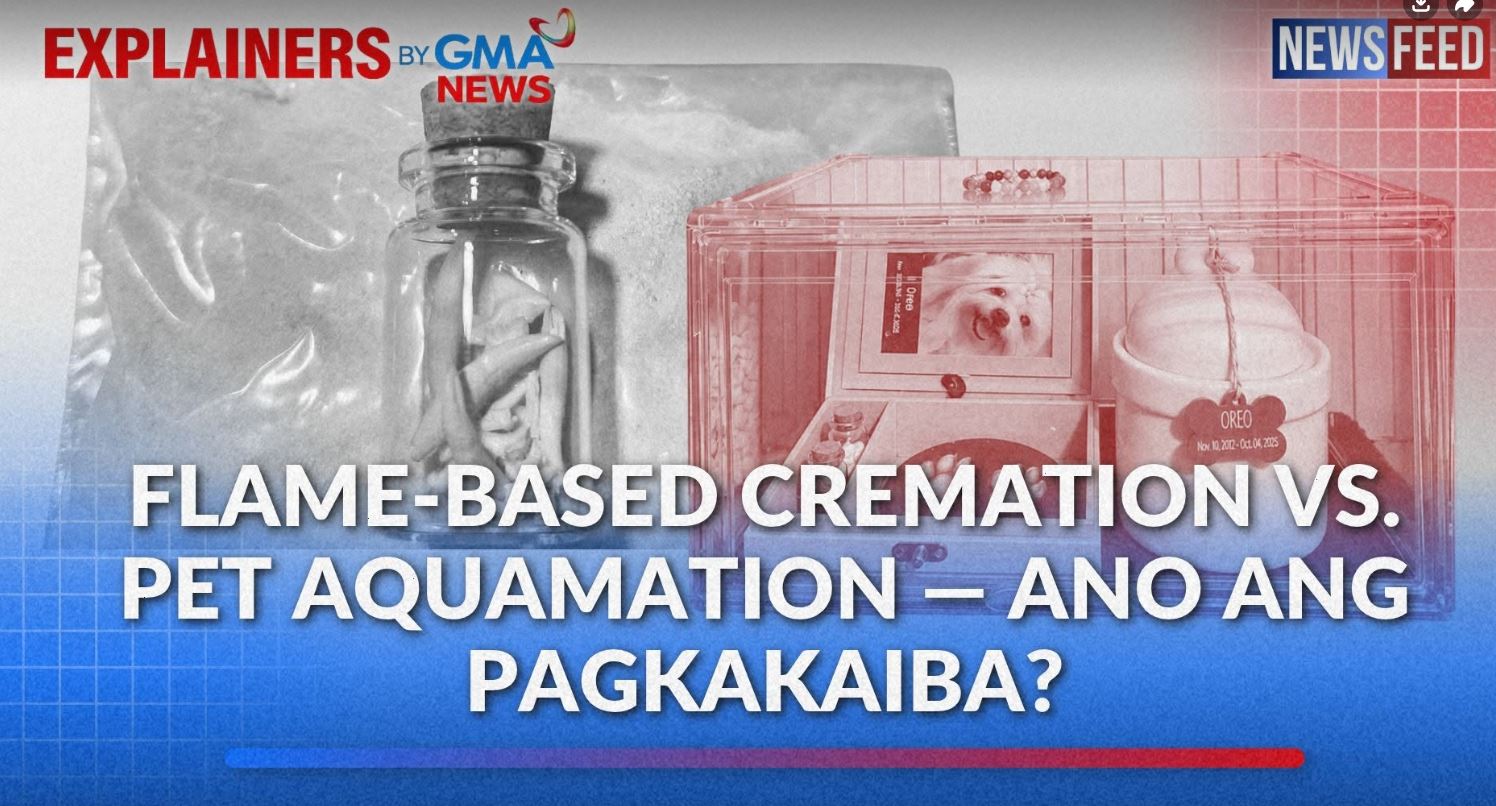
Other than flame-based cremation, however, there is also a form of cremation that uses water and chemicals. This is aquamation, or alkaline hydrolysis, where the decomposition phase is quickened.
In aquamation, the body of the pet is placed in a stainless-steel vessel with an alkaline solution. The machine uses heat and pressure to slowly melt the soft parts of the body until only the bones are left.
The bones are then dried and crushed into powder.
According to the American Animal Hospital Association (AAHA), aquamation leaves behind bones that are dried. This is why it is often whiter compared to ashes from a flame-based cremation.
U.S. based non-profit organization Environmental Literacy Council said that the colors of pet ashes may differ based on their diet, health conditions, and medication.
Following the Bulacan incident, Philippine Animal Welfare Society (PAWS) said that there are different ways to check the validity of the cremation services that fur parents are getting.
“It's sad that we have to ask the consumers themselves to be the ones to look out when there should be a regulatory function… On how they can check if the crematorium is legitimate, many of the legit crematoriums provide a step-by-step documentation of their pets' cremation,” PAWS Executive Director Anna Cabrera said in a mix of English and Filipino.
“I've seen pet parents show me that there is a timestamped video from the time that they took the animal, all the way to the cleaning of the body, sa pagpasok doon sa cremation machine, hanggang sa paglabas and kung paano nilagay sa urn, and it's given to them. And I think this should be the standard,” she added.
Cabrera advised fur parents that if they have doubts about the ashes that they are holding, they can bring it to the National Bureau of Investigation (NBI).
NBI Director Melvin Matibag said that they can do the forensic analysis to check.
“They can bring the ash to NBI, and they will do the forensic analysis, just to give them the assurance that it's really at least a cremated dog…But they're only going to be able to determine if it's the cremated remains of a dog, or a cat, or if it's wood, or if it's ashes, cement,” Cabrera said. —Jean Mangaluz/LDF, GMA News
KioskNews shows a cleaned-up reading view extracted from the publisher’s page — the original always lives on their site, not ours.