Secret report finds 2000-tonne ship poses severe environmental threat
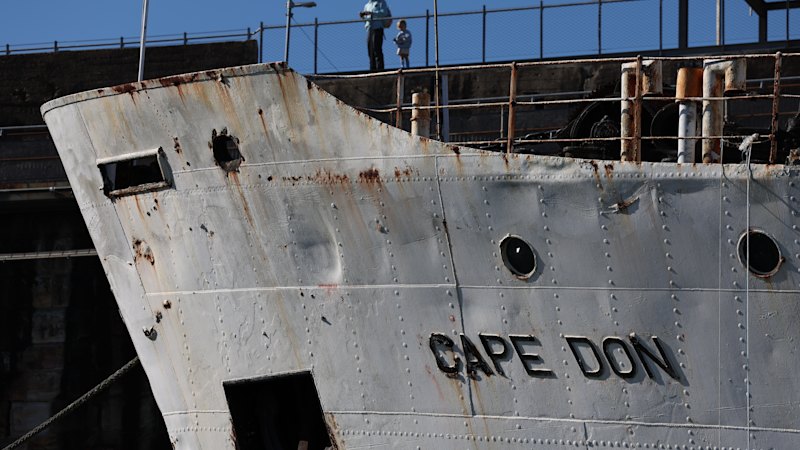
A 2000-tonne ship seized by NSW Maritime near the busiest shipping zone in Sydney Harbour has holes in its hull so gaping that a passing wave could sink the vessel and cause an environmental catastrophe.
An independent surveyor’s report on the condition of the MV Cape Don warned early last year that the vessel was “severely deteriorated” and the bilge pumping arrangements were grossly inadequate to manage flooding or water ingress.
“The risk of catastrophic failure of the port side hull plate is extremely high, which would pose an immediate and severe environmental threat,” the confidential report by AMSA Accredited Marine Surveyors reported.
But the hazard is unlikely to be removed from its mooring at Balls Head in Waverton until next year, due to the logistical challenges of dismantling a ship in such frail condition.
NSW Maritime executive director Nicole Watts said the agency was exploring options, including dismantling the vessel in place or scooping it out of the water from underneath in a “bath tub scenario” to ensure it did not crumble during disassembly. This may require specialist equipment to be brought in from overseas.
One such option is operating in Darwin and that facility may be available to NSW Maritime after its current job is complete.
Depending on which option NSW Maritime pursues, the salvage is likely to cost $15 to $20 million and will be borne by the taxpayers because the vessel is uninsured.
“We’ve obviously got to go through our procurement process, but we’re aware of the emergency,” Watts said, recalling the 2022 sinking of the former Manly ferry MV Baragoola.
“It needs to be done very urgently because things can change imminently. We don’t want a repeat of the Baragoola.”
NSW Premier Chris Minns on Sunday said the government had to step in because of the serious implications for the environment, Sydney Harbour and the reputation of the state.
“I’d expect anyone who owns or operates a boat in the maritime sector to follow the rules,” he said. “We have to make sure that there are appropriate regulations and penalties in place if there is a breach because it can’t just be shovelled over to the taxpayer when things go wrong.”
MV Cape Don, a former lighthouse supply tender, was bought by the charitable Sea Heritage Foundation in 2004, since which time volunteers have been painstakingly repairing it with plans to open it up as a museum.
In recent years, it has been used for university research and as a classroom for cub scouts, who drew on the expertise of the marine engineers and shipwrights working on its restoration to design a water surface cleaning robot.
But the private surveyors who conducted the visual inspection of the ship for Transport for NSW last year raised concerns that many of the repairs were degraded or questionable.
Transport for NSW Maritime issued the Sea Heritage Foundation with an “unsafe vessel notice” in June last year, a day after receiving questions from the Herald.
Negotiations with the owners broke down and the agency seized the vessel last month with plans to dispose of it safely.
The private surveyors noted the presence of environmental hazards, including asbestos, zinc chromate paint and the previous use of tributyltin (TBT) antifouling paint, a chemical that changes the genders of marine snails.
Other concerns included corroded guardrails, water ingress, missing and rotten timber planks, large areas of flaking paint, a crane that was not stowed correctly, a stairway at high risk of failure and holes large enough to see daylight.
Heavy rust wastage at the stern left it “extremely vulnerable” to flooding, and its positioning near the waterline on the exposed side of the ship meant such flooding was highly likely, the report found.
The hull plate in the main hold was also pocked with large holes that were likely to get bigger if disturbed.
“It could be as simple as the wake from a passing vessel and wave pressure breaching the hull further, and due to the size of this void space it could potentially be catastrophic,” the report said.
Sea Heritage Foundation did not directly answer questions about the condition of the ship, but disputed through its legal adviser any suggestion that it was incompetent or indifferent to safety or environmental protection, and said it was exploring legal action against the Herald.
“It would be seriously misleading to present historical observations as current findings without assessing subsequent repairs, mitigation measures and technical evidence,” legal counsel George Caramanlis said.
He did not address questions about the foundation’s lack of insurance on the vessel.
Watt said many insurers were unwilling to take on ageing vessels and Maritime NSW planned to crack down on unsafe vessels, removing them when necessary.
“When you go out on Sydney Harbour, you can see this is not the only vessel in disrepair. I can tell you it will not be the only one,” she said.
Get to the heart of what’s happening with climate change and the environment. Sign up for our fortnightly Environment newsletter.
KioskNews shows a cleaned-up reading view extracted from the publisher’s page — the original always lives on their site, not ours.