Why Mao remains sensitive in China: Mbappé’s remark and the Cultural Revolution
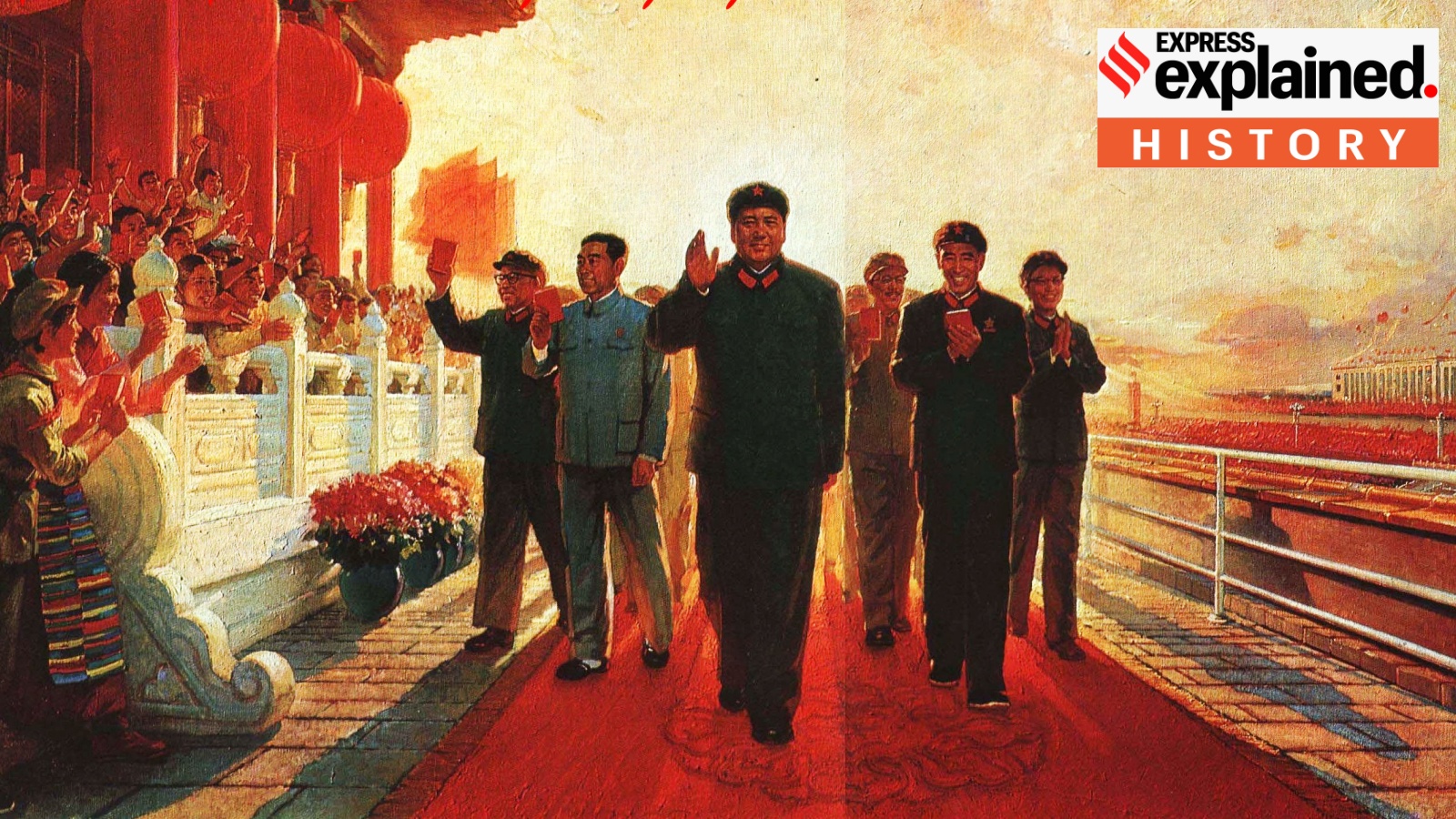
French football star Kylian Mbappé found himself at the centre of a controversy on Tuesday (October 27), prompting China to suspend State TV broadcasts of Spanish league games and major Chinese brands to drop him from sponsorship deals.
In what was intended as a light-hearted video, the Real Madrid player was discussing memes featuring him, saying his favourite one superimposed his face onto that of a “Chinese dictator”, referring to Mao Zedong. The Chinese State’s response, though, was anything but light-hearted.
One State media editorial said, “No country can tolerate attacks on its founding fathers”, invoking the “historical memory and cultural sensibilities of the Chinese public”. Yet the Chinese Communist Party’s (CCP) own relationship with Mao’s legacy is complicated.
In fact, it was almost exactly 50 years ago that Mao’s brainchild, a decade of unprecedented chaos in modern China officially called the “Great Proletarian Cultural Revolution”, ended. The CCP has since denounced it and described the period as causing “The most serious losses and setbacks since the founding of the People’s Republic (in 1949).”
At the same time, the Party preserves Mao’s place in the nation’s history, with his legacy continuing to impact the political system’s functioning today.
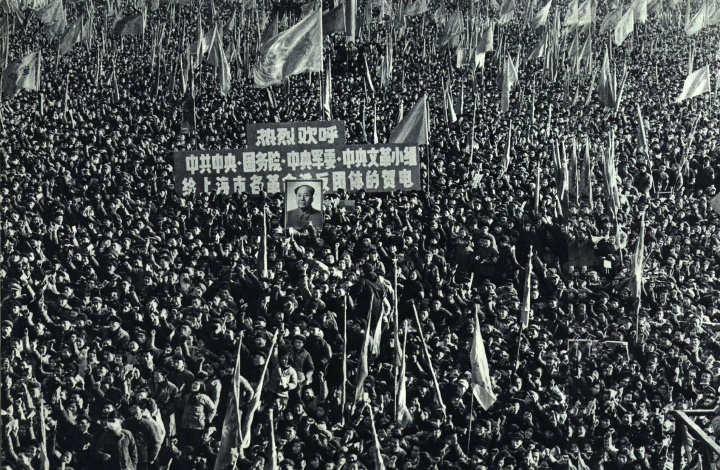 Factions of the Red Guards, who were the ground soldiers of the Cultural Revolution, march with a portrait of Mao Zedong. (Wikimedia Commons)
The Great Leap lead-up
Mao led the CCP to victory in the Chinese Civil War, culminating in the establishment of the communist republic. Hailing from a peasant family in the Hunan province, he was credited with reimagining an ideology centred on workers in the erstwhile Soviet Union and adapting it for the Chinese peasantry.
Story continues below this ad
A towering figure, he presided over the establishment of modern China, but was also behind some infamous policies that killed and persecuted millions, including the father of current Chinese President Xi Jinping.
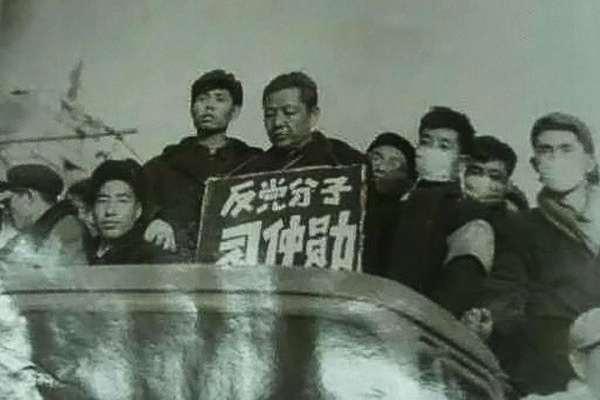 Xi Zhongxun, a senior Communist Party official and the father of Xi Jinping, was persecuted during the Cultural Revolution. This often involved public humiliation and public questioning of those seen as disloyal to the Party. (Wikimedia Commons)
In order to win the civil war and take his message to the masses, Mao and his army undertook the “Long March” for a year, covering over 12,000 km. It ended in 1936 in northwestern China, with around 90,000 of the 100,000 people that it began with left dead by the end of it. Despite the massive losses, it added to the myth-making around Mao — and this would not be his first such mammoth endeavour.
Around a decade after the republic was formed, Mao launched another audacious plan, the Great Leap Forward (1958-62). The State sought to usher in industrial and agricultural growth, but rapid changes such as collective land ownership and unrealistic targets strained those very sectors. It ultimately led to what is considered the worst famine in modern history, leaving over 20 million people dead, according to some estimates.
Preparing for a Cultural Revolution
In 1966, shortly after the failure of the Great Leap Forward, the Party sought to re-emphasise its singular authority and rid society of influences deemed a threat to Communism. On the ground, this translated into millions of people being encouraged to report ‘traitors’ in their midst, relatives turning on each other, and urban youth being sent to the countryside for a ‘re-education’ — including Xi, who was then a teenager.
Story continues below this ad
What led to this turn of events? Analysts point to a wide set of factors. Globally, the death of Soviet leader Josef Stalin in 1953 and his successor Nikita Khrushchev rolling back several of his policies was seen as an ominous sign by Mao, who greatly admired Stalin. He worried about the future of the Chinese republic — and the Party — after him.
Ideological commitment was not the only motive at play; Mao also purged officials seen as challenging his authority. In a recent research article, however, academician Yiching Wu of the University of Toronto argued that motives such as consolidating power were only attributable later (“Mao’s Cultural War: The Origins of the Cultural Revolution Revisited”). In reality, the decade unfolded haphazardly.
A decade of turmoil
In line with communism’s wider tenets, culture and institutions — such as colleges, schools, theatres — were seen as considerably influencing thought and in need of reform. Mao’s wife and former theatre actor Jiang Qing, for instance, decried the fact that the theatre, “a place to educate the people, is now dominated by (stories of) emperors, generals, gifted scholars, and beautiful ladies—this is all feudalistic and bourgeois stuff… the principal characters are not workers, peasants, and soldiers.”
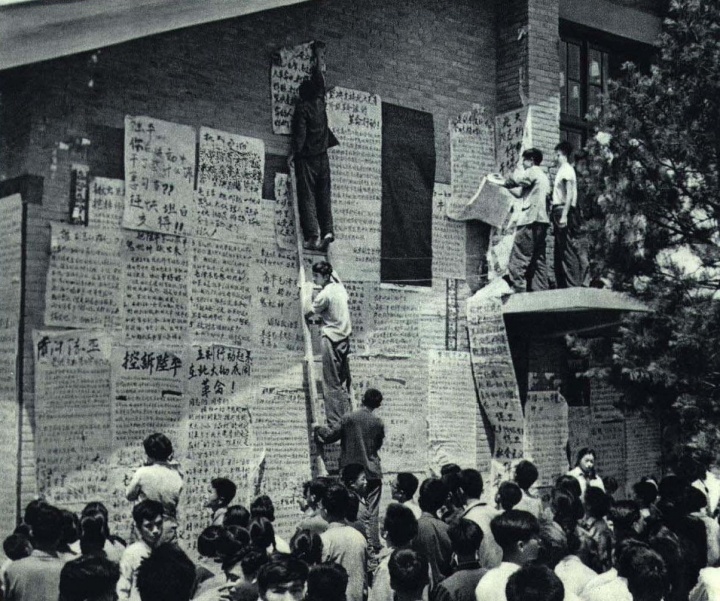 Peking University students put up posters about the Cultural Revolution. (Wikimedia Commons)
Then began efforts to do away with the ‘Four Olds’: “Old thought, old culture, old customs, and old habits.” University students were encouraged to leave their education and devote themselves to the cause; a youth-led army called the “Red Guards” arose, and everything seen as representing older systems had to be destroyed. This included acts such as the desecration of the philosopher Confucius’s grave and destruction of pre-1949 cultural artefacts.
Story continues below this ad
In their book Mao’s Last Revolution (2006), authors Roderick MacFarquhar and Michael Schoenhals wrote that one of the posters put up by students then “prophetically proclaimed what would become the hallmark of the movement: ‘Beat to a pulp any and all persons who go against Mao Zedong Thought-no matter who they are…’”
Over 1 million deaths have been attributed to this period by some estimates. Apart from the attacks led by students, which peaked in the early years, the State’s attempts to restore order also brought its share of violence. Local cadres went about exacting revenge against their superiors, finally having the freedom to deploy violence.
Wu wrote, “Mao unmistakably orchestrated the first—a cultural purge—yet the second, marked by political escalation, did not simply extend from his initial aims. It took shape through the interaction of political maneuvering, interpretive escalation, and unintended consequences that exceeded any single actor’s control.”
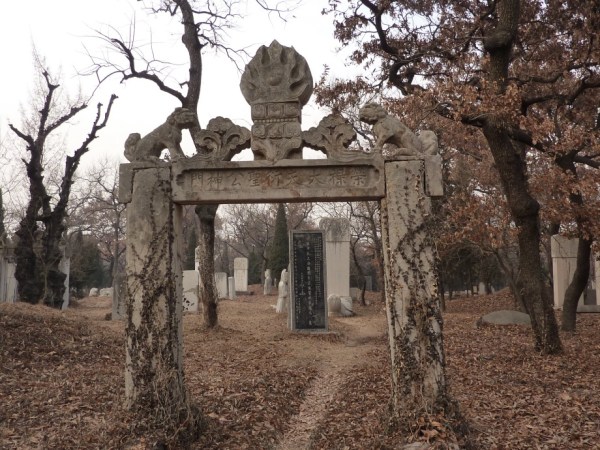 The cemetery where Confucius was believed to have been buried was attacked during the Cultural Revolution. (Wikimedia Commons)
How the Cultural Revolution still shapes China
MacFarquhar and Schoenhals argued in their book that “To understand the ‘why’ of China today, one has to understand the ‘what’ of the Cultural Revolution.”
Story continues below this ad
Mao died on September 9, 1976, and the Cultural Revolution is generally considered to have ended that year. The CCP subsequently blamed the “Gang of Four”, which included Mao’s wife Jiang Qing, for many of the movement’s excesses. However, its 1981 historical resolution also acknowledged Mao’s responsibility for the disaster, even as it maintained his central place in the Party’s history.
The upheaval helped shape China’s political and economic direction after Mao. Deng Xiaoping, who was purged during the Cultural Revolution, emerged as the paramount leader and championed reform. Beginning in 1978, China moved towards economic liberalisation under the supreme control of the Communist Party — reconciled under the slogan “Socialism with Chinese Characteristics.” “Planning and market forces are not the essential difference between socialism and capitalism… Development is the absolute principle. We must be clear about this issue,” Deng said.
Fifty years after the Cultural Revolution ended, and almost as many since its economy opened up, China looks very different. Despite persistent inequality, it has brought hundreds of millions out of poverty. It dominates global manufacturing and is increasingly seen as managing a rivalry with the US on fronts ranging from geopolitics to AI.
The legacy of the revolution continues to shape Chinese politics. Josh Kurlantzick, Senior Fellow for Southeast and South Asia at the Council on Foreign Relations, told The Indian Express that it likely affected Xi himself: “His father was purged during the Cultural Revolution and then jailed and beaten badly, and Xi himself was denounced… It certainly must have had a searing impact.”
Story continues below this ad
“The key lesson from this is that Xi, instead of responding to the Cultural Revolution by becoming more liberal and open, like a lot of those who were badly treated by it, decided that he needed to become more ideological, more supportive of the CCP… since Xi has become the leader of China, he has made the country far more ideological again, made the CCP the central institution in all walks of life much more so again,” he added.
Many analysts thus draw some commonalities between Mao and Xi for their centralisation of power. That might be one reason why criticism of the revolution is not still in vogue, apart from the fact that doing so could undermine the legitimacy of the Party today.
In general, a sense of repression is felt more acutely by many in present-day China. “Openly talking in a way that could be perceived as negative about the Party or its past and that can be picked up by state surveillance — which is much more omnipresent — or on WeChat, where surveillance is omnipresent, is much more likely to get a Chinese person detained, jailed, or abused. The country is just overall far more repressive than it was 20 years ago, and it also has the tools to enforce this repression,” Kurlantzick said.
He pointed out that the repression also possibly stems from “an intense fear of disorder above all else — and that almost surely comes from the legacy of the Cultural Revolution, which created disorder on a very high level across the country. This has led Xi to keep very close personal control of almost all issues, purge most of the people around him, and essentially turn China into a one-man dictatorship.”
KioskNews shows a cleaned-up reading view extracted from the publisher’s page — the original always lives on their site, not ours.