Bangsamoro votes for first parliament in historic test of Philippines peace process
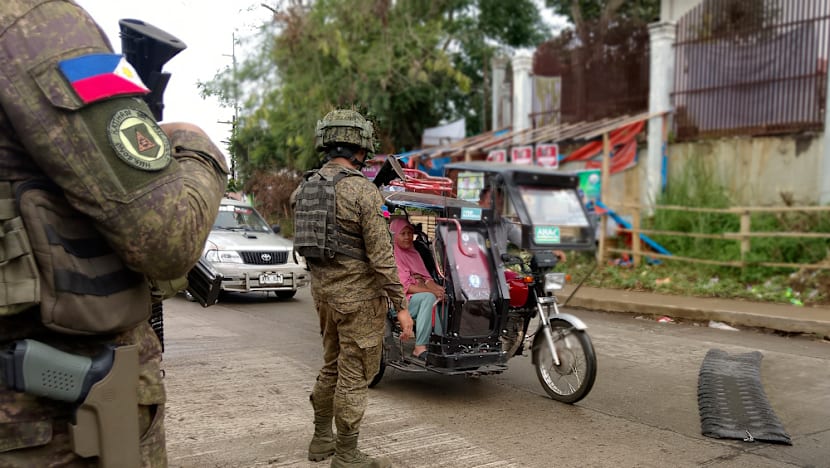
Polling is under way in the Bangsamoro region of the southern Philippines, where voters are choosing their own parliament for the first time in a historic test of a political system born out of years of conflict.
Voters in the Bangsamoro Autonomous Region in Muslim Mindanao (BARMM) will elect 80 members of parliament representing regional, district and sectoral levels.
Security is tight across the region, with authorities seeking to protect voters and election personnel and ensure peaceful and credible polling on Monday (Sep 14).
CHANGING POLITICAL LANDSCAPE
The vote marks a major milestone in a long-running peace process and ushers in a form of regional government unique in the Philippines, which has a presidential system.
For former rebels who spent decades fighting the Philippine state, the new parliament also represents a shift from armed struggle to policymaking.
Experts say that after years of violence, failed agreements and renewed peace efforts, the establishment of a functioning parliamentary system is itself a significant achievement.
The longer-term test will be whether that political mandate can translate into effective governance, greater accountability and lasting peace.
Signs of the changing political landscape were on display last month, when all 13 parties vying for seats in parliament took part in a debate in Cotabato City.
Benedicto Bacani, executive director of the Institute for Autonomy and Governance, said the strong participation offered reason for optimism in a region long associated with election violence and corruption.
“The region is notorious for elections with guns, goons and gold,” he said. “But now, you have 13 political parties talking about their vision, talking about the issues that matter to them, I think that is a source of hope for us.”
Violence and corruption have long hampered development in Mindanao, leaving parts of the region among the poorest in the Philippines.
Supporters of the parliamentary system hope it can help strengthen institutions, improve accountability and give the Bangsamoro population meaningful political autonomy.
Filipino peace negotiator Miriam Coronel-Ferrer said the system could also move the region away from politics dominated by individual strongmen.
“Now we are looking at a system of political parties – not necessarily just one dominant party, but parties that have to work with other political parties and ensure that there's check and balance there,” she added.
Coronel-Ferrer was the chief negotiator for then-President Benigno Aquino III's government when it signed a landmark peace deal with the Moro Islamic Liberation Front (MILF) in 2014.
That agreement paved the way for the creation of the Bangsamoro autonomous region in 2019.
Until now, the region has been governed by a transition authority whose members were appointed rather than elected.
Several postponements of the parliamentary election, due to factors ranging from unfinished transition processes to legal hurdles, extended the authority's tenure and fuelled friction within the community.
Monday's vote means Bangsamoro residents can finally choose the representatives who will govern them.
“This election is important because they will be given legitimacy. They will be given the mandate of the people,” Bacani said.
“They will now have to be accountable to the Bangsamoro people, not to the national government or to the president of the Republic of the Philippines.”
UNFINISHED BUSINESS FROM THE PEACE DEAL
Regardless of who wins, the incoming government will inherit significant challenges, including unfinished efforts to disarm former MILF fighters.
Under the 2014 peace agreement, MILF combatants are to give up their weapons as part of a broader normalisation process.
Aside from establishing the Bangsamoro entity, the 2014 peace deal calls for all MILF rebels to give up their weapons.
But disarmament has stalled amid allegations that the national government has fallen short in providing promised socio-economic assistance to former combatants.
About 26,000 former MILF fighters have so far been disarmed under the peace process, while another 14,000 remain.
“For all intents and purposes, you have a strong, intact Bangsamoro Islamic Armed Forces leading to the elections,” Bacani said.
“If you have a situation where an armed group is part of the government, they will always be a source of instability.”
The stakes extend beyond the future of the Bangsamoro region.
A successful political transition that delivers tangible improvements to people's lives could make the region less conducive to violent extremism, Coronel-Ferrer said.
“That's a very important thing, for the region, but also for the rest of the world.”
KioskNews shows a cleaned-up reading view extracted from the publisher’s page — the original always lives on their site, not ours.