Surviving AI means holding on to basic skills and our humanity
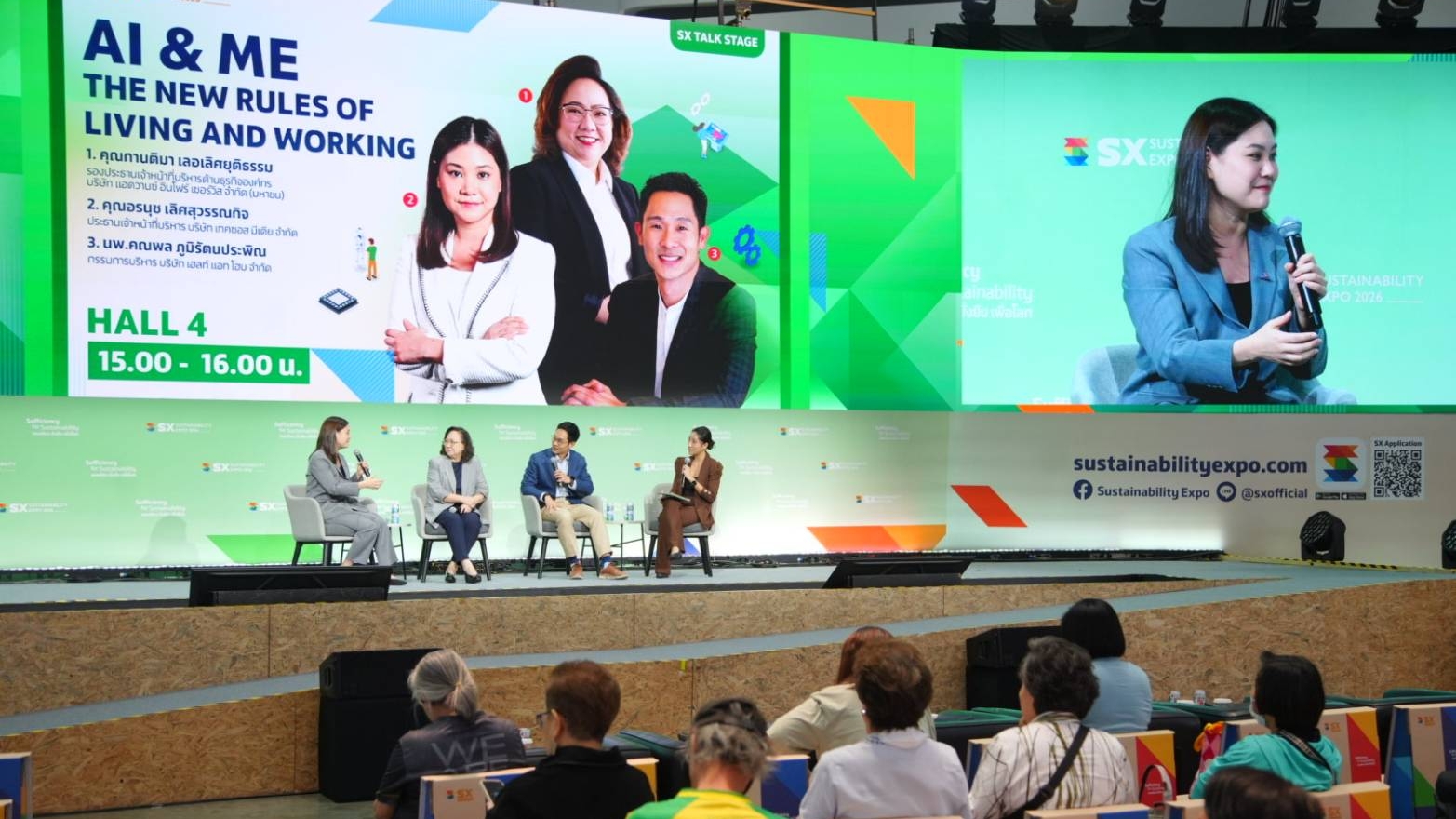
Speakers at SX2026 say human skills will matter more, not less, as AI takes over routine work
Will AI replace people? Which jobs will disappear? What skills will we need to survive? And who will gain and who will lose out as AI plays a growing role in the world of work? These questions are a source of anxiety for people of all backgrounds and ages. But those who work with AI every day believe there is still plenty of room for “humanity” in this world – as long as we do not abandon basic communication skills.
The issue was taken up at the panel discussion “AI and Me: The New Rules of Living and Working” at Sustainability Expo 2026 (SX2026), where speakers experienced in working with both people and technology shared their experiences and perspectives.
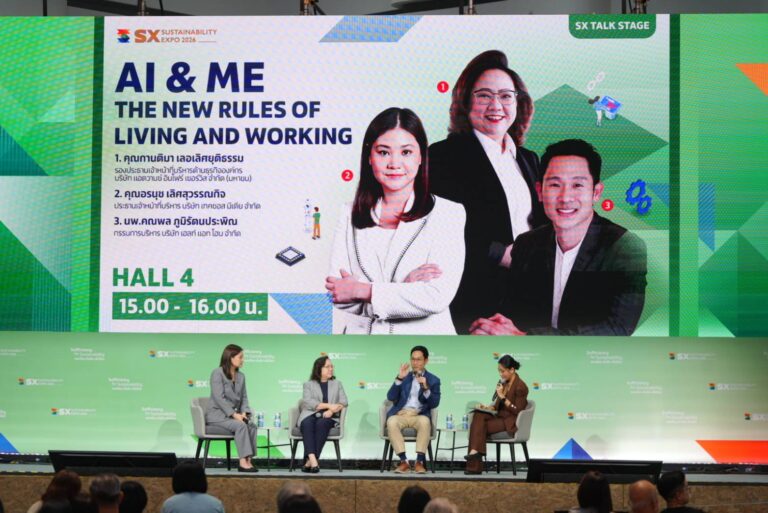
Kantima Lerlertyuttitham, deputy chief executive and chief corporate officer of Advanced Info Service Plc (AIS); Oranuch Lerdsuwankij, chief executive of Techsauce Media Co; and Dr Kanapon Phumratprapin, executive director of Health at Home Co, agreed that AI is a good assistant that lightens the load of repetitive tasks and work that involves processing large amounts of data, such as comparing figures, transcribing recordings and reading X-rays. If we learn to use AI well, we will have more time for work that adds value, or to build and strengthen relationships with the people around us.
Beware the AI trap
AI’s ability to handle huge volumes of work in a short time is a major trap that puts human development at risk. Many people assume that because AI is smart and fast, they can leave the hard work to it and take things easy. In reality, the opposite is true: we gradually lose the ability to weigh up, analyse and handle work that requires logic. As newer generations of AI become more capable, those who choose to do only easy tasks will steadily fall behind.
The key question, therefore, is not whether AI will replace people, but what kind of people will survive and what skills they will need as AI advances rapidly. Ms Oranuch believes that anyone with an open mindset who is ready to learn can develop new skills and use new tools. It is not a matter of age, she said, but of readiness to learn.
Modern organisations and managers must also be ready to have technology among their subordinates, because some types of work require people and technology to work together. In customer service, for instance, AI may answer repetitive questions, frequently asked questions and certain other queries, but sensitive matters still need to be handled by people. At the same time, organisations will need staff who understand back-office processes to help people and technology work together smoothly.
AI still cannot beat being human
The next question is whether every young person needs to learn to code, and what skills they should have. All three speakers agreed that what matters are the skills AI cannot yet perform – particularly those that depend on being human.

Ms Oranuch said analytical thinking and communication are essential. To get the most out of technology, we must know how to ask the right questions so that we can direct AI effectively. Communication is another key skill, as it ensures smooth teamwork and coordination.
Ms Kantima believes that, besides analytical thinking, people also need to be adaptable. “We must not keep doing things the same way. Just because something worked well before does not mean that doing it the same way today will still deliver the same good results,” she said.
Dr Kanapon said responsibility and humanity will become increasingly important, especially in the medical profession. AI may excel at checking lab results and reading X-rays, processing large volumes in a short time, and can take over data work. This gives doctors more time to understand and empathise with patients – to talk with them, observe their expressions and understand their background as well as their family and social needs. Doctors can then weigh all of this together with other test results analysed by AI to arrive at the best treatment option for each patient. That may not be the best approach in purely scientific terms, but it is the best for each patient’s circumstances.
Doctors also make decisions that AI cannot make as well, such as whether to put a patient on a ventilator, he said, because there are many factors a doctor can see that AI cannot, and such decisions involve responsibility for a human life.
How to survive in the AI era
As technology advances relentlessly, people must keep developing themselves too. Rather than letting fate or circumstances decide for us, we should work out for ourselves what skills to add or what to learn in order to build on our abilities – and not assume that AI can do everything for us.

The skills that allow us to keep growing are not complicated at all. They are the basics – listening, speaking, reading and writing – which we should not let AI do for us. “Listening” to the person in front of us, understanding them and being able to “speak”, or communicate effectively, builds good and smooth relationships. “Reading” gives us enough information to use and control technology and to make important decisions. Most importantly, “writing” requires our brains to analyse information, set priorities, weave a story together and see the picture clearly before putting it into words – in effect, training several skills at once.
“We need to ‘Start’ – don’t be afraid to begin, and dare to step out of our comfort zone. We need ‘sati’, or mindfulness – don’t believe everything AI tells you; rely on knowledge and analysis, and use your own judgement. And finally, we must be ‘Strong’, because in a fast-moving world where new things keep arriving, we must be ready to embrace them and adapt quickly enough,” said Ms Oranuch.
KioskNews shows a cleaned-up reading view extracted from the publisher’s page — the original always lives on their site, not ours.