‘A really scary place for children’: English hospitals have chronic lack of health play staff

Children in English hospitals with serious illnesses are being exposed to avoidable trauma because too few health play professionals are being employed, analysis by a leading charity has found.
Employed by hospitals across England, these workers help to support children through the trauma and anxiety that can come with receiving medical treatment by providing play opportunities through games, toys and activities.
However, English hospitals are facing a shortage of such staff, leaving children without the relief such organised play and games can provide for those having treatment for serious conditions.
Across NHS hospitals in England, there are only 955 full-time equivalent health play professionals currently supporting 21 million child hospital admissions each year, according to figures obtained by the charity Starlight Children’s Foundation via freedom of information requests.
This equates to a ratio of about one professional for every 22,061 admissions, far below the recommended staffing levels of one professional per 2,230 hospital admissions.
Health play professionals can also help to provide positive healthcare experiences for children, which research has shown can help to reduce distress, improve cooperation and help to prevent lifelong healthcare avoidance and mental health problems associated with traumatic childhood healthcare experiences.
At the age of three, Lyndsey Hookway’s daughter Filly was diagnosed with acute lymphoblastic leukemia. She spent 26 months in and out of hospital undergoing treatment including chemotherapy.
Now 13, Filly recalls the positive impact health play had on her when she was very young.
“I definitely did feel less anxious and less nervous, and they definitely did help me overcome stuff like losing my hair, such as playing with a lion teddy called Ollie the Brave who had removable wigs,” Filly said. “I was definitely bored and so having the play specialists really did help with that. “They really do make a big difference and it really did make a difference on the days that they weren’t there.”
She added: “They should be considered the same priority has other hospital staff because I think especially for children who they’re mostly for, the hospitals can be a really scary place. So it really does help.”
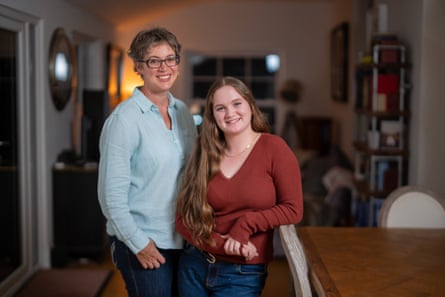
For Hookway, the play professionals also gave parents of seriously ill children relief at a time that was incredibly overwhelming for the whole family.
“Having the health play professionals was a nice break for Filly to have someone who wasn’t me, who was falling apart, to have,” Hookway said. “As Filly was bored and scared and in pain and unwell, during all of her admissions. But she’s also got a mum who’s probably traumatised and stressed and spinning plates at home as well.”
She added: “We’ve seen the difference between the hospitals that were well-resourced by play specialists and the ones that weren’t.”
Alongside the shortage of specialist staff, Starlight also found that only 23% of NHS trusts and health boards across the UK had dedicated budgets to train health play professionals, resulting in a postcode lottery with inequitable access to therapeutic play support. Furthermore, no integrated care board (ICB) has a dedicated health play budget.
Only 5% of ICBs include health play within their children and young people’s strategies.
Cathy Gilman, the chief executive of Starlight, said: “Every child deserves healthcare that is compassionate as well as clinically excellent. Yet for too many children, hospital is frightening, overwhelming and, ultimately, traumatic. We know those experiences can stay with them for life, affecting their mental health and even whether they seek healthcare as adults.
“Play changes that. It helps children understand what is happening, gives them a sense of control, builds trust with the healthcare team and reduces fear before, during and after treatment. It isn’t entertainment and it certainly isn’t a luxury. It is an essential part of safe, effective children’s healthcare.”
KioskNews shows a cleaned-up reading view extracted from the publisher’s page — the original always lives on their site, not ours.