The 6 Most Amazing Books of the 1990s, Ranked

Sign in to your Collider account
Sometimes you finish a novel and keep thinking about a conversation that lasted only a page. These 90s' books are full of moments like that. For instance, a silence someone should have noticed, a decision made to keep a friend, or a memory that changes with every retelling.
At first, those details can seem small beside everything else happening in the story. But as the characters live with the consequences, you begin to see why those moments mattered so much. The authors of these 1990s novels make that realization feel painfully human. Let’s start the countdown.
6 'The Secret History' (1992)
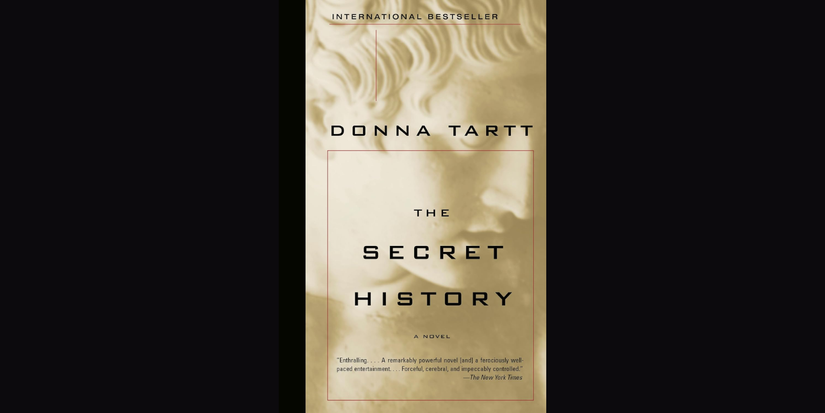
Richard Papen arrives at Hampden College desperate to escape his unremarkable life in California. He becomes fascinated by an exclusive group of classics students studying under Julian Morrow, whose intellectual confidence and privileged lifestyles seem utterly irresistible. Donna Tartt's The Secret History reveals almost immediately that these students will murder their friend Bunny Corcoran. Yet, Richard's determination to belong makes their increasingly disturbing behavior alarmingly easy to understand.
There's something especially horrifying about watching intelligent people rationalize cruelty among friends. Henry Winter's calm authority, Francis Abernathy's nervousness, and Bunny's relentless provocations make every gathering increasingly uncomfortable. Richard sees the lies for what they are, but walking away would mean losing his place among them. So he stays. He keeps finding ways to live with the lies. Tartt makes that slow surrender feel uncomfortably familiar. The murder promises suspense, but watching these friendships deteriorate under guilt and suspicion is what makes the novel unforgettable.
5 'The Wind-Up Bird Chronicle' (1994–1995)

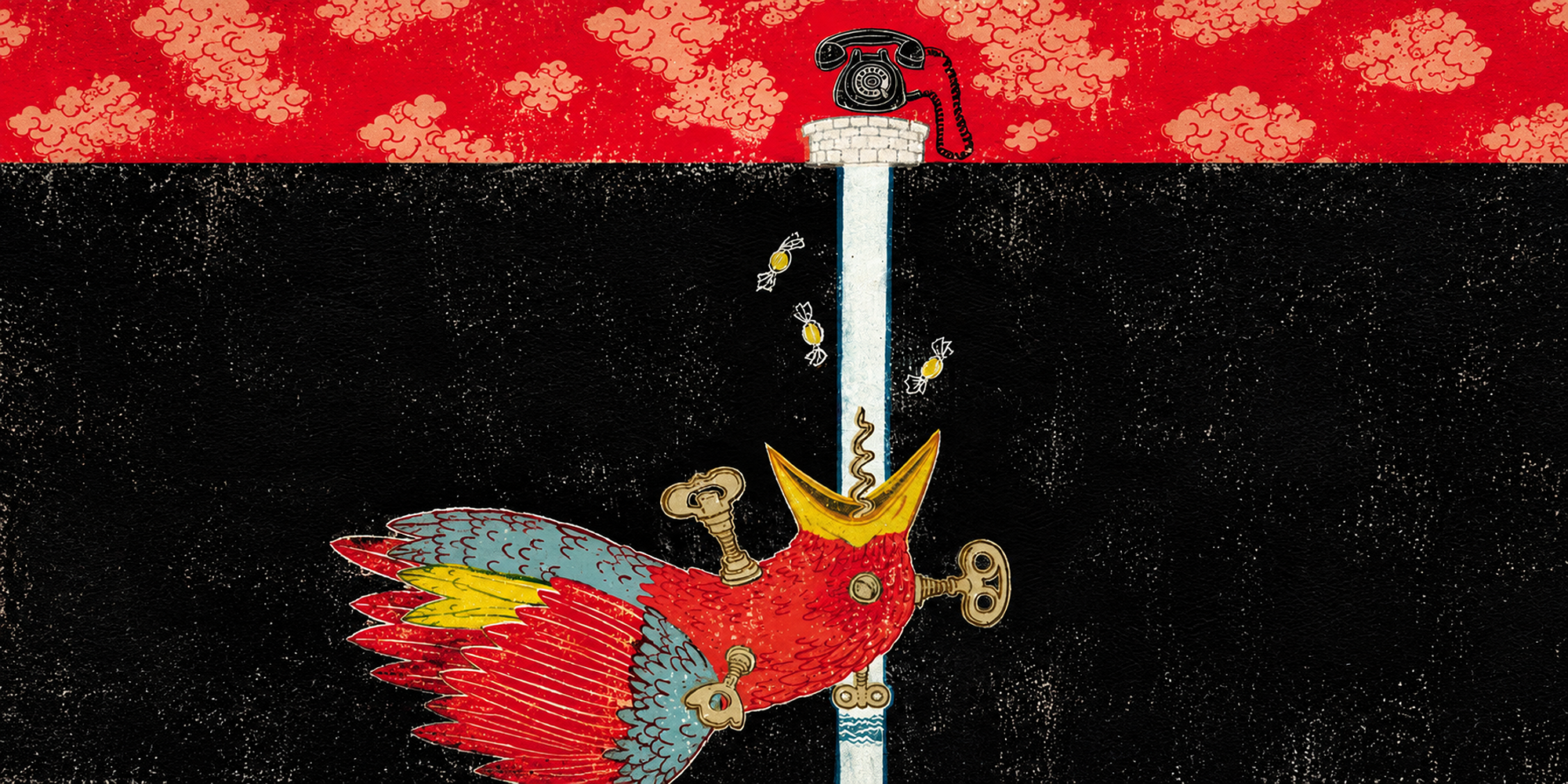
An unemployed Tokyo man searches his neighborhood for a missing cat while his wife goes to work. That's how casually The Wind-Up Bird Chronicle begins, spending considerable time describing Toru Okada's cooking, household routines, and conversations with an inquisitive teenager named May Kasahara. There's something incredibly convincing about Toru's indifference to his own future. He cooks spaghetti, wanders through quiet streets, and listens to strange telephone calls without exhibiting the urgency most people would consider appropriate. Then his wife Kumiko disappears.
The abandoned well behind a neighboring property becomes one of the novel's most unforgettable locations. Toru spends extended periods sitting in complete darkness, attempting to understand experiences that increasingly defy ordinary explanation. Meanwhile, Lieutenant Mamiya recounts horrifying wartime events in Manchuria, including witnessing a man being skinned alive. This book’s achievement is the unmistakably disturbing relationship between these experiences. A simple domestic disappearance gradually introduces questions about violence, memory, and the painful histories people prefer to leave unexamined. Nothing stays buried forever.
4 'Disgrace' (1999)

The story starts with David Lurie, an aging Cape Town professor, who loses his university position following a sexual relationship with a student whom he exploited. Refusing to offer the satisfactory public repentance demanded by his disciplinary committee, he retreats to the Eastern Cape farm of his daughter Lucy. Disgrace initially follows David's uncomfortable adjustment to rural life, where his academic credentials provide little practical advantage. Lucy works hard, manages her property independently, and has remarkably little patience for her father's assumptions about how she should live.
And then three strangers attack the farmhouse. David is locked in a bathroom. He is set on fire. He is rendered completely helpless. Meanwhile, Lucy is assaulted. The dogs are slaughtered. Their disagreement afterward is devastatingly difficult to read. David demands action and answers, while Lucy insists upon making decisions he cannot accept. This book refuses to give either character a comforting resolution. Stripped of all authority, David's eventual work helping Bev Shaw euthanize unwanted dogs culminates in a final decision so painfully ordinary that it becomes almost unbearable.
3 'The Things They Carried' (1990)
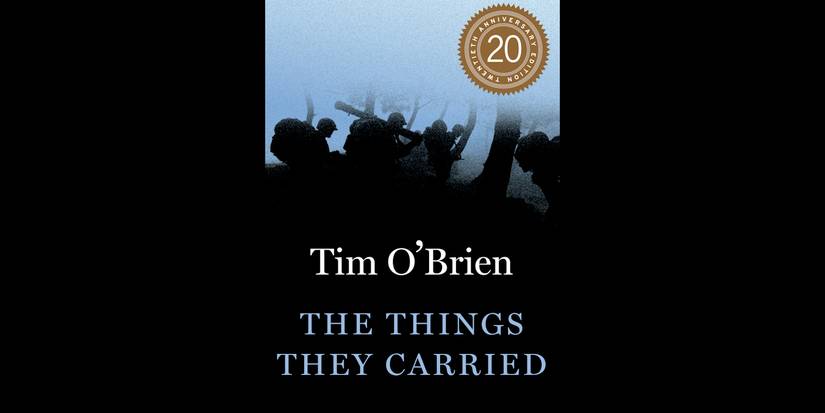
The Things They Carried follows Lieutenant Jimmy Cross, who leads young American soldiers through Vietnam while obsessing over letters from Martha, a college student who doesn't return his romantic feelings. These men are introduced through the objects they transport on exhausting marches. Kiowa carries an illustrated New Testament and his grandfather's hatchet. Ted Lavender carries tranquilizers and marijuana. Cross keeps Martha's photographs and a pebble she sent him. Even the regulation flak jackets receive an exact weight of 6.7 pounds.
Then Lavender is shot dead after relieving himself. His companions wrap his body in a poncho and carry him away, and Cross burns Martha's letters because he believes his distraction contributed to the death. That terrible attempt to regain control becomes even more upsetting when the book recounts Kiowa's death and the soldiers searching through a flooded sewage field for his body. O'Brien repeatedly questions the reliability of his own narration, forcing readers to consider how soldiers remember events they can barely tolerate discussing. Few war books capture guilt with such genuinely distressing precision.
2 'Infinite Jest' (1996)

Infinite Jest is a wildly ambitious, frequently hilarious novel that somehow makes endless tennis drills, painfully awkward recovery meetings, and hundreds of footnotes fascinating. It follows Hal Incandenza, a gifted young tennis player secretly dependent on marijuana, and Don Gately, a recovering addict working at a Boston halfway house. Their daily routines receive almost obsessive attention, from Hal's exhausting training to Gately's uncomfortable attempts to help people who can barely help themselves.
And then there's the Entertainment, a mysterious film so addictive that its viewers forget to eat, sleep, or do anything except watch. Quebec separatists want to use it as a weapon, and the resulting plot becomes wonderfully absurd. But Gately's hospitalization, where he endures terrible pain while refusing narcotics, is genuinely heartbreaking. The story twists addiction into something that is simultaneously funny, humiliating, and frightening. Few massive novels pulse with this much life.
1 'The God of Small Things' (1997)

Seven-year-old twins Rahel and Estha live with their mother Ammu and her complicated extended family in Ayemenem, Kerala, where the family operates Paradise Pickles & Preserves. The God of Small Things spends considerable time observing their childhood in 1969, from their unusual conversations to their fascination with Velutha, a gifted carpenter whose caste status determines how others are permitted to treat him. The arrival of their English cousin Sophie Mol should be an exciting family occasion. Instead, the children's lives are irrevocably changed.
Ammu's forbidden relationship with Velutha, Sophie's drowning after a boat overturns, and Baby Kochamma's deliberate false accusations produce consequences that become almost intolerable to witness. The moment Estha is manipulated into incriminating Velutha is particularly heartbreaking. The story unfolds the tragedy piece by piece, cutting between the twins' childhood and their bleak reunion decades later, when Estha has largely stopped speaking. Every return to their earlier happiness becomes more upsetting because we understand exactly what they will lose. The book observes these children with such extraordinary tenderness that the eventual cruelty inflicted upon them becomes impossible to forget.
Collider Exclusive · 8 Questions · 2 Minutes Which Iconic Fandom Should You Join? Harry Potter · Lord of the Rings · Star Wars · Star Trek
Eight honest questions about how you actually are: what you put on when you need cheering up, how deep you go into the things you love, what you argue about, what you keep on your shelf. Answer them and we will tell you where you belong. Four of the biggest fandoms on earth are taking new members, and they could not be more different from one another.
⚡Harry Potter(Wizarding World)
💍Lord of the Rings(Middle-earth)
⚔️Star Wars(A Galaxy Far Away)
🖖Star Trek(The Final Frontier)
01
What do you put on when you need cheering up? Nobody is brave about this one.
02
How deep do you go into something you love? There is no shallow end here, only different deep ends.
03
What do you and your friends actually argue about? Every fandom has one argument it has been having for years.
04
How do you feel about a room full of strangers? Every one of these comes with a very big room.
05
Where would you rather spend a week? Pick on instinct rather than on budget.
06
What do you believe about people, mostly? All four of these stories have an answer, and they disagree.
07
What is actually on your shelf? Look over at it before you answer.
08
What do you actually want from a story? Eight questions in, this is the one that picks your fandom.
Membership Confirmed Your Fandom Is…
Four of the largest communities on the planet, and four completely different reasons to belong to one. Here is yours, what it would give you, and the argument you would be having within a week.
Harry Potter
You belong to the fandom that is really about comfort. Hogwarts works on people because it is a place rather than a plot, and the pull is not the wizard war so much as the corridors, the food, the weather and the sense that somebody is expecting you.
- You are drawn to belonging, which is why this fandom sorted itself into houses within about five minutes and has never stopped.
- This is the most social of the four, and the one most likely to know which type every single person in your life would be.
- The books are built to be reread rather than analysed, and rereading is exactly what you do with things you love.
- The new HBO series is bringing the whole thing back one book at a time, which means the arguments are about to start all over again.
Lord of the Rings
You belong to the deepest fandom on this list, the one where somebody has always read further than you and is quietly delighted to say so. Middle-earth rewards patience more than any other world in popular culture.
- You like the sense that the story you are reading is only the visible part of something enormous, which is precisely how Tolkien built it.
- This fandom takes adaptation seriously to a degree that other fandoms find slightly alarming, and it has good reasons for that.
- Your favourite thing about the books is probably the bit that is not action at all, which is the walking, the songs and the long goodbyes.
- Nobody here thinks heroism belongs to the powerful, and the whole story exists to make that argument.
Star Wars
You belong to the loudest and largest tent of the four, the one where three generations are all watching the same thing and none of them agree about any of it. That disagreement is not a flaw in this fandom, it is the main activity.
- You want something you can share with absolutely everybody, from a six year old to a grandparent, and this is the only one on the list that really does that.
- Nobody argues like Star Wars fans argue, and the argument has been running since roughly 1980 with no sign of resolution.
- The pull here is sensory before it is narrative, since it is the sound design, the score and the look of a used and dented galaxy.
- You would be first in the queue, in costume, with strong opinions and a genuinely good time.
Star Trek
You belong to the thinking fandom, the one that turns up for the argument rather than the explosion. Trek has always been a series of ethical problems in space, and the people who love it love being asked what they would have done.
- You are an optimist in a way that is currently unfashionable, and this is the only major franchise still willing to say the future might be better.
- The best episodes are the ones where nobody fires anything, which is a sentence that makes perfect sense to this fandom and to nobody else.
- Starfleet Academy brought the franchise back to a classroom in 2026, which is appropriate, because Trek has always been a bit of a seminar.
- You would want the conversation afterwards more than the episode itself, and here you will always find somebody willing to have it.
KioskNews shows a cleaned-up reading view extracted from the publisher’s page — the original always lives on their site, not ours.