Why more Japanese women are choosing ‘silver divorce’ after decades of marriage

Ayumi lives alone in a spacious suburban house originally bought to raise a family, her two cats now her only full-time companions. Her two daughters have grown up and left home, and her husband of more than two decades moved out nearly a year ago as they finalise a divorce.
For the 62-year-old Kawasaki resident, who spoke on condition that her surname be withheld, this was not how she envisioned her later years.
“He worked very long hours, including on weekends, and I was always busy taking care of the house and raising the children,” Ayumi said. “I think we worked well as a team at the beginning, but somewhere along the way, we just stopped talking like we had before.”
The marriage had its fair share of ups and downs – financial stress during their daughters’ university years and the deaths of their respective parents. But the final break came when the girls left home.
“It felt like we were almost strangers with nothing in common,” she said. “Before, we had always put our children first. But suddenly they had their own lives, and we both realised there was not much holding us together any more.”
Ayumi’s experience reflects a growing trend across Japan. While total divorces nationwide have steadily declined since peaking in the early 2000s, separations among couples married for 20 years or longer – commonly called “silver divorce” – continue to rise.
Data from the Ministry of Health, Labour and Welfare released in September showed that such late-life break-ups reached a record 24.2 per cent in 2025, rising 0.4 percentage points from the previous year. The total number of divorces in 2025, however, fell to 179,073, down 6,831 from 185,904 in 2024.

Financial independence
Several changes have caused older women to re-evaluate unhappy or distant marriages later in life.
Sumie Kawakami, a lecturer at Yamanashi Gakuin University and author of a book on gender issues, said an “empty nest” frequently exposed deep emotional divides built up over decades.
“Many find that they had grown a long way apart during the years of raising their children,” Kawakami said. This has been exacerbated by more women entering employment, earning a wage that gives a degree of self-sufficiency previous generations lacked.
A key turning point was Japan’s 2007 pension system reform, which allowed divorced spouses to claim up to 50 per cent of the Employees’ Pension Insurance contributions accumulated by their partner during the marriage.
“For women earning less than 1.3 million yen [US$8,217] a year, this was significant,” Kawakami said, as it provided a financial safety net upon retirement that previously did not exist.
Married, but living apart
Japan’s demanding corporate culture also plays a key role long before divorce papers are filed.
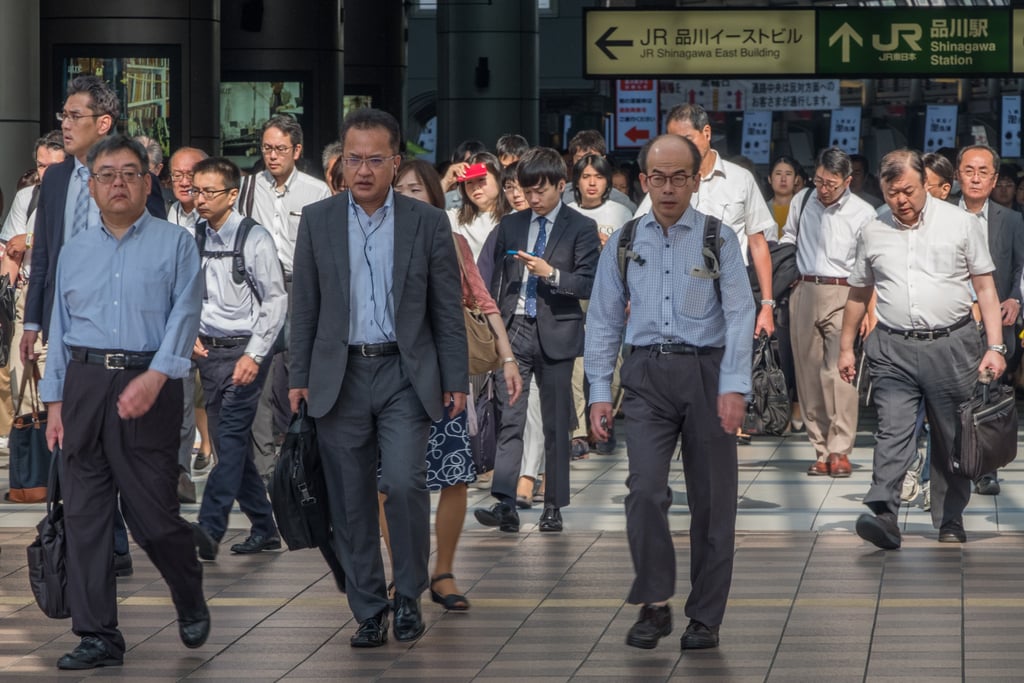
Under the common practice of tanshin funin (solo work transfers), companies can relocate married male employees to distant domestic or overseas offices for years at a time. Wives often stay behind so children do not have to change schools.
“These situations can go on for decades,” Kawakami said. “One of my friends never actually lived in the house he bought for his family; his wife and children live there and he visits when he can. So it is not at all surprising that when the husband reaches retirement age he has nothing in common any more with his wife.”
The price of silence
Beyond the legal and financial costs, late-life separation can carry a distinct psychological burden.
Bill Cleary, clinical director of the Tokyo-based TELL counselling service, frequently works with older couples struggling to readjust once children leave home.
“They have time on their hands suddenly, find themselves face-to-face and do not know what to do,” Cleary said. “Late-age divorce has become a significant problem, even when the narrative so often is that people do not want to be alone. Humans are wired for connection, and many of us do not do well in isolation, but still people are wanting to separate.”
Cleary agreed that societal stigma around both divorce and mental health support often prevented couples from seeking professional help early enough.
“If your car has a mechanical problem, you take it to a garage,” Cleary said. “The same level of support should be available to care for our hearts and our thoughts. Too many people are not seeking help before it is too late and they do not know what to do, so the only thing they can think of is to get out of the marriage.”
For Ayumi, who works three part-time jobs and has regular contact with her daughters, the decision has brought a mix of pragmatism and self-reliance.
“I do not know what the future holds, but for now, I am confident that I can stand on my own two feet.”
KioskNews shows a cleaned-up reading view extracted from the publisher’s page — the original always lives on their site, not ours.