The 10 Most Ambitious High Fantasy Books of All Time, Ranked

Diego Pineda has been a devout storyteller his whole life. He has self-published a fantasy novel and a book of short stories, and is actively working on publishing his second novel.
A lifelong fan of watching movies and talking about them endlessly, he writes reviews and analyses on his Instagram page dedicated to cinema, and occasionally on his blog. His favorite filmmakers are Andrei Tarkovsky and Charlie Chaplin. He loves modern Mexican cinema and thinks it's tragically underappreciated.
Other interests of Diego's include reading, gaming, roller coasters, writing reviews on his Letterboxd account (username: DPP_reviews), and going down rabbit holes of whatever topic he's interested in at any given point.
Sign in to your Collider account
Few genres lend themselves better to hyper-ambitious ideas than high fantasy. This is, after all, a genre which liberates the writer from any of the constraints of real-world history, science, or logic, with stories set in worlds entirely outside the reader's reality. Vast imagined cultures, complex magic systems, and mythological creatures as strange as the author can imagine are the order of the day in history's best high fantasy books.
But while creating a fictional fantasy world from scratch is an inherently ambitious task, ten particular high fantasy masterpieces from throughout history can quite reasonably be counted as the most ambitious in the subgenre's history. Whether it's a foundational classic like The Lord of the Rings or a modern gem like The Name of the Wind, these books all aim for the sky and don't miss.
10 'Tigana' (1990)

Despite being one of the greatest fantasy authors of his generation, Canadian writer Guy Gavriel Kay is somehow still awfully underappreciated by the mainstream. His work tends to take place in fictional places inspired by real places from real periods. Case in point: Tigana, set in a world resembling Renaissance Italy, follows two rival sorcerer-kings who conquer a peninsula and drive a band of rebels to fight for their homeland.
It's one of those forgotten fantasy books that have aged beautifully, highly ambitious both in terms of thematic scope and narrative scale. It tackles topics as complicated as cultural erasure and collective memory with an admirable level of depth and nuance, dissecting the complexity of nationalism while also engaging in some tremendously layered worldbuilding. What makes it even more admirable is that instead of fanning out all of that thematic density across a whole series, Kay condensed it into this single standalone volume.
9 'The Fifth Season' (2015)

Back in the 2010s, N. K. Jemisin made history by making her Broken Earth series the first book trilogy ever to have each installment win the Hugo Award for Best Novel in consecutive years. As phenomenal as its sequels are, though, the best of the bunch is the first installment: The Fifth Season, about a mother embarking on a desperate journey across a massive supercontinent to rescue her abducted daughter and avenge her murdered son.
It's one of the best fantasy books published since 2010, combined with plenty of elements of science fiction that make it one of the most iconic science fantasy novels of the last 26 years. Full of inventive ideas and boldly experimental elements (such as some chapters written in a second-person point of view), it's a structurally sprawling and brilliantly subversive piece of masterful speculative fiction.
8 'The Name of the Wind' (2007)
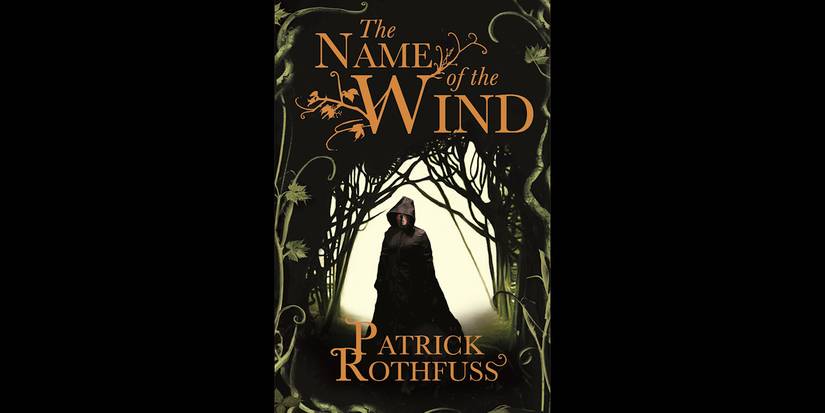
The Name of the Wind, the first chapter in Patrick Rothfuss' Kingkiller Chronicles, is about a retired wizard living as a recluse innkeeper, who recounts the tragic story of his youth as a student at a legendary school of magic. After a whopping 15 years of waiting, fans have grown doubtful that Rothfuss will ever get to finish the trilogy; but even if that prediction comes true, there will be no way of denying that Name of the Wind is one of those fantasy books that are a masterclass in prose.
It's not just Rothfuss' beautifully melodic writing that earned this modern classic praise from creatives of Lin-Manuel Miranda and Ursula K. Le Guin's stature, though. Radically and artfully subverting the traditional "Chosen One" trope of heroic high fantasy, The Name of the Wind is a grand deconstruction of the very concept of myth-making, anchored by a rigorous hard magic system and an uncompromising attention to sensorial details.
7 'Assassin's Fate' (2017)
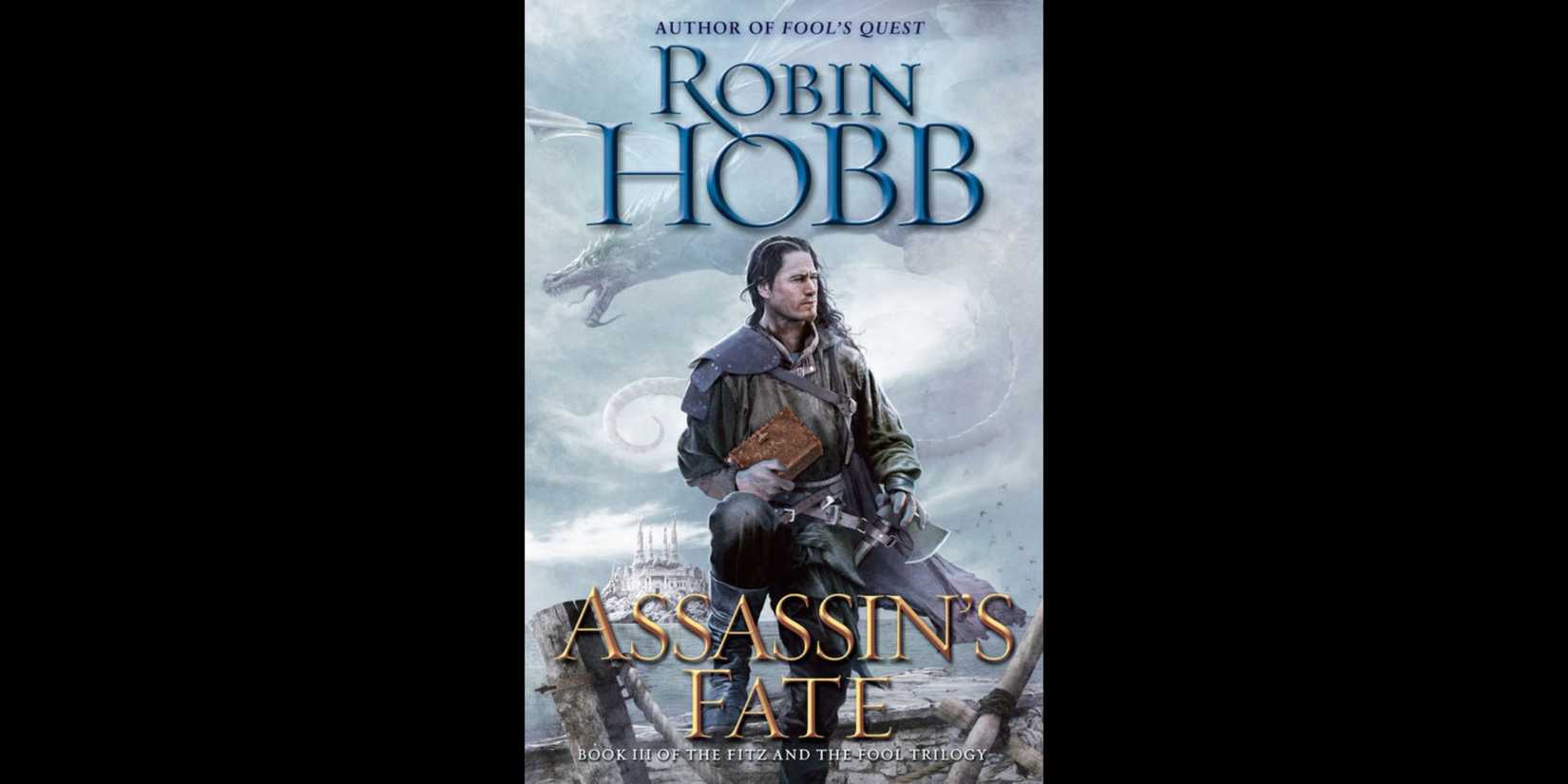
Robin Hobb is an exceptional author, but there's really not much of a question as to what her best work is: It has to be the massive 16-book Realm of the Elderlings series, which consists of several different subseries. The last of the bunch is the Fitz and the Fool trilogy, which itself concludes with Assassin's Fate, about an aging assassin who embarks on a brutal mission of vengeance, believing that his kidnapped young daughter is dead.
Concluding a series as sprawling as the Realm of the Elderlings series is always a titanic task, but to seek to conclude it with one of the best epic fantasy books of all time? That was clearly Hobb's aim with the mega-ambitious Assassin's Fate, and she definitely succeeded. Full of shocking twists, emotional payoffs, and cathartic moments decades in the making, Assassin's Fate is just as much of a must-read as all of its predecessors.
6 'The Way of Kings' (2010)
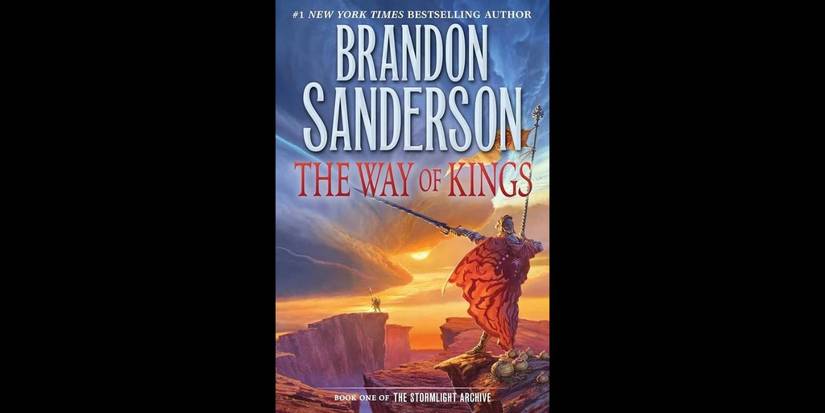
Many fantasy literature fans would likely agree that as far as current-day English-language fantasy literature goes, the world doesn't have an author more prolific, important, or widely beloved than Brandon Sanderson. Part of his overarching Cosmere universe, the Stormlight Archive series begins with The Way of Kings, about a group of characters struggling to survive a storm-lashed world and to rediscover the ancient magic needed to stop an impending apocalypse.
It's one of the best heroic fantasy books of all time, and even though there are those who would argue that the sequel, Words of Radiance, is Sanderson's magnum opus, it's hard to deny that the start of this sprawling series is its most ambitious installment. The Way of Kings has worldbuilding so complex and well-rounded that it's hard to believe it's high fantasy, balanced with a level of psychological depth not often found in heroic fantasy stories.
5 'A Storm of Swords' (2000)
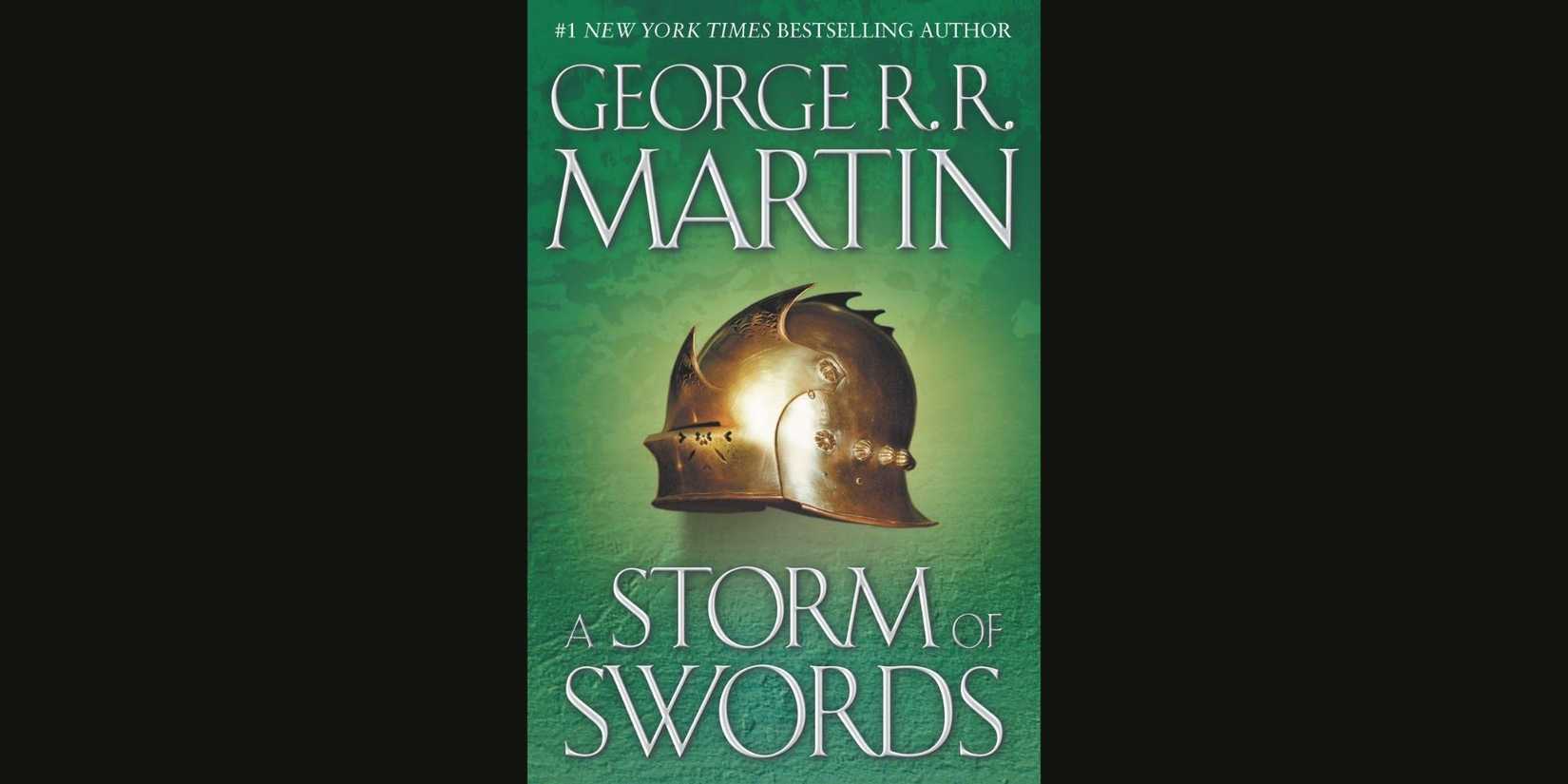
With A Game of Thrones, George R. R. Martin completely revolutionized high fantasy literature, helping distance the genre from its heavily Tolkien-inspired days. However, it's the third book in A Song of Ice and Fire, A Storm of Swords, that's arguably Martin's best work to date. In it, betrayal and shifting alliances shatter the Seven Kingdoms as the War of the Five Kings reaches its brutal climax.
The result of this premise is one of the saddest books of all time, and that dark sense of tragedy is often closely accompanied by the sheer ambition of Martin's worldbuilding, character writing, and thematic development. Relentlessly paced across a thousand riveting pages, A Storm of Swords subverts a myriad of high fantasy clichés with a density of structural turning points that makes it an absolute masterclass from cover to cover.
4 'Tehanu' (1990)

Back in 1968, Ursula K. Le Guin's A Wizard of Earthsea kicked off the Earthsea Cycle, itself one of the most stylistically and thematically ambitious fantasy book series of all time. But in spite of its short length and more subdued nature in comparison to its predecessors, Tehanu is arguably the most ambitious Earthsea novel of all, following an aging former priestess and a traumatized girl navigating a world where magic is fading.
Tehanu isn't hyper-ambitious in terms of scale, or of dramatic plot twists, or of complex magic systems. Rather, it's one of the most thematically and emotionally complex fantasy books of all time. Deconstructing the Hero's Journey and subverting the male-centered high fantasy tropes that Le Guin herself had helped revolutionize and pioneer before, the book studies ideas of trauma, systemic abuse, and feminism in the enrapturing world of Earthsea.
3 'The Lord of the Rings' (1954–1955)

Published in three volumes but technically all one massive high fantasy epic, J. R. R. Tolkien's The Lord of the Rings follows Frodo, a meek hobbit who must journey across Middle-earth with a diverse Fellowship in order to destroy an ancient ring before the Dark Lord Sauron can reclaim it and enslave the world. Many see this as the single most ambitious speculative fiction novel of the 20th century, and for good reason.
The Lord of the Rings is certainly one of the most amazing fantasy books of all time, at the very least. It laid down the blueprint for the entire modern form of the high fantasy genre, establishing the foundational archetypes that have continued to define and rule these stories for the past 71 years. The plot seems like a simple Hero's Journey story on the surface, but underneath reveals the construction of an entire mythology as complex as those created by whole cultures over the course of several decades.
COLLIDER Middle-earth
Personality Quiz
Collider/ Movies/ The Lord of the Rings/ Which Race Do You Belong To
Ten Questions · Five Peoples Which Lord of the Rings Race Do You Belong To? Hobbit · Elf · Dwarf · Man · Orc
Middle-earth is home to many peoples: the courageous, the ancient, the stubborn, the ambitious and the wretched. Ten questions will determine which race truly claims your soul. The answer may surprise you, or it may confirm what you already suspected.
The Five Peoples🌿Hobbit
🌟Elf
🪓Dwarf
⚔Man
💀Orc
The ShireMordor
Stage 1 of 10Comfort
What does your ideal day look like? How we rest reveals as much as how we fight.
Press 1 to 5 to choose
The ShireMordor
Stage 2 of 10Time
How do you feel about the passing of time? Our relationship with mortality shapes everything we value.
Press 1 to 5 to choose
The ShireMordor
Stage 3 of 10Instinct
Danger is approaching. Your first instinct is to: Fight, flight, or something in between.
Press 1 to 5 to choose
The ShireMordor
Stage 4 of 10Treasure
You stumble upon a great treasure. What do you feel? What we desire, and what we do about it, is the true test.
Press 1 to 5 to choose
The ShireMordor
Stage 5 of 10Community
How important is community and belonging to you? No race of Middle-earth is truly alone, but some prefer it that way.
Press 1 to 5 to choose
The ShireMordor
Stage 6 of 10Ambition
How ambitious are you, honestly? Ambition is neither virtue nor vice. It depends entirely on what you want.
Press 1 to 5 to choose
The ShireMordor
Stage 7 of 10Nature
Where do you feel most at home in the natural world? Middle-earth is vast, and every race has its place within it.
Press 1 to 5 to choose
The ShireMordor
Stage 8 of 10Strength
What kind of strength do you most respect? Every race defines strength differently, and they are all at least a little right.
Press 1 to 5 to choose
The ShireMordor
Stage 9 of 10Legacy
What do you want to leave behind when you are gone? Legacy is the story we tell ourselves about why any of this matters.
Press 1 to 5 to choose
The ShireMordor
Stage 10 of 10Truth
Be honest. What do you want most out of life? The truest question always comes last.
Press 1 to 5 to choose
Middle-earth Has Spoken You Belong To
A tie. You walk between two peoples.
🌿 The Hobbits The Shire-folk Heroism does not require ambition, and you are the proof.
You are, at your core, a creature of comfort, community and quiet joy, and there is nothing small about that. Hobbits are proof that heroism does not require ambition, that the bravest heart can beat inside the most unassuming chest. You value good food, warm hearths, close friends and a world that stays largely untroubled by dark lords and quests. When adventure does find you, and it will, you rise to it not because you sought it but because the people you love needed you to. That is not ordinary. That is the rarest kind of courage in all of Middle-earth.
LoyalGroundedUnassumingBraver Than You Look
🌟 The Elves The Firstborn They mistake your depth for distance.
Ancient, graceful, and carrying a weight of memory most mortals cannot fathom, you are one of the Elves. You see the world in its fullness: its beauty, its impermanence, the unbearable ache of watching everything you love eventually fade. You pursue perfection not from pride but because excellence is how you honour the time you have been given. Others may see you as remote or melancholy. They are not wrong, exactly. But they mistake depth for distance. You feel everything, which is precisely why you have learned to carry it so quietly.
AncientExactingObservantMelancholy
🪓 The Dwarves The Stone-born Anything worth doing is worth doing properly.
Stubborn, proud, fiercely loyal and possessed of a work ethic that would exhaust most other races before breakfast, you are Dwarf-kind through and through. You do not ask for approval and you do not offer it cheaply. Your loyalty, once given, is given for life. Your grudges last longer. You love deeply and defend ferociously, and the things you build, with your hands and your sweat and generations of accumulated craft, are made to last. Not for glory. Because anything worth doing is worth doing properly, and you have never once done anything by half measures.
StubbornLoyalExactingImmovable
⚔ The Race of Men The Mortal Kind You fall, and you rise, and the rising is what defines you.
Mortal, ambitious, flawed and magnificent, you belong to the most complicated race in Middle-earth, and that complexity is your greatest strength. Men are capable of cowardice and extraordinary bravery, of cruelty and breathtaking sacrifice, sometimes within the same breath. You feel the urgency of your finite years and it drives you. You want to matter. You want to leave something behind. You fall, and you rise, and the rising is what defines you. Tolkien called mortality the Gift of Men, not a curse but a fire that burns bright precisely because it does not burn forever. That fire is you.
AmbitiousMortalDrivenUnfinished
💀 The Orcs The Broken Kind You have made your peace with a world that is not kind.
Brutal, survivalist and contemptuous of anything that cannot defend itself, you answered with the instincts of an Orc, and there is a certain savage honesty in that. You do not dress up your desires in polite language or pretend you want things you do not. You want power, survival, and to never be at the bottom of any hierarchy again. Orcs are not evil by nature. They were made from something that was once good and broken into this shape by forces they did not choose. What remains is fierce, territorial, and deeply aware that the world is not kind. You have made your peace with that. The question is what you do with it.
TerritorialBluntRelentlessUnsentimental
Your Closest Matches
1
2
3
Copied to clipboard
Quest recorded by COLLIDER Collider.com · Middle-earth
2 'The Crippled God' (2011)
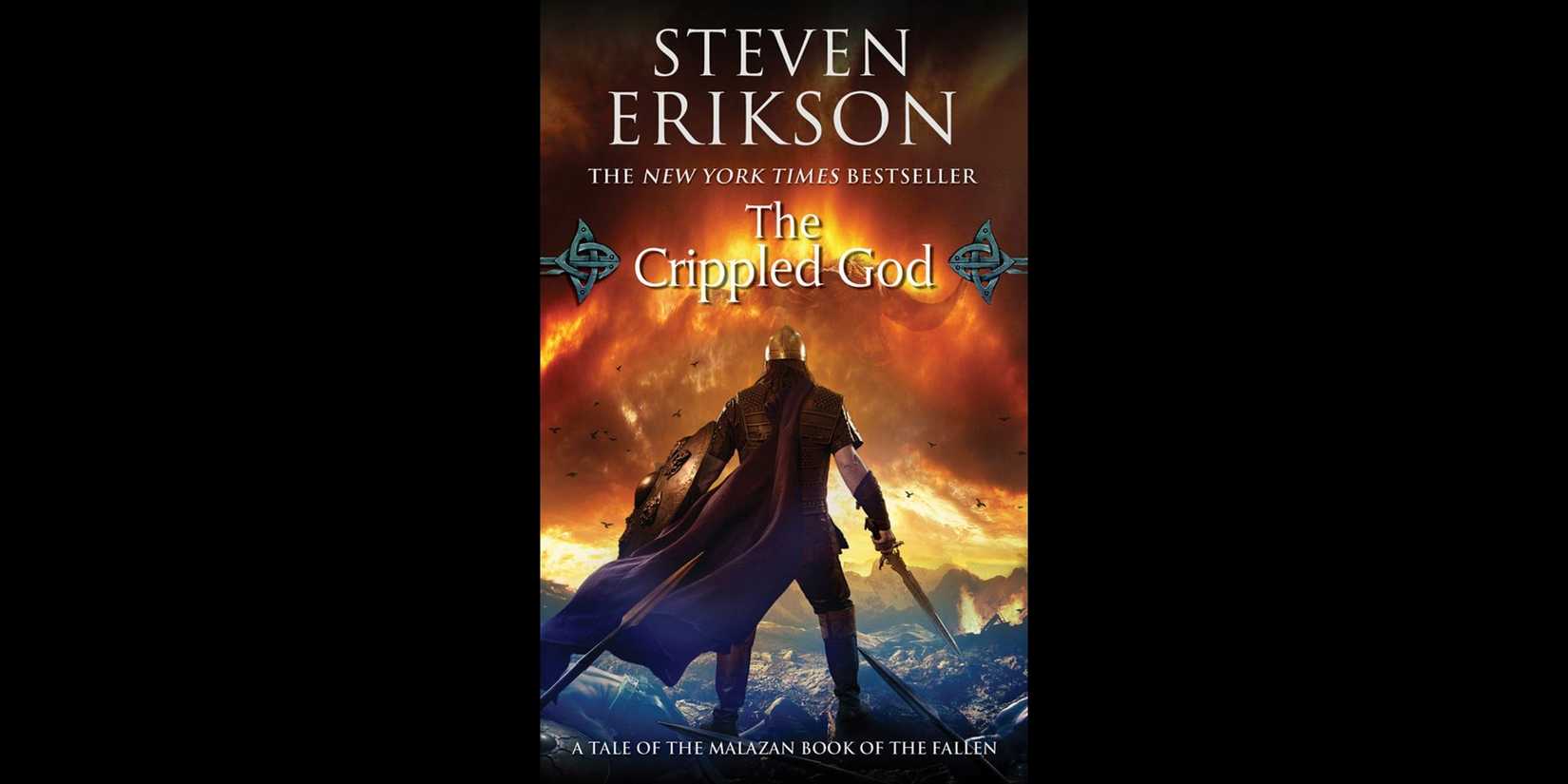
Canadian author Steven Erikson's Malazan Book of the Fallen is one of the greatest and most important fantasy book series of modern times, and it also happens to be one of those book series that peaked with their last entry. The Crippled God is set immediately after the events of its predecessor, Dust of Dreams, and follows Adjunct Tavore leading the Bonehunters further into the Letherii wastelands.
Bringing a series as massive as the 10-book, three-million-word Malazan to a satisfying close was always going to be an inherently ambitious task, but Erikson somehow found ways to make The Crippled God even more impressive than it already seemed like it would be in theory. It's an absolutely cathartic climax that perfectly blends mind-bending cosmic fantasy with a visceral sense of military realism, bringing the series' profound philosophical theses to satisfying ends.
1 'The Silmarillion' (1977)

Heavily popularized by J. R. R. Tolkien, the concept of mythopoeia means "myth-making" and refers to the creative act of generating a fictionalized mythology or legend. The Lord of the Rings came precisely as a way for Tolkien to further expand a world he had been crafting for decades, and The Silmarillion (published posthumously and edited by Christopher Tolkien and Guy Gavriel Kay) is the culmination of the Professor's entire passion project, recounting the origins of Middle-earth.
One of the best fantasy books of the 20th century, The Silmarillion is so dense and so sprawling that some may find it challenging, but the challenge is rewarded with some of the most stunningly complex and layered worldbuilding in the history of speculative fiction. There is no work of high fantasy more ambitious than this 400-page epic, which reads entirely as a fully realized and cohesive Legendarium. The fact that it was created by a single mind and not an entire ancient culture makes its mere existence incredible.
KioskNews shows a cleaned-up reading view extracted from the publisher’s page — the original always lives on their site, not ours.