World No.44 to Asia's best, how Indian boxers turned a corner
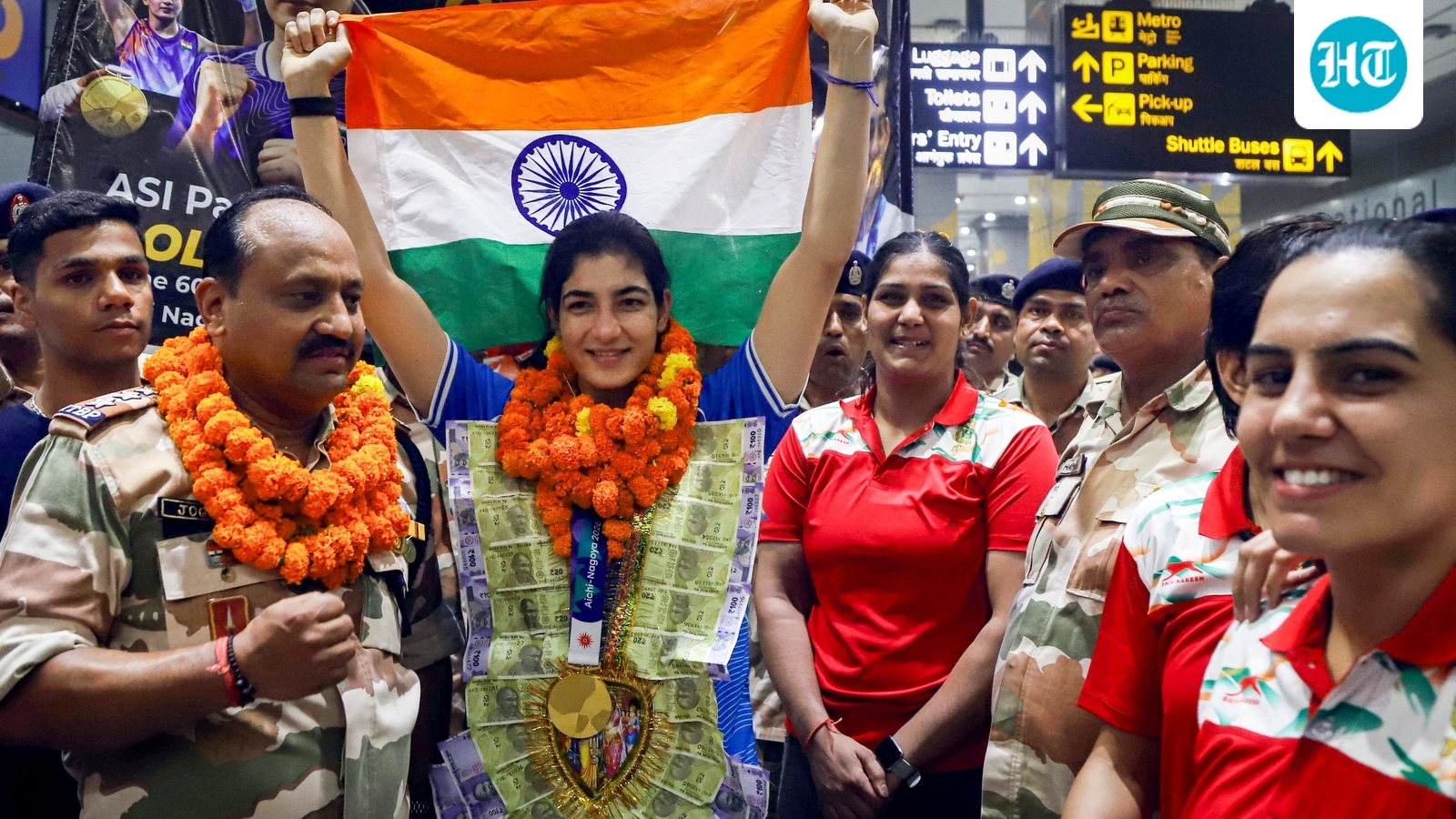
New Delhi: Indian boxers returned with six medals—three gold and three bronze—from the Asian Games in Japan, topping the medals tally in the sport for the first time. Lovlina Borgohain (75kg), Parveen Hooda (65kg) and Ankush Panghal (80kg) won gold and Kapil Pokhariya (90kg), Narender Berwal (+90kg) and Priya Ghanghas (60kg) bronze.
India won only one silver and three bronze in 2023 Hangzhou to be ninth on the boxing leaderboard. India's returns this time shouldn't come as a surprise going by the results the boxers have been producing of late.
The Indian boxers won the most medals (16) at this year's Asian Championships, to be ranked second after Kazakhstan (13 medals) on gold medal count. At the 2025 World Championships, India were third in the table with four medals (2 gold, 1 silver, 1 bronze), behind Kazakhstan (10:7-1-2) and Uzbekistan (11:6-2-3).
The Commonwealth Games in July-August was another indicator of India's growth.India had a record haul of seven gold and three silver medals to top the tally. The Glasgow success though came with an asterisk as global powerhouses such as Kazakhstan, Uzbekistan, and China are not part of the CWG. The Asian Games were viewed as a litmus test for the Indian pugilists and they delivered.
While an Asiad medal from the experienced Lovlina was not unexpected—she won silver in Hangzhou—a pleasant surprise was the heavyweight medals. "We expected these many medals but from different weight categories," joked national coach CA Kuttappa. "Ankush has been a revelation. Narender is a medallist from the last Asiad and Kapil has a lot of potential."
Ankush is a product of smart weight management. Only last year he lost the Inter-Services final in 70kg to Hitesh Gulia. He wanted to move to 75kg—a non-Olympic weight—but with a maintenance weight of 82-83kg, Kuttappa felt it made sense to step up to the Olympic division of 80kg.
"We would want his maintenance weight to be around 85kg. That will add a lot to his power. He has strong basics and a very good counter-attacking game," he said.
Technological innovation has been another key factor behind India's rise from world No.44 a decade ago to Asia’s best now. The need to upgrade sports technology was felt after the 2021 Tokyo Olympics and efforts began on that front. By 2023 end, BFI procured equipment for athletes' data collection, monitoring and analysis.
GymAware, a velocity tracker that monitors strength and physical progression, Firstbeat, a heart-rate management system, and Force Plates, used for jump assessments, worth ₹2.5 crore in all, were procured.
The boxers have been using Whoop bands to record their resting heart rate, sleep patterns and other recovery indicators, helping the support team understand how boxers were responding to training workloads and rest.
A lower resting heart rate suggests an athlete's recovery is on track and the peaking process can then be planned accordingly.
Parveen, for instance, recorded an approximately 10% drop in her resting heart rate compared to the baseline. Read alongside her sleep and other recovery parameters, this provided greater confidence that she was recovering and responding well to the training.
Separate jump assessments identified the scope to improve the speed of Parveen’s initial movement. These findings helped guide targeted work on quicker movement initiation and explosive strength.
The assessments gave coaches a clearer basis for tweaking training and recovery for Parveen. Her preparation illustrates how the boxing federation’s investment in sports science can turn performance data into practical training decisions for boxer and coach.
"Such sophisticated equipment is a bit of a novelty in our sport. Only the USA and China were using it before us, and the idea took shape after a training trip to USA in 2023," a BFI official said.
The final leg of preparation involved getting boxers from Dominican Republic and Iran to train with Indian boxers at NIS Patiala. The Dominican contingent had seven women and three male boxers while Iran sent a boxer each in +90kg, 55kg, and 60kg.
"It was a real gamechanger. There were a few Olympic medallists among them and our boxers learned a lot while sparring with them. The Dominicans are very good technical boxers, while the Iranians' style is similar to that of the Uzbeks and Kazakhs. It was a wholesome experience. In Japan, North Kore showed interest in coming to India and training with us," Kuttappa said.
"The result is for all to see," said BFI president Ajay Singh. "This success reflects a decade of sustained work. In 2016, Indian boxing was ranked world No.44. Since then, the BFI team has studied leading boxing nations, learned from their systems and worked to strengthen our athletes’ preparation and support. Finishing second at the Asian Championships, third at the World Championships and leading the medal table at CWG showed that progress. Finishing ahead of Uzbekistan and Kazakhstan at the Asiad reinforces it.”
KioskNews shows a cleaned-up reading view extracted from the publisher’s page — the original always lives on their site, not ours.