Harvesting the Sun, and powering the farm
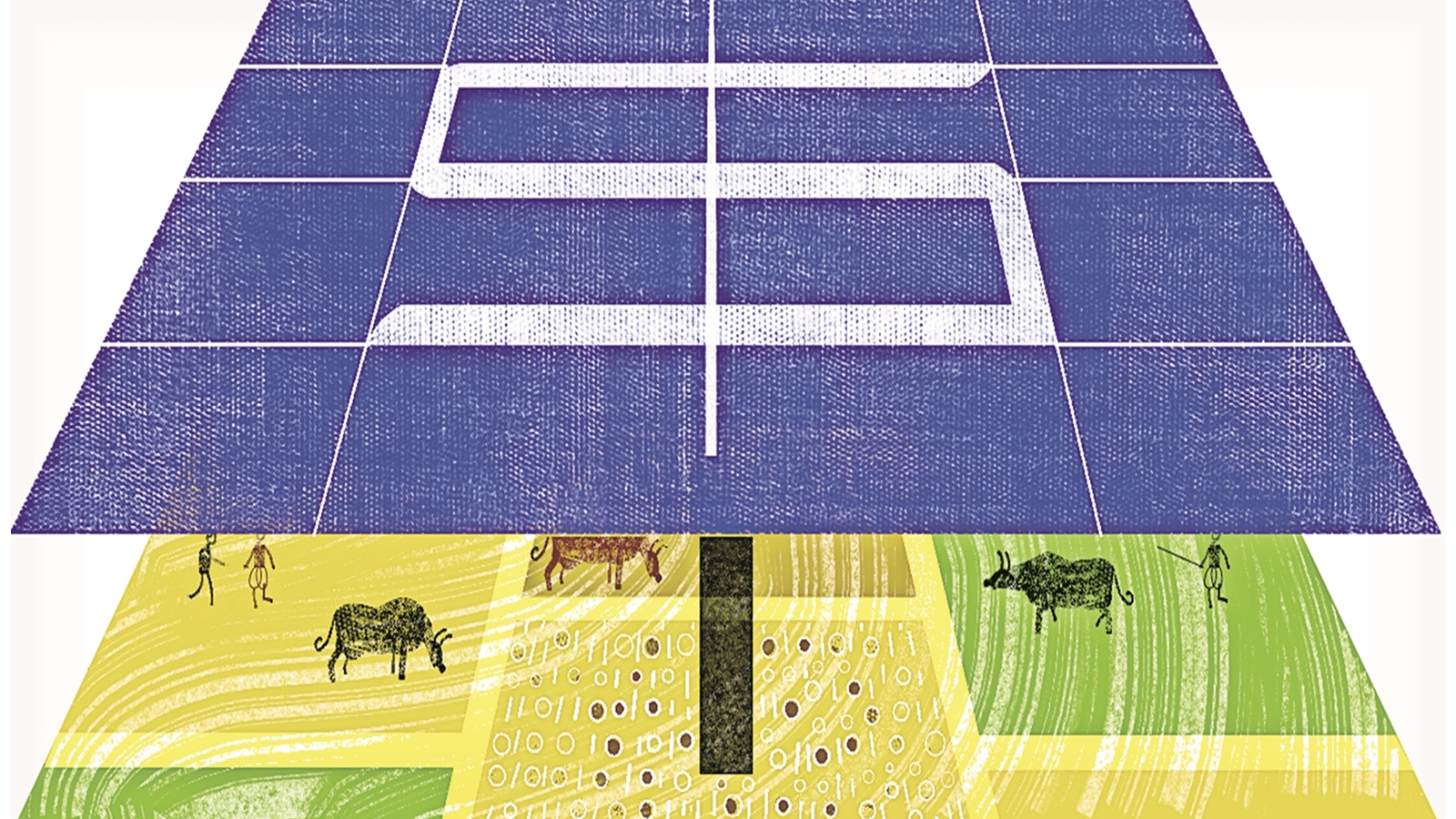
India’s journey towards Viksit Bharat must be built on the prosperity of its villages. Under Prime Minister Narendra Modi’s leadership, empowering the annadata has been a central purpose of governance. Agrivoltaics, or AgriPV, offers an opportunity to take that purpose forward by enabling farmers to produce clean electricity while continuing to cultivate their land. The successful efforts of the Government of India in the form of PM-KUSUM are already evident in the solarisation of irrigation. Further efforts are being made to accelerate the generation of solar energy through creation of separate space for AgriPV under the next phase of PM-KUSUM.
From October 21 to 23, India will host the seventh AgriVoltaics World Conference at Bharat Mandapam in New Delhi. Its theme, ‘Powering the Global South’, speaks directly to the responsibility India is ready to shoulder. We want the benefits of agricultural innovation and the energy transition to reach the small and marginal farmers who constitute about 86 per cent of India’s farmers.
Behind every harvest are months of effort, money invested and a family’s hopes. A good crop does not always bring a good income. Weather, input costs and market prices can unsettle the household budget. Public policy must help farmers strengthen their capacity to withstand these uncertainties and create additional opportunities to earn. Agrivoltaics combines cultivation and solar generation on the same land through structures and spacing suited to farming. It can give the cultivator an additional source of revenue from electricity. Where solar energy replaces diesel or purchased power, it can also reduce costs. The favourable microclimate under AgriPV provides additional protection against heat stress, drought, excessive solar radiation, and hail.
Domestic manufacturing, transparent procurement and investment in energy infrastructure have helped create the foundations for further growth. Agrivoltaics can bring more of that opportunity into the rural economy, including work in installation, maintenance and agricultural services.
Optimal crop selection is one of the prerequisites for the successful adoption of agrivoltaics. It should emphasise shade tolerance, morphological plasticity, and stable productivity under intermittent radiation. Appropriate agronomic management, including alley-based planting, adequate irrigation and nutrient supply, is essential for maintaining productivity. The agrivoltaic designs should generally aim to maintain around 70 per cent or more of natural incoming radiation at the crop canopy, while adjustable PV panels can provide additional flexibility during radiation-sensitive growth stages. Agriculture and energy departments must plan together, with state governments, research institutions and local bodies. The farmer experiences the results of all these decisions on one holding. Our institutions should be capable of working with the same sense of unity.
Farmer trust must guide every step. Cultivators should be able to understand an agreement, know the return they can expect and see who bears each responsibility. Land ownership must remain protected. Tenant cultivators and women farmers also need a voice in how projects are designed and how benefits are shared.
India has valuable experience on which to build. ICAR’s Central Arid Zone Research Institute in Jodhpur has explored cultivation alongside solar generation and rainwater harvesting. BAIF’s Rural Innovation Centre in Pune is testing different configurations across a range of crops. The Government of India has established the Centre of Excellence (CoE) on Agri-Photovoltaics with 100 kW capacity at ICAR-Indian Agricultural Research Institute, New Delhi in 2025. This is jointly led by ICAR and National Institute of Solar Energy (NISE) under the guidance of the Ministry of New and Renewable Energy. The data generated from the CoE for the next two years will help in providing technical suggestions on specific crop suitability, boundary conditions and optimal integration of agricultural fields and solar panels.
Hosting the world conference brings an international scientific community into this national endeavour. Affordable structures and finance suited to modest holdings deserve as much attention as advances in solar technology. This is also an opportunity to deepen India’s partnership with the Global South. The International Solar Alliance, launched by India and France, provides a foundation for cooperation on solar energy. Agrivoltaics creates further scope for joint field research, training and the exchange of practical experience. Countries facing pressure on land, water and rural incomes should have access to solutions developed for their conditions. India’s scientists, manufacturers and rural entrepreneurs can contribute to that effort.
As we welcome the world to New Delhi, our expectation is practical. The discussions should help produce better-tested projects, partnerships that share knowledge and business arrangements farmers can trust. Viksit Bharat will advance when the small farmer has the confidence and means to take part in new sources of prosperity. Agrivoltaics can contribute to that goal, with agriculture at its foundation and the annadata at its centre.
Joshi is Union Minister of New and Renewable Energy and Chouhan is Union Minister of Agriculture and Farmers Welfare
KioskNews shows a cleaned-up reading view extracted from the publisher’s page — the original always lives on their site, not ours.