How Belgium defeat changes Italy’s qualifying campaign for EURO 2028

LONDON, ENGLAND - JULY 11: Giorgio Chiellini, Captain of Italy lifts The Henri Delaunay Trophy with coach Roberto Mancini following his team's victory in the UEFA Euro 2020 Championship Final between Italy and England at Wembley Stadium on July 11, 2021 in London, England. (Photo by Michael Regan/UEFA via Getty Images)
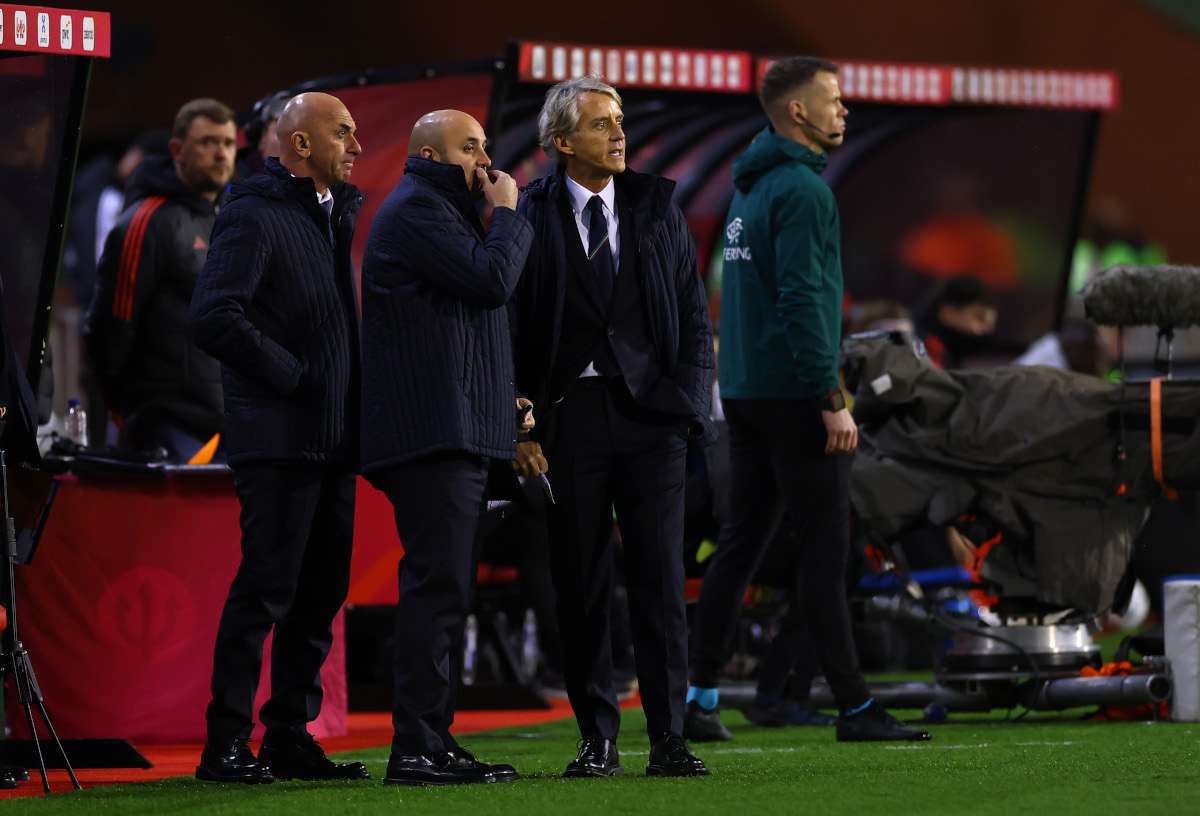
Italy were knocked out of the Nations League at the end of the group stage following a 4-1 defeat away against Belgium in Brussels on Sunday night, which means that Roberto Mancini and his players will be involved in EURO 2028 qualifiers instead of the Nations League quarter-finals during the next international break.
What next for Italy after Nations League exit?
Sunday’s defeat against Belgium was Italy’s final international fixture of the calendar year, and when they return to action in March, the focus will have already turned to qualification for the next major tournament: EURO 2028.

The 4-1 loss against Belgium saw Italy finish their Nations League group in third place, despite starting the night in first, and means that Italy will not be taking part in the Nations League quarter-finals in March. They will kick off their EURO qualifying campaign instead.
The nations involved in qualification for EURO 2028 will be divided into 12 groups of either four or five. As Italy have not qualified for the Nations League quarter-finals, they will be placed into a group of five rather than four and will begin their qualification campaign in March, rather than September.
Italy will face the other four teams in their qualifying group home and away. Nations that finish at the top of their group will qualify directly for the final tournament, as will the eight best-ranked runners up.
The four remaining runners up, along with the best-ranked non-qualified group winners from the Nations League will compete in the play-offs.
The EURO 2028 qualifying draw will take place in Belfast on Sunday, December 6 at 17.00 GMT.
KioskNews shows a cleaned-up reading view extracted from the publisher’s page — the original always lives on their site, not ours.