NSW police will be armed with military-style rifles from Sunday. How will Australians respond?
Police officers armed with military rifles are a familiar sight in some major global tourist destinations. Now, in an Australian first, they will be visible in Sydney too.
On Sunday, the New South Wales police launched a permanent special unit to patrol tourist areas, crowded public spaces, major events, sporting matches and places of worship – armed with military rifles.
The new patrol unit was promised in the wake of the Bondi terror attack and has been welcomed by sections of the Jewish community, with police saying it aims to deter threats and better position police to respond to armed offender attacks. But the decision to heavily arm the unit has been met with a mixed response from experts and civil liberties groups, with some warning against the potential for “mission creep” and the “American-style militarisation of our police force”.
‘Preserving life’
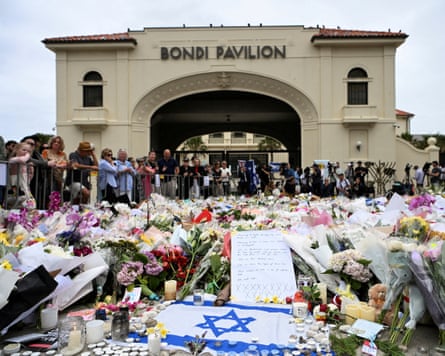
In May, the NSW police deputy commissioner David Hudson told the royal commission into antisemitism that police were outgunned at the 14 December Bondi massacre. They were armed with 9mm Glock pistols while the alleged shooters – one of whom was shot dead by police – were armed with rifles, which have a greater range.
The Jewish community had asked for a dedicated police presence at the Hanukah event in the days before the tragedy took place, due to the high threat level, but only junior roaming patrol officers were in the area when the shooting began.
In the aftermath of the tragedy, the Police Association of NSW began arguing for officers to be issued with long-armed weapons more consistently.
NSW riot police have had access to long-arm rifles since at least 2017. As of 2019 the NSW police force had issued 1,500 long-arm firearms, according to information provided to parliament.
The new unit, known as the Armed Response Command, will include 200 specialist trained officers who will drive specialist cars, carry military rifles and be “highly visible” across Sydney, police have said.
The unit’s commander, Det Supt Andrew Evans, said the unit was built on the principle of “preserving life”.
“Operational readiness is about ensuring that if the community needs us on its worst day, we can perform at our best,” he said in a media statement last week.
Julian Droogan, a counter-terrorism expert at Macquarie University, says while it makes sense to harden security around locations such as the Opera House and Bondi beach, which may be targeted in an attack, there is a risk it could just push attacks towards “softer targets”.
“You cannot police your way out of the challenge of terrorism, you have to be able to address it also at the root cause,” Droogan says.
He says it remains to be seen whether visibly arming police officers will make the community feel safer.
“We have to be careful of distinguishing between a political response, which wants to look tough on terrorism, to a response that actually does help address the problem because it is a real problem.”
The NZ example
New Zealand police carried long-arm rifles for six weeks in the immediate aftermath of the 2019 Christchurch terror attack, where a lone shooter killed 51 people across two mosques.
It was major departure for NZ police, who are usually unarmed. General duty officers do have access to a Glock and a Taser, like Australian police, but they keep both weapons and a rifle locked in their car during routine duties, according to John Battersby, a former NZ police officer turned security expert at Massey University. NZ police have an active armed offender unit, but its officers are on call and don’t patrol.
The country trialled an armed police unit in the wake of the Christchurch attack but it was soon scrapped. The then police commissioner, Andrew Coster, said the decision to remain unarmed was made after consultation with the NZ community.
“[Armed patrol teams] do not align with the style of policing that New Zealanders expect,” he said.
In Australia, where patrolling officers already carry a handgun and Taser, the community may respond differently. But Battersby warns of the potential for “mission creep” and a potential change in the attitudes of police.
after newsletter promotion
“I think we’ve got to respond to the risks that are emerging, but when we respond to those risks, we have to be conscious that we may be bringing others,” he says. “There’s some real risks sitting with a mismanagement, if that happens, in what Australia is doing.”
He adds: “I think to get this to work and to get the public to accept that, there’s going to have to be a huge amount of police discipline.”
Vincent Hurley, a former NSW police officer and now lecturer in modern policing at Macquarie University, says he believes fewer people would have lost their lives at Bondi had there been an armed response command present. But he also raises concerns about community responses to such a heavily armed unit.
“There is an option to do what New Zealand does and have them not out but strategically placed so they can be accessed if needed,” he says.
Clear regulation needed
The new patrol unit has been welcomed by the Executive Council of Australian Jewry, which says it hopes such a move will deter future threats or end attacks quickly.
“Terrorism changes the way we live and the massacre at Bondi, which saw long arms deployed against defenceless Australians, was always going to result in an increased police capability to deal with such horrors,” says Alex Ryvchin, the council’s co-chief executive.
“No Australian wants to see officers with military weapons on our streets, but the sight of body bags is far worse.”
Bart Shteinman, the executive officer of the Jewish Council of Australia, says the Jewish community is still hesitant to come together in large open spaces. He has called for a more holistic approach to tackle the root causes of antisemitism.
“Bigger guns and harsher laws will not tackle the root causes of violence and hatred, nor can they eliminate the chance of another fatal mass casualty attack,” he says.
Timothy Roberts, the president of the NSW Council for Civil Liberties, warns the state is “witnessing an American-style militarisation of our police force” that moves away from community-led policing and “increases the risk of state violence”.
He is also wary about how the new force will be deployed, and particularly if it will be used in response to protests.
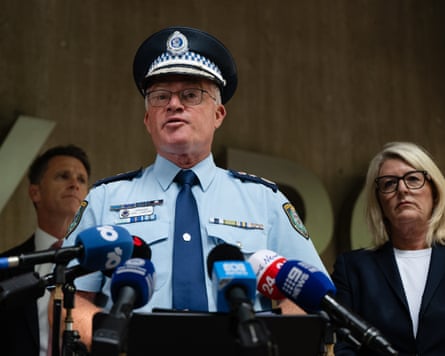
Asked about that possibility at a press conference in October, the NSW police commissioner, Mal Lanyon, said: “No, I don’t see that they will be deployed at protests. We have a public order and riot squad who are well and truly established to do that.”
But Roberts says that verbal assurance is not enough.
“We need clear regulation about when and where the Armed Response Command can operate, including making it explicit that officers carrying combat assault rifles will not be deployed at protests. This needs to happen in policy and legislation not just public comment,” he says.
KioskNews shows a cleaned-up reading view extracted from the publisher’s page — the original always lives on their site, not ours.