Abandoned and traumatised: child refugees at ‘violent’ breaking point in Egypt after fleeing Sudan war
Mounds of rubbish, the stench of raw sewage and, at night, roaming drug dealers and gangs. These are the streets of a forsaken neighbourhood in Cairo that Sudanese children call home, after fleeing the violence of their country’s civil war.
It is here that Tala*, a social worker, spends her days trying to bring deeply traumatised war refugees back from the brink. She shares the story of an eight-year-old boy who was suicidal, repeatedly telling his mother that he wanted to die so he could join his father, who was killed in Sudan before they fled to Egypt.
The boy would become hysterical over small things, she says. Trauma and fear had turned to anger, and he was constantly looking for ways to hurt himself and others. Over several months, Tala worked to build rapport with the boy, helping him return to education.
Most of the estimated 400,000 Sudanese child refugees now living in Egypt are traumatised by war, say support workers, and stuck in poverty with little hope for the future – a generation in limbo. Between 50% and 70% of them remain out of school.
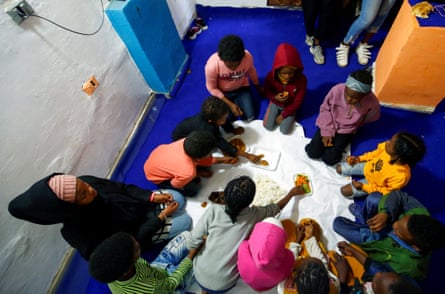
Cuts to humanitarian funding mean many are left unattended while their parents work 10-hour shifts, the pay from which barely covers the cost of basic food and rent. Living in marginalised, unsafe neighbourhoods without residency papers or the mental healthcare needed to treat profound trauma, these children are increasingly vulnerable to a spiral of hopelessness and violence.
Rajia*, a clinical psychologist who works with Sudanese refugee children, says they have been pushed to “violent” breaking point. “They are acting out the scenes they have seen in the war. If you ask them to draw something, they draw cannon or fighter jets.”
Without the structure that school provides, a kind of low-grade despair sets in, says Rajia, who says there has been a rise in cases of young teenagers self-harming and taking their own lives. A teenage boy recently told his family before he killed himself that he “wanted to see the world outside this window” and saw no escape from his life as a refugee.
One of the most common issues Tala says she faces is that many children have lost the will to learn. She says they tell her things such as: “I’m not going to benefit from this. I will never be able to continue my education.”
Recently, while working with a group of nine-year-olds, one told her: “I don’t want to read or learn. What’s the point? I’m going to die when I am returned to Sudan.”
That pain is compounded by the terror of daily deportation raids, where Egyptian police go from door to door taking refugees from homes and businesses. One mother described to the Guardian how her 14-year-old son was detained for more than two months before being deported, unaccompanied, to Sudan. She could do nothing to help him.
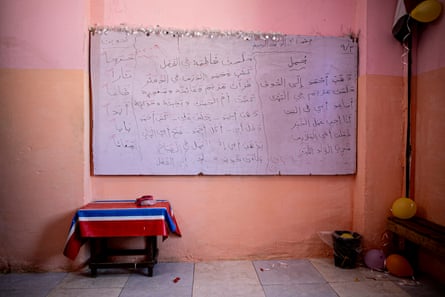
Many children are forced to work to support their families, putting their education and their physical safety at risk. Children as young as 11 are working on farms and in factories where they are subject to physical and sexual abuse.
Aid workers say children are also vulnerable to being groomed for sexual exploitation, lured with the promise of mobile phones and money.
Unsupervised while their parents work long hours, children who are not in school are exposed to gangs and taking drugs, both of which have proliferated, becoming daily features of life since the war.
Adam*, a doctor, says drugs present an appealing escape for many young people. Late into the night, he treats teenage patients affected by substance abuse who arrive with severe injuries, either self-inflicted or from fights.
after newsletter promotion
Out of more than a dozen mothers interviewed by the Guardian, all said the lack of safe accommodation was a concern. They feared leaving their children at home alone and described how gangs of Egyptian and Sudanese teenagers, often armed with knives, made it dangerous for them to leave their homes after sunset.
Miriam*, a mother of five, described how Jana*, her 14-year-old daughter, was repeatedly threatened by a gang member as she walked home from work and told that if she did not come with them, they would kill her. Eventually, says Miriam, a gang member stabbed Jana, leaving a deep wound in her thigh.
Miriam went to the UNHCR, the UN refugee agency, pleading for help to find a new home, but none came. “Everyone is telling me to leave this neighbourhood,” she says, “but I can’t afford to live anywhere else.”
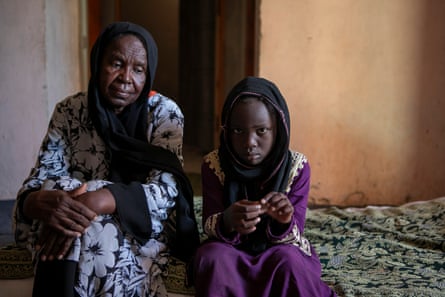
Azza*, 52, arrived in Egypt with her seven-year-old granddaughter after her daughter and son-in-law were killed in a missile attack in Sudan. They share a small bed in a flat infested with fleas, with Azza’s arms covered in coin-sized scars from old bites.
Unable to afford school, her granddaughter spends most of her days at home. “She remembers soldiers chasing us,” says Azza. “How our house was and the friends that she lost. She’s not the same as she used to be; she gets lost in her thoughts and forgets things.”
Azza recently declined a job that would have involved 10-hour shifts, six days a week, afraid to leave her granddaughter at home alone. But she knows that she will soon need to work to contribute to rent and expenses.
KioskNews shows a cleaned-up reading view extracted from the publisher’s page — the original always lives on their site, not ours.