Limit AI now or humanity will lose its agency, says Nobel laureate Maria Ressa

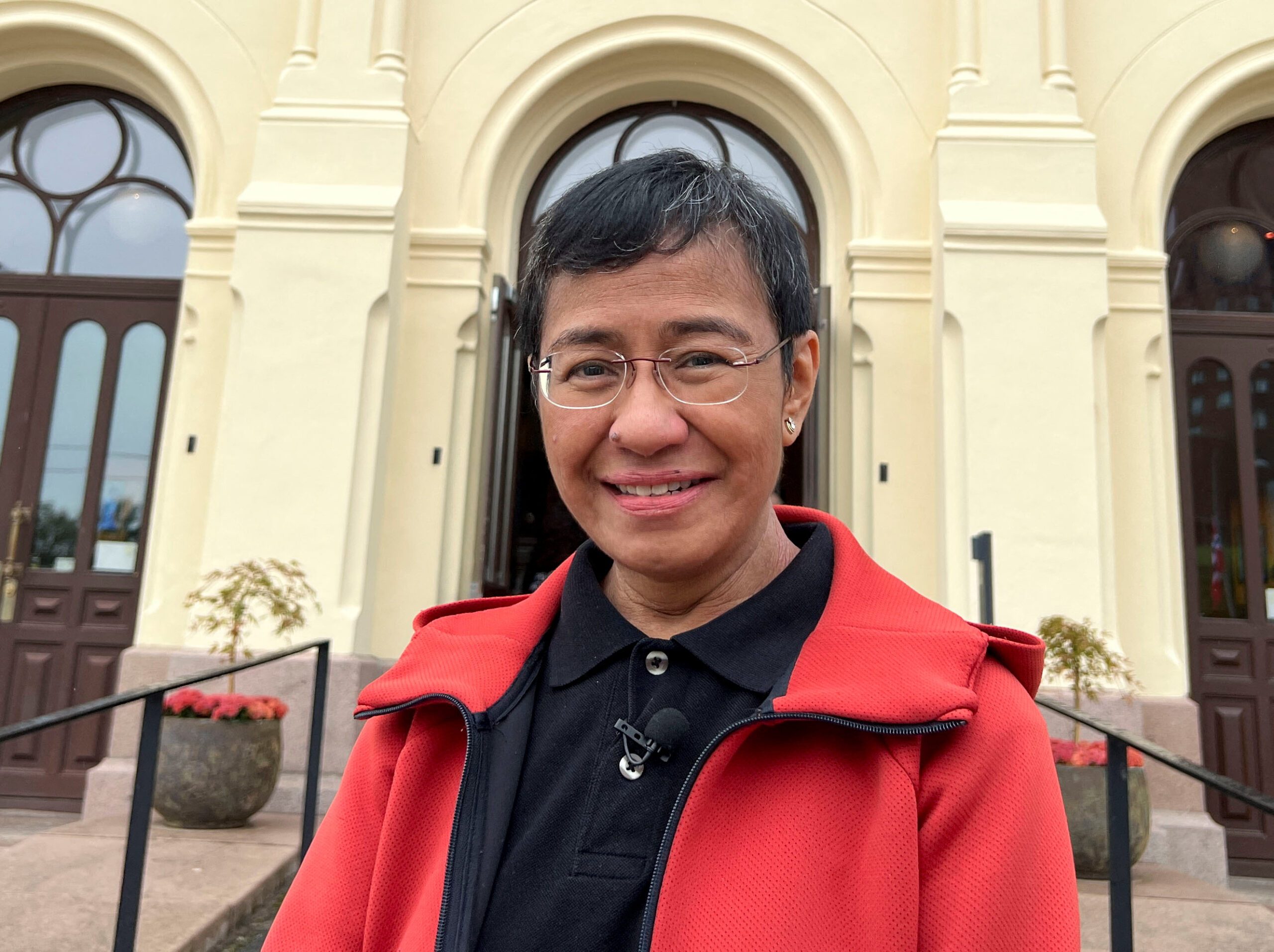
MARIA RESSA. Nobel Peace Prize laureate Maria Ressa of the Philippines poses for a picture outside the Nobel Peace Center in Oslo, Norway, September 4, 2026
Gwladys Fouche/Reuters
Nobel laureate Maria Ressa warns that unregulated AI threatens human agency, urging citizens to demand legislation for public safety and accountability from tech companies
AT A GLANCE
- Nobel laureate Maria Ressa warns that artificial intelligence is manipulating human needs and could undermine personal agency unless regulated.
- Ressa emphasizes the need for citizens to advocate for AI regulation, highlighting that it is a public safety issue rather than a freedom of speech issue.
- She calls for accountability from tech companies for the harm caused by their products and suggests creating communication platforms that prioritize public interest over corporate control.
This is AI-generated. Read the article for full context. Report any errors.
OSLO, Norway – Artificial intelligence, having hijacked humanity’s attention through social media and our biology by manipulating our need for intimacy, will take away our agency unless we legislate now to limit it, Nobel Peace Prize laureate Maria Ressa said.
The Filipino and American journalist, who jointly won the 2021 award in part for her work documenting the power of large tech companies, serves as co-chair of the United Nations’ international scientific panel on artificial intelligence, tasked with assessing how AI is transforming lives worldwide.
Ressa says citizens must campaign for regulation on AI to put pressure on politicians to introduce legislation.
“It is not a freedom of speech issue to ask for regulation. It’s a public safety issue,” said the co-founder and CEO of news outlet Rappler, a Reuters client.
“I think we’re at that phase where if this doesn’t happen, we will tip … (It) will be beyond our control if we don’t step in now,” she said in an interview during a visit to Oslo to speak at a conference on threats against democracies.
Three waves of AI
“Artificial intelligence is neither artificial nor intelligent. It’s been around for about 70 years, and there have been three waves that have already hit the public,” she said.
She described the first phase as social media platforms capturing attention, polarizing societies and isolating individuals in the process.
“The second phase was hacking our biology, again through intimacy: the chatbots,” Ressa said. “And then the last one is agency itself, through agentic and multi-agentic AI, the frontier models that are creating these machines that don’t just pretend to be human, but act for us.”
Some critics, including U.S. President Donald Trump, have rejected industry calls to regulate AI over fears of losing the AI race to China. Ressa dismissed that argument as “good spin”.
“China actually puts more safeguards in place for its citizens than Silicon Valley does for the rest of the world. If you’re on TikTok, the version of TikTok that is in China has age restrictions,” she said.
Speaking before Anthropic CEO Dario Amodei called on AI companies to slow the rate at which they advance model capabilities amid mounting fears of misuse of artificial intelligence, Ressa said the first step to bring about change is to make tech companies accountable.
“The very first one (step) is to actually make the companies responsible for the damage they’ve done,” she said, welcoming the US lawsuits that led Meta Platforms to pay up to $18 billion over the next decade and strictly limit how teenagers use Facebook and Instagram.
How do we fix it?
She welcomed moves by the European Union and countries, led by Australia, to put age limits on social media but said it does not tackle the “fundamental flaw” that the tools developed by tech companies are addictive for adults too.
“We know this is harmful, so you should remove the addictive features, not just for teenagers, but for all of us,” Ressa said. “It isn’t just the youth that’s being manipulated politically in every country around the world.”
Communication platforms built by public interest groups, away from the control of Big Tech, should be created, in the same way public works such green parks were created, something Rappler did when it launched Rappler Communities in 2023, she said.
A mobile app built on an open-source, secure and decentralised protocol called Matrix, Rappler Communities allowed the Rappler newsroom to connect with its readers, and the readers among themselves, to “have real conversations”, Ressa said.
Rappler invited other Filipino media to join and is now extending the model to other outlets in Southeast Asia.
“It’s a place where people can be safe in the digital sphere, where they can talk to each other and more importantly, listen to each other so that the great work of democracy happens,” she said. – Rappler.com
KioskNews shows a cleaned-up reading view extracted from the publisher’s page — the original always lives on their site, not ours.