The 10 Greatest Sci-Fi Books of All Time, Ranked by Goodreads

Jeremy has more than 2900 published articles on Collider to his name, and has been writing for the site since February 2022. He's an omnivore when it comes to his movie-watching diet, so will gladly watch and write about almost anything, from old Godzilla films to gangster flicks to samurai movies to classic musicals to the French New Wave to the MCU... well, maybe not the Disney+ shows.
His favorite directors include Martin Scorsese, Sergio Leone, Akira Kurosawa, Quentin Tarantino, Werner Herzog, John Woo, Bob Fosse, Fritz Lang, Guillermo del Toro, and Yoji Yamada. He's also very proud of the fact that he's seen every single Nicolas Cage movie released before 2022, even though doing so often felt like a tremendous waste of time. He's plagued by the question of whether or not The Room is genuinely terrible or some kind of accidental masterpiece, and has been for more than 12 years (and a similar number of viewings).
When he's not writing lists - and the occasional feature article - for Collider, he also likes to upload film reviews to his Letterboxd profile (username: Jeremy Urquhart) and Instagram account.
He has achieved his 2025 goal of reading all 13,467 novels written by Stephen King, and plans to spend the next year or two getting through the author's 82,756 short stories and 105,433 novellas.
Sign in to your Collider account
Goodreads is a rather clunky and hard-to-use website, so it’s a shame that it is kind of as big as book-related online databases get. There is surely a way to make a site like this better. Even IMDb is better, if you're looking at movie-related sites that let you log, rate, and review titles, though Letterboxd beats out IMDb. Not as well-known, but you’ve got Rate Your Music for albums and singles, too. Goodreads is just a headache.
Like, it’s hard to find an official top 250, or top 1000, or a top anything overall, because it’s not just decided by the number, with Listopia being something on Goodreads, and there are different Listopia lists that get voted on, and these are slightly different, because you’ve got a list of Popular Highly Rated Science Fiction and then one for Best Science Fiction. And none of the titles in either are ranked by the average rating, because a “book’s total score is based on multiple factors, including the number of people who have voted for it and how highly those voters ranked the book.” If you like a consistent or comprehensible methodology, don’t look at Goodreads for all-time best lists. But if you don’t mind, then these are the “best” sci-fi books according to Goodreads, or some of the voters, or Listopia, or whatever, based on a methodology that isn't exactly clear. This is going by the top 10 as it currently stands on the “Best Science Fiction” list.
10 'The Martian' (2011)

Andy Weir does have a certain style he’s stuck to, as a writer, so far, but it’s mostly worked. “Mostly” because the one that’s not super well-known, Artemis, is kind of divisive, but then The Martian and Project Hail Mary both entertain for similar reasons, and make for rather cinematic reads (and so it’s not surprising that both were adapted into successful movies only a few years on from each one being published).
The Martian has been voted on more often for that previously-mentioned confusing Listopia list, even though Project Hail Mary has a higher average rating, and also, Project Hail Mary has that higher rating even after receiving a higher number of votes. So, it doesn’t really make sense. It more comes down to voting on that list, which is a problem when that list is the first thing that comes up when you're trying to search for the highest-rated sci-fi books on Goodreads. It’s just not the way things are done on more comprehensible online databases.
9 'Do Androids Dream of Electric Sheep?' (1968)

Do Androids Dream of Electric Sheep? is set in a future where androids exist, and are hard to tell from human beings, but they're treated as lesser anyway, and some of those androids go rogue, which leads to a bounty hunter being tasked with tracking them down and “retiring” (or killing) them. If that sounds familiar, it was the basis for Blade Runner, just with the title changed, for better or worse.
The movie does a little of what the book does, and both ask the same interesting questions about technology and human nature, but Do Androids Dream of Electric Sheep? is also different enough in other ways that make it a worthy read, even if you’ve already seen Blade Runner (and you probably have seen Blade Runner before, what with it being such a classic film and all).
8 'Hyperion' (1989)
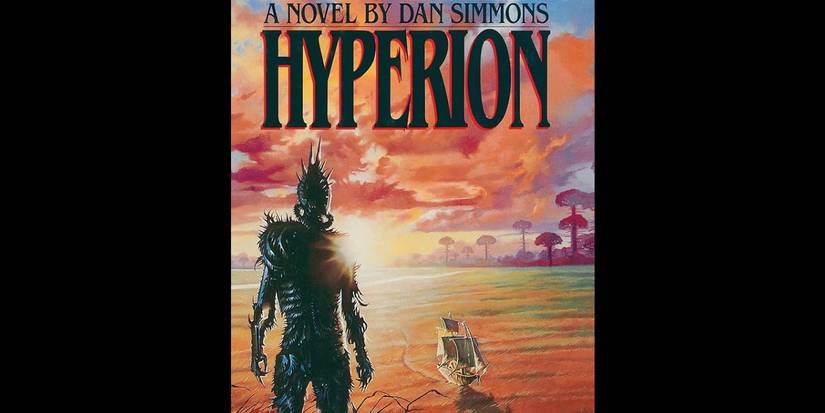
Hyperion is about a journey undertaken by an eclectic group of people, headed toward the titular planet. There is a wider conflict happening around them, and the hope that on the planet of Hyperion, something will be found that can bring peace to the galaxy, but then those people also all have their own personal reasons for undertaking the risky voyage to a mysterious place.
A lot of conflict happens in the background or out of sight, and then there really is a big focus on the journey itself, with the main characters each getting a chance to tell the others their backstories, in effect; their lives in the lead-up to becoming pilgrims, essentially. It’s well-structured and compelling, and then there are also several sequels to Hyperion that continue the overarching narrative and sense of world-building (or, technically, galaxy-building?).
7 'Brave New World' (1932)
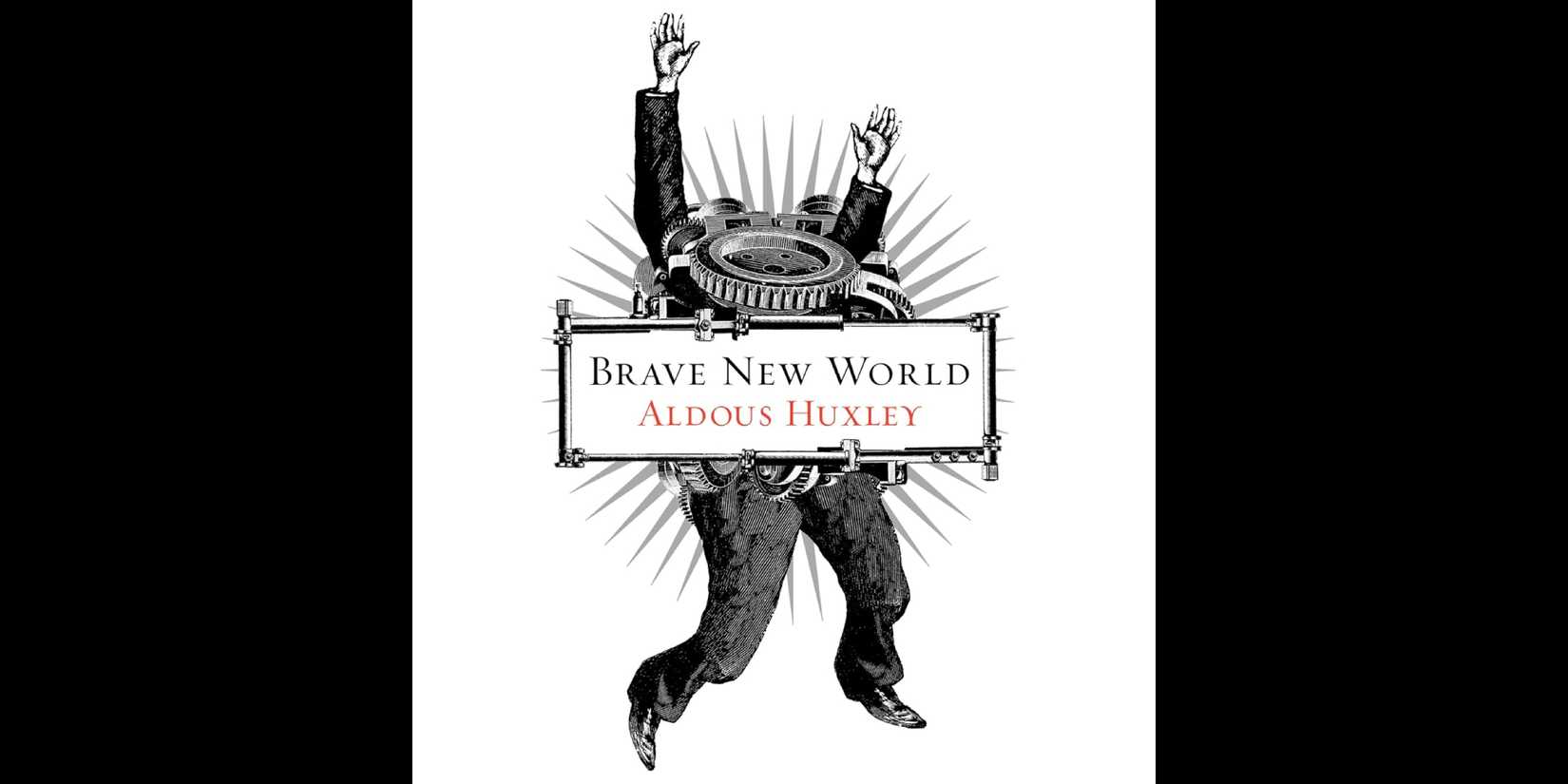
Two dystopian books rate a little higher than Brave New World according to the Goodreads list being referred to for present purposes, but importantly, Brave New World did come first. It feels especially influential on this particular kind of science fiction as a result, with the future it depicts being a strange and continually unsettling one where, quite plainly, technological advances haven’t necessarily bettered the lives of most people.
It’s really all about the concept and the intricacies of the world here more than it is about the story, because it’s kind of hard to break down and/or remember what Brave New World is about, in terms of going from one event to another throughout. That’s where perhaps some later dystopian books manage to feel a bit more impactful and emotionally compelling, but Brave New World was indeed brave and eye-opening for its time, and it’s worth engaging with for the sheer number of (oftentimes horrifying) things it gets you to think about.
6 'Foundation' (1951)

Undoubtedly, Isaac Asimov is one of the biggest names in the history of the science fiction genre, especially if you're specifically looking at hard sci-fi, with its particular focus on the science side of things and stuff. He was hugely prolific as well, but the one novel of his that’s either the most-read or most popular (or maybe both) is Foundation, which kicked off the series of the same name.
Broadly, it’s about the collapse of a galactic empire, and this first book itself has several different short stories that all add up to one grand narrative of sorts. It’s ambitious when taken on its own, and then obviously more so if you consider the entirety of the Foundation series, but in any event, it’s undeniably essential if you're after genuinely classic science fiction from one of the genre’s masters.
5 'Fahrenheit 451' (1953)

That book about burning books, Fahrenheit 451 is frustratingly listed on Goodreads as a book that was published in 1963, even though other sources all say it was published in 1953. It’s more ammunition for the argument that Goodreads is a bit of a disorganized joke, and it also makes the book feel a little less impressive, since the qualities here that feel groundbreaking are obviously more so if the book came out nearly three-quarters of a century ago, compared to 63 years ago.
Anyway, as mentioned before the tangent, it’s a book about book-burning in a future where books are outlawed, and what happens when one of the people who burns books for a living starts to question what he does. Fahrenheit 451 moves at a good pace and stands as a genuinely compelling story on top of giving you a lot to chew on thematically, so it’s great stuff all-around and all.
4 'Nineteen Eighty-Four' (1949)
Since Goodreads has its lists be popularity contests, it’s inevitable that extremely well-known books like Nineteen Eighty-Four get recognized, but this one does deserve the praise. Maybe being slightly ahead of Fahrenheit 451 in that top 10 is odd, but they are neck-and-neck, as far as dystopian books go. Fahrenheit 451 might have the more interesting story, but Nineteen Eighty-Four has ultimately had the bigger cultural impact.
Anyway, words feel unnecessary here, when talking about the words found in this book. George Orwell wrote something influential and continually discussed, and then there’s also the ongoing relevance of Nineteen Eighty-Four, and the way that parts of it can be interpreted or analyzed in different ways, enough so that it’ll probably never stop being discussed and debated over. And that’s a good thing, mostly, but what would be a better thing is if Nineteen Eighty-Four stopped feeling prescient and/or relevant, because that really speaks to the state of the world since 1949 and all.
3 'Dune' (1965)

It’s always worth mentioning Dune as a contender for the best sci-fi book of all time, and so it’s good (not to mention expected) to see it revered on Goodreads as well as, you know, just about everywhere else. It’s also quintessential in the sense that it’s very heavy on sci-fi stuff and hard to describe using other genre descriptors as a result, unless you also want to call it an “epic” as a genre descriptor, which is fair enough.
The narrative here does feel appropriately grand for something that takes place on – and involves – a whole planet, doing a great job with world-building while having various characters belonging to different (and interesting) factions that get wrapped up in one overall conflict. The sequels written by Frank Herbert are also interesting for sure, but the original here does stand as well and truly the best of the bunch.
2 'The Hitchhiker's Guide to the Galaxy' (1979)
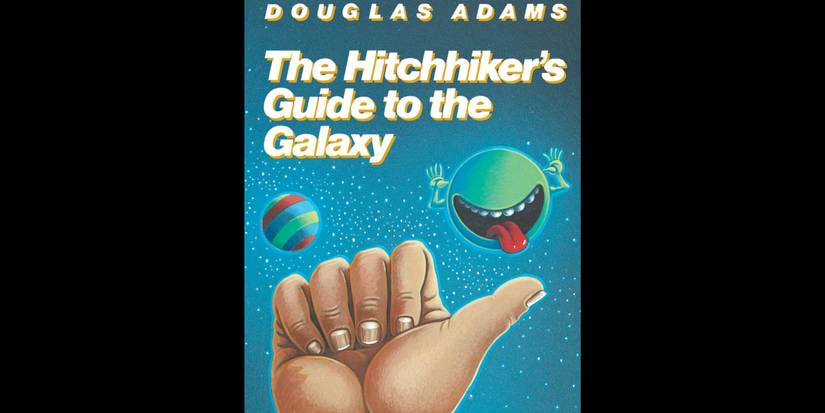
This one stands out from a lot of other great science fiction, since The Hitchhiker’s Guide to the Galaxy is a lot more focused on comedy than most science fiction, to the point where it’s a solid candidate for the crown of funniest book ever written. The world ends at the start of the book, sure, but there’s never really a point when the jokes slow down, and the hit rate of those jokes (everything hitting, and pretty much nothing missing) is immense.
The Hitchhiker’s Guide to the Galaxy does have sci-fi concepts and a good deal of adventuring, but if you're not usually into that stuff, then you'll still have a blast with this thanks to the humor.
If you want to look at the popularity of this one, beyond its sheer quality, then there’s the fact that it’s probably one of the most approachable of all the classic works of science fiction. The Hitchhiker’s Guide to the Galaxy does have sci-fi concepts and a good deal of adventuring, but if you're not usually into that stuff, then you'll still have a blast with this thanks to the humor, and so it’s well and truly one of the most difficult-to-dislike books of potentially all time.
1 'Ender's Game' (1985)

This is honestly surprising, and it would be nice to understand the methodology and try to break down why Ender’s Game ended up at #1, but yeah, surprise: Ender’s Game is #1. It’s currently the highest-rated or most popular or whatever you want to say sci-fi book on Goodreads, so that’s something. Guess it’s part of a series and it was revered for its time, even if it doesn’t hold up fantastically nowadays.
It’s a flawed book, to say the least. If it’s a product of its time, then sure, but also, so many other great sci-fi books don’t feel like products of their time to this extent, and plenty came out further back in time than Ender’s Game. So, it’s a bit disappointing to find this at the top of that Goodreads ranking, and the bottom of this page. Oh well. So it goes.
KioskNews shows a cleaned-up reading view extracted from the publisher’s page — the original always lives on their site, not ours.