The Great Desperation: 104 Indians deported in February 2025: A year later

The narrow, brick-lined lane in Bagrian village, in Punjab’s Kapurthala district, was quiet and dark when Maninder Singh returned in the early hours of a cold February day in 2025. As villagers gathered around the Punjab Police vehicle that stopped near the gurdwara, Maninder Singh shuffled out with two others, looking dazed and spent.
He had just returned after a gruelling 40-hour flight, one of 104 Indians who had been handcuffed and shackled at the ankles aboard a US military aircraft that landed in Amritsar on February 5, 2025.
There were no smiles, no conversation, only grim faces. “Dukh di ghari si (it was an hour of grief),” recalls sarpanch Charanjit Singh.
 ⠀
Minutes later, Maninder, 41, was with his stunned family: his parents, an ailing grandmother, his wife and two little daughters, who were asleep. That was the first time the family had seen or heard from him since he left for the US in January 2025.
As news of the deportation flight, the first of its kind, and the ordeal of those on board dominated the news cycle, Punjab watched in anguish and anger. Among those sent back were people who had sold land, pledged homes, borrowed from relatives and moneylenders, and paid agents lakhs of rupees to reach the US. Some had been deported within days; others spent months in detention before being put on flights to India. The Ministry of External Affairs puts the number of Indians deported from the US between January 2025 and July 2026 at 4,800.
Many wondered if the deportation would finally end, or at least slow down, the great migration out of Punjab into foreign lands.
In Bagrian village, the answer came nine months later. Of those deported from the US in February 2025, three were from Bagrian. In the months that followed, all three of them packed their bags again. This time, for Spain.
Story continues below this ad
The deportations had not ended the migration story, merely altered its direction.
 A row of affluent houses in a village in Kapurthala
The representative of a travel agency, who spoke on condition of anonymity, says that while deportation from the US does not bar an applicant from seeking and getting a Schengen visa to enter Europe, it could considerably lower the candidate’s chances.
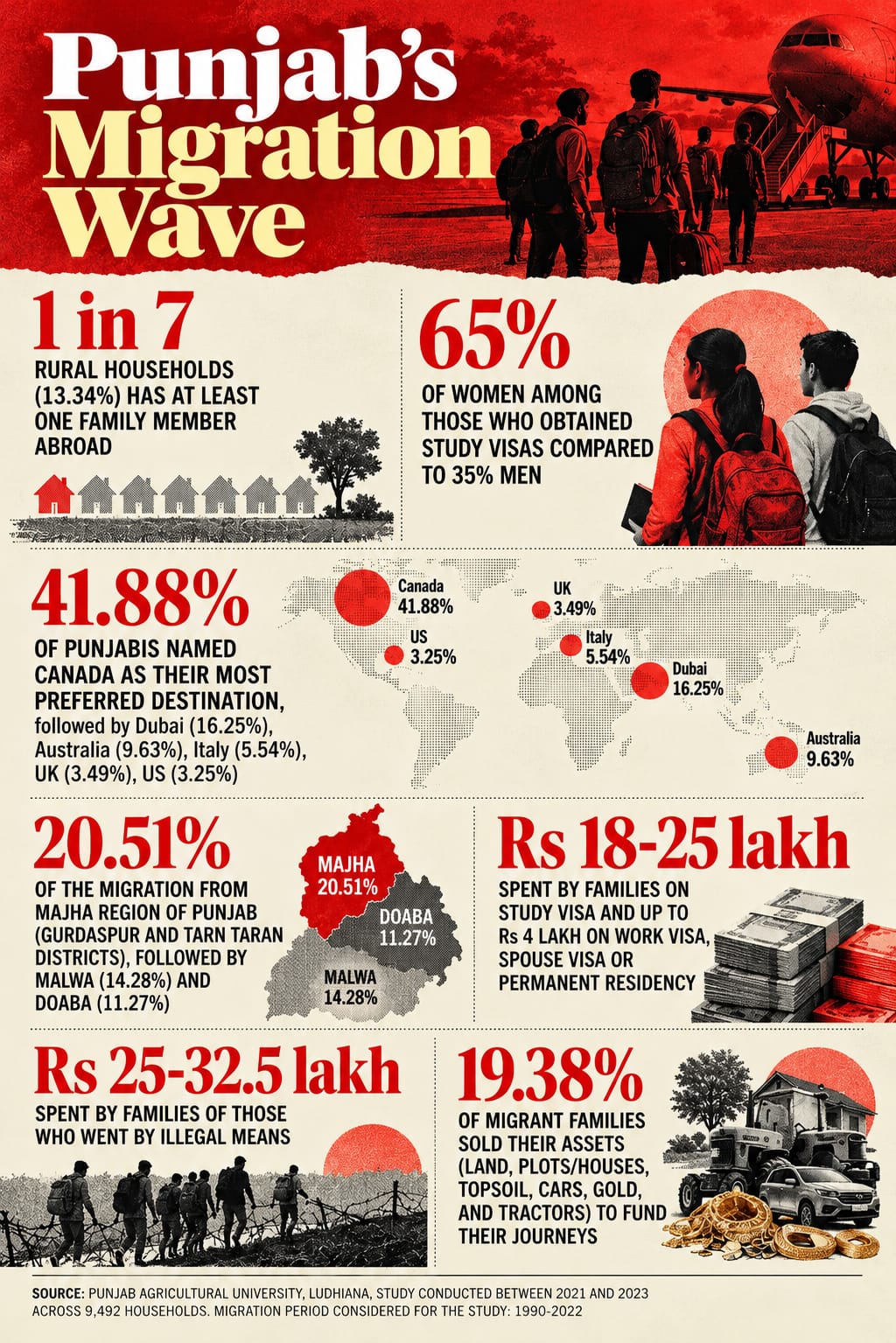
Thus, many of those who left for Europe may have had to take the illegal route, said another travel agent. “Spain has become a preferred destination because it is easy to arrange a tourist visa there for around Rs 8-10 lakh. This is much cheaper than going to the US or Canada. Later, it is easy to extend the visa and even get a work permit. Besides, the borders are very fluid and the boys from Punjab often move to Portugal or even Italy.”
‘He went for our daughters’
Two roads, narrow and dusty, cut through Bagrian, a village of around 1,600 residents. But it’s the houses — most with glass-and-wood facades and ornate gates — lining these roads that speak of Bagrian’s aspirations and its remittance architecture.
Story continues below this ad
Almost every household has one or two members living abroad.
Until two years ago, Maninder Singh, 42, who belongs to the Dalit Mazhabi community, worked as a doctor’s assistant at a clinic near Bagrian. Things were going fine, but he didn’t want his children to be left behind. So he decided to try his luck in the United States.
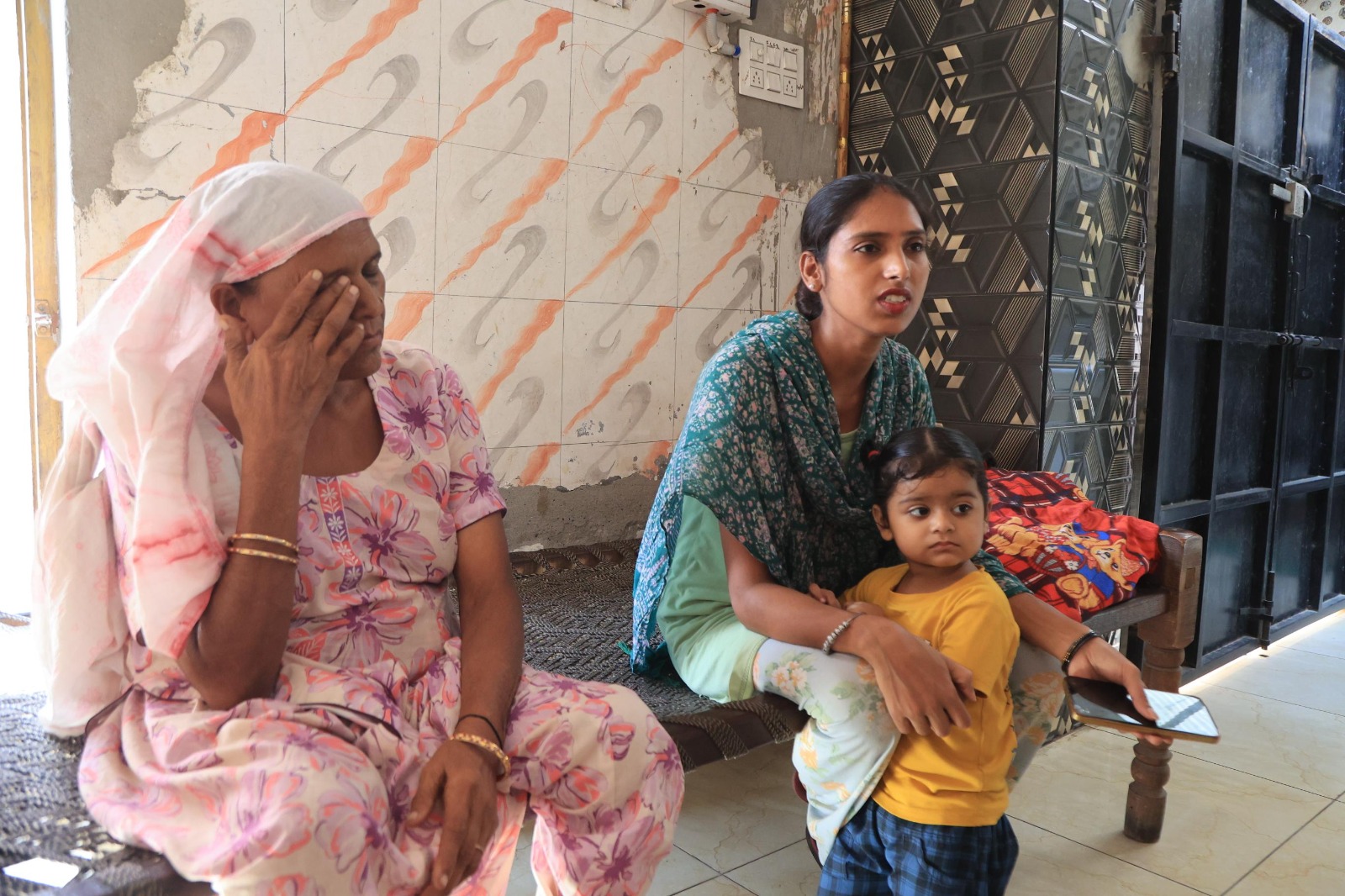 Amandeep Kaur, wife of Maninder Singh, with her mother-in-law Manjit Kaur in their house in Bagrian village.
“For our daughters,” says Maninder’s wife, Amandeep Kaur, 32, taking a break from washing a pile of clothes to sit down on a cot. “He wanted them to grow up in a better house, have the comforts the Jat Sikh families in the village have. He said he would take us there some day and we would all have a better life.”
The couple’s four-year-old daughter, Rajdeep, attends the government school in Bagrian, while their two-year-old, Gursimrat, goes to the local anganwadi centre.
Story continues below this ad
In 2025, Maninder took a loan of Rs 30 lakh to arrange for the journey to the US.
But his American dream ended before it could start. He was illegally crossing into the US from Mexico, when he was held by US Border Patrol agents. A month after leaving home in January 2025, he was back in Bagrian.
With the loan hanging on the family like deadweight, in November 2025, nine months after he returned from the US, Maninder set off again, this time to Spain on a “temporary visa that can be extended”. He is now employed as a farmhand near Barcelona.
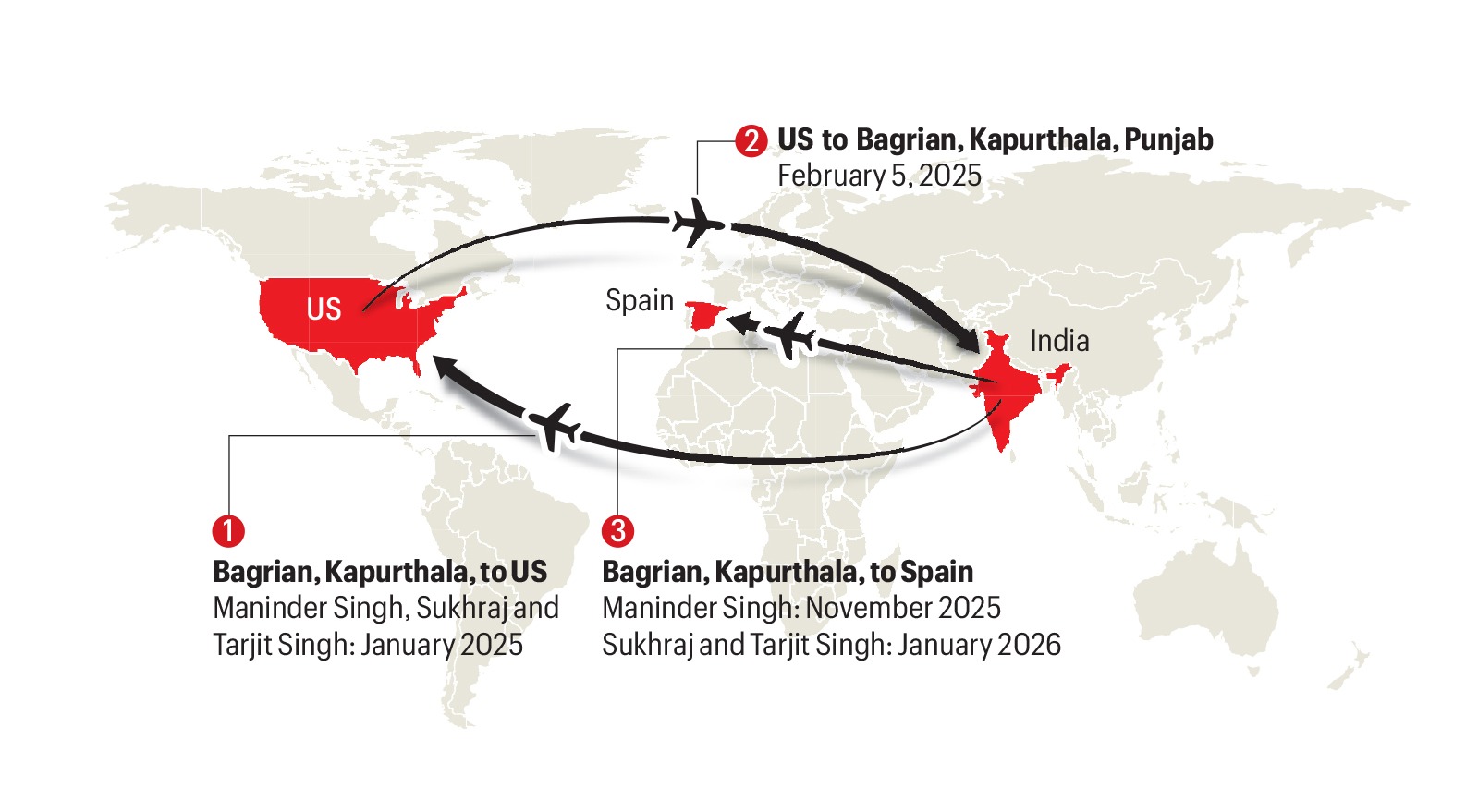 ⠀
“He calls regularly from Spain and says he will soon start sending money,” says Amandeep.
Story continues below this ad
But this time, the stakes are higher. Her husband mortgaged their house for “several lakhs” to finance the journey to Spain.
For now, the family is surviving on the old-age pension that Maninder’s parents get, free rations, and the monthly Rs 3,000 that Amandeep and her mother-in-law have been getting since July as part of the state government’s Mukh Mantri Mawan Dheeyan Satkar scheme for women.
Amandeep is a graduate of Lovely Professional University, but with Maninder away, the responsibility of running the house falls on her, and she can’t afford to consider a career of her own.
“I have severe backaches. My husband can barely see. How can she work?” says her mother-in-law Manjit Kaur.
Story continues below this ad
The family that keeps trying
Metres away from Maninder’s house is the part of Bagrian village that’s inhabited by Jat Sikhs. The houses here are larger and more elaborately designed, with wood panels and glass panes. Jasbir Singh’s house, with brown floor tiles, is among the few that are still modest.
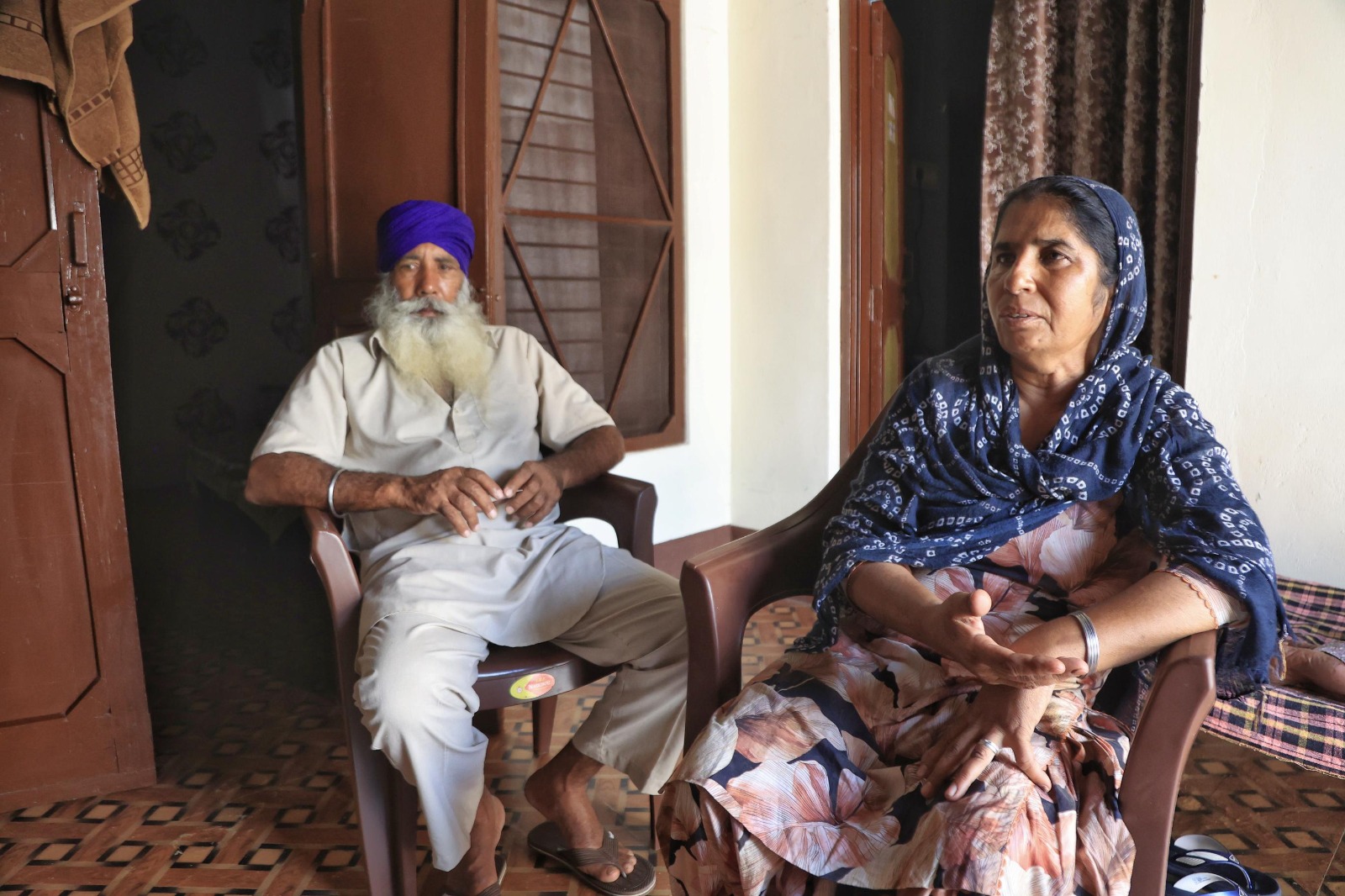 Jasbir Singh and Baljit Kaur at their home in Bagrian, Kapurthala. Their son Sukhraj is now in Spain.
Sitting in the living room that doubles as their bedroom, Jasbir Singh and his wife Baljit Kaur talk of how their world collapsed when their younger son, Sukhraj, was deported from the US in February 2025. He was caught while attempting to scale the wall from Mexico and kept in detention for 20 days before being deported.
Sukhraj was among the first to tell the Indian media that the deportees had been brought back in shackles.
But the experience did little to deter him from trying his luck again. He is now in Spain on a “temporary visa”. The family claims the agent sent him by air and he landed in Madrid.
Story continues below this ad
Ask them how much they paid the agent and they claim only Sukhraj would know. “The agent treats him like a son,” says Baljit.
Sukhraj’s deportation from the US was not the first time the family’s immigration dreams had ended in disappointment.
In 2000, Jasbir had spent Rs 4 lakh to move to Greece where he spent four years working as a farmhand before returning home, depressed and barely speaking.
“It was not a good experience. The farmer made him work like a slave but paid him a pittance. He went into depression and still takes medication,” says Jasbir’s wife Baljit.
Then, in 2012, their elder son, Gurpreet Singh, left for Germany when he was barely 18. The family had paid an agent Rs 9 lakh to arrange his journey.
Story continues below this ad
Gurpreet spent nine years in Germany, working at a local restaurant. He repaid the loan and even applied for permanent residence. But one morning, the German police knocked on his door.
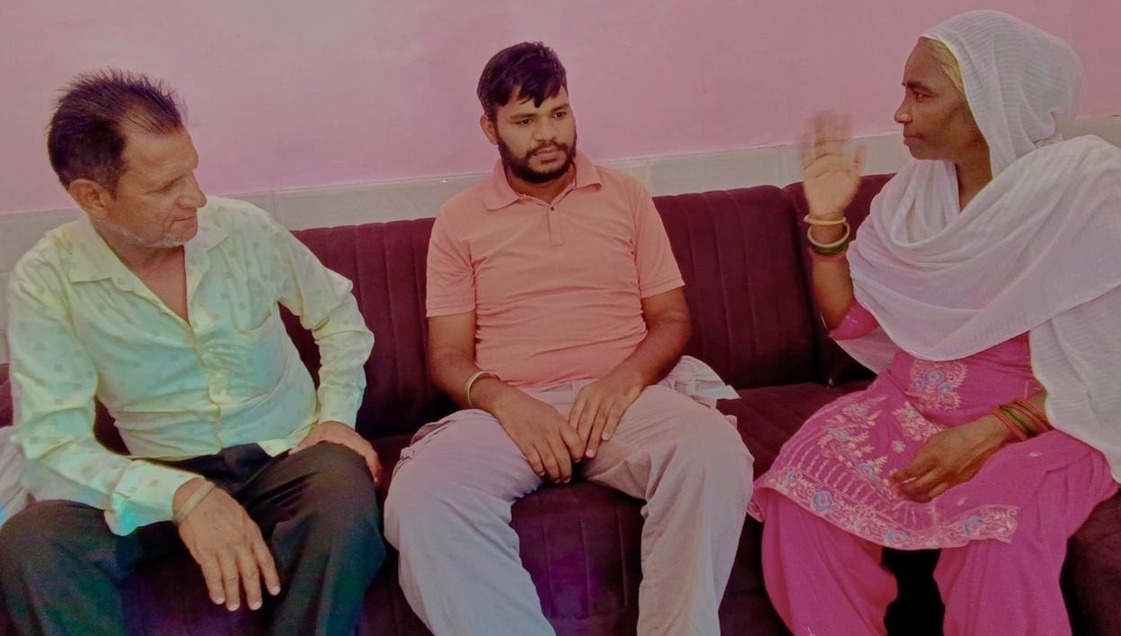 Naresh Singh with his parents at their house in Ladhu Ka village in Fazilka district
“It was 4 am. They asked him to get his rucksack and escorted him to the airport. He still doesn’t know why he was sent back,” Baljit Kaur says.
Gurpreet now tends to two cows and sells milk in Bagrian, barely making ends meet.
Baljit is hopeful, now that Sukhraj is in Spain. “He recently found work at a restaurant… It’s easy to extend visas in Spain,” she says.
Does the possibility of another return haunt the family?
Jasbir shrugs. “What choice do we have? We have no land left. We sold off the little land we had to fund these journeys.
Farming land on lease is risky. You have to pay the lease even if you reap a poor harvest. Private jobs here pay little, and employers can dismiss you at their whim. Te phir, nasheyaan ne kam kharaab kita hai — and then, drugs have spoiled things. Abroad, you are certain to get your wages, even if the work is hard. You get a salary cheque, no matter what.”
 ⠀
‘What can he do here?’
At the end of the lane is the house of Tarjit Singh, 32, another youth who was deported in February 2025. With shiny marble floors, trendy wooden ceilings and an SUV in the driveway, the three-storey house speaks of quiet luxury.
With the state government promising to rehabilitate deported youths, his mother Nirmal Kaur says the family approached a local politician, who offered Tarjit a job as a security guard at Punjab Agricultural University, Ludhiana, for a monthly salary of Rs 15,000.
Tarjit instead chose to go to Spain on a “temporary visa” earlier this year.
Nirmal Kaur says her younger son, Dharamjit, 30, too, is in Spain.
“He works in a restaurant there. He went eight years ago, but has not come back home even once. He says he will return once he gets his papers.”
Yet, when it was Tarjit’s turn to leave, she didn’t object. “It’s his choice,” she says. “He wants to make something of his life. What would he have done here anyway? We have very little land.”
Charanjit Singh, the sarpanch of Bagrian, says the village has a long tradition of sending people abroad. “Everyone wants to do better in life with little education,” says Charanjit, who himself worked in Doha for eight years before returning home.
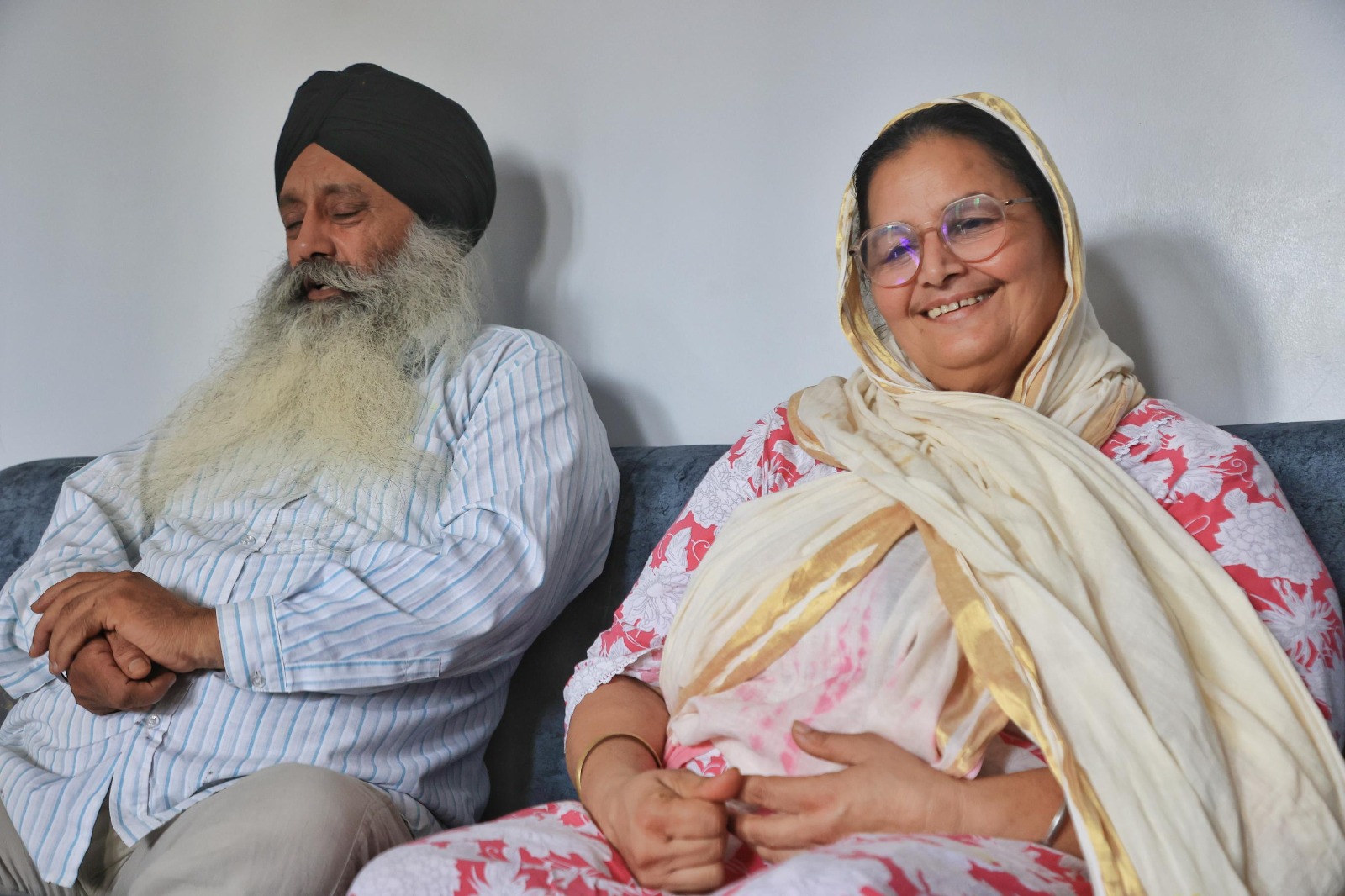 Ajaib Singh, who retired as a sub-inspector from the Punjab Police, with his wife. Their two daughters are now settled in Canada.
“Most of the youngsters who migrate haven’t studied beyond Class 10 or 12. They don’t have the degree or skills to get a good job here,” he says.
Not everyone takes the illegal route to citizenship abroad, says Ajaib Singh, who retired as a sub-inspector from the Punjab Police four months ago.
Around nine years ago, his elder daughter Harshpreet went to Canada after clearing IELTS, the English language proficiency test for study, work, and migration across major English-speaking countries. His younger daughter, Sukhman, followed five years ago. Ajaib Singh says he would rather that his son, who studies at DAV University in Jalandhar, stay back in Punjab, but then, “if he is destined to settle abroad, he will”.
KioskNews shows a cleaned-up reading view extracted from the publisher’s page — the original always lives on their site, not ours.