Hegseth pitches new US-Asean defence framework, but doubts run deep
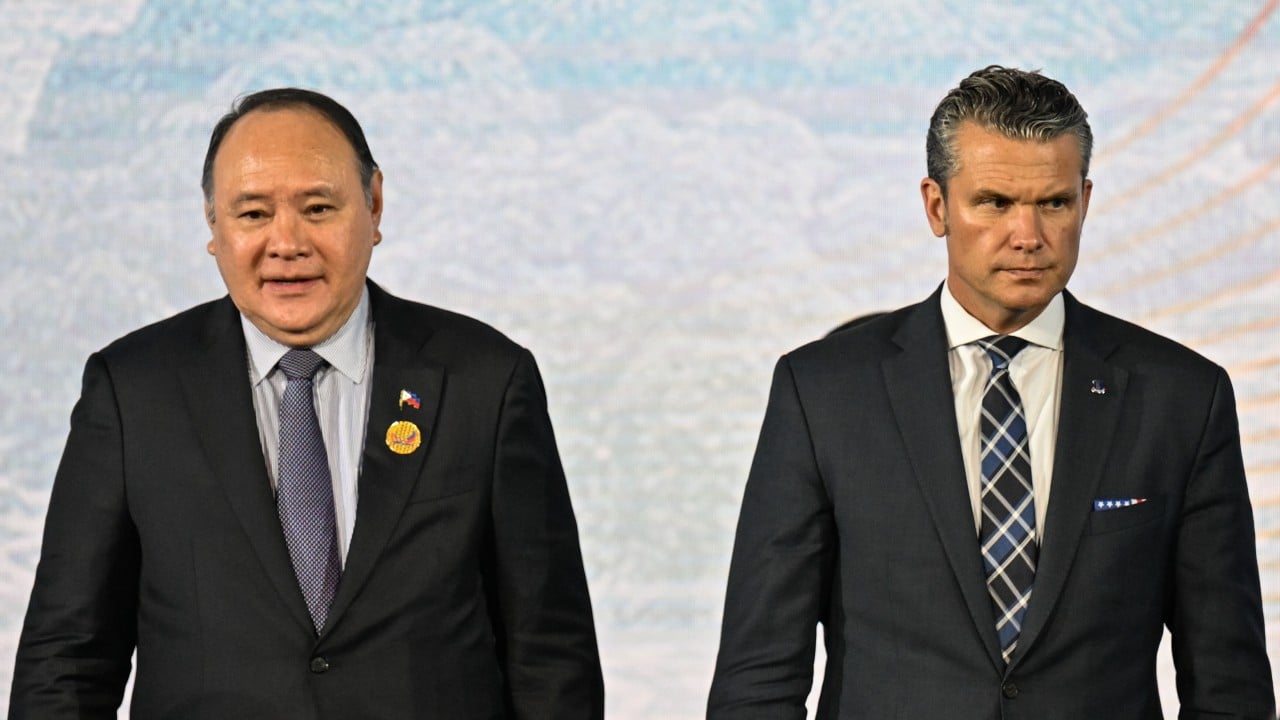
What are Southeast Asian nations doing to help the United States tackle its challenges? A reporter with the American right-wing organisation Turning Point USA put the question bluntly to US President Donald Trump’s defence chief this week in the Philippines.
As US Defence Secretary Pete Hegseth pitched closer naval ties and maritime security cooperation at a gathering of defence ministers from the Association of Southeast Asian Nations (Asean) and other regional powers, the question injected transactional politics into what is usually the realm of diplomatic niceties.
Analysts say the Pentagon chief’s proposal is unlikely to produce a substantial Asean-wide framework, given the bloc’s long-standing refusal to choose sides and the limits of its consensus-based system.
In his remarks, Hegseth urged his regional counterparts to develop a “practical” framework to deepen security cooperation between Washington and Asean.
“As we look to the future in this region, I’d like us to be even more ambitious … we propose that we work together to develop a US-Asean Framework for Defence Cooperation,” Hegseth said, without offering details.
“A practical framework that guides our cooperation over the next several years. I will note a critically important next several years,” he added, acknowledging that “we’re not going to agree on everything, nor do we need to”.
Hegseth described Washington’s approach as “strong, quiet and clear – strong enough to deter coercion and aggression, quiet enough to avoid needless escalation or public theatrics”, without explicitly mentioning Beijing or its long-standing territorial disputes with several Asean member states.
He said Washington was ready to begin work with Singapore, which is set to chair next year’s Asean meetings.
In a separate exchange on the sidelines, responding to the reporter’s question about what Asean was doing for the US, Hegseth called it a “great point” and rejected the old framing of the relationship.
“This is not an aid exercise,” he said. “This is not a foreign aid or defence aid exercise where countries come and ask for what the United States will do for them and then we do it out of the sense of international goodwill … the expectation is that allies bring what they can to the table.”
He pointed to access, basing and overflight rights across critical geography in the first island chain as the kind of contribution that matters, describing Asean’s value as lying in “mutually beneficial exchanges”.
That tension goes to the heart of Washington’s challenge with Asean: can a bloc that has long resisted choosing sides deliver the tangible returns the US is increasingly demanding?
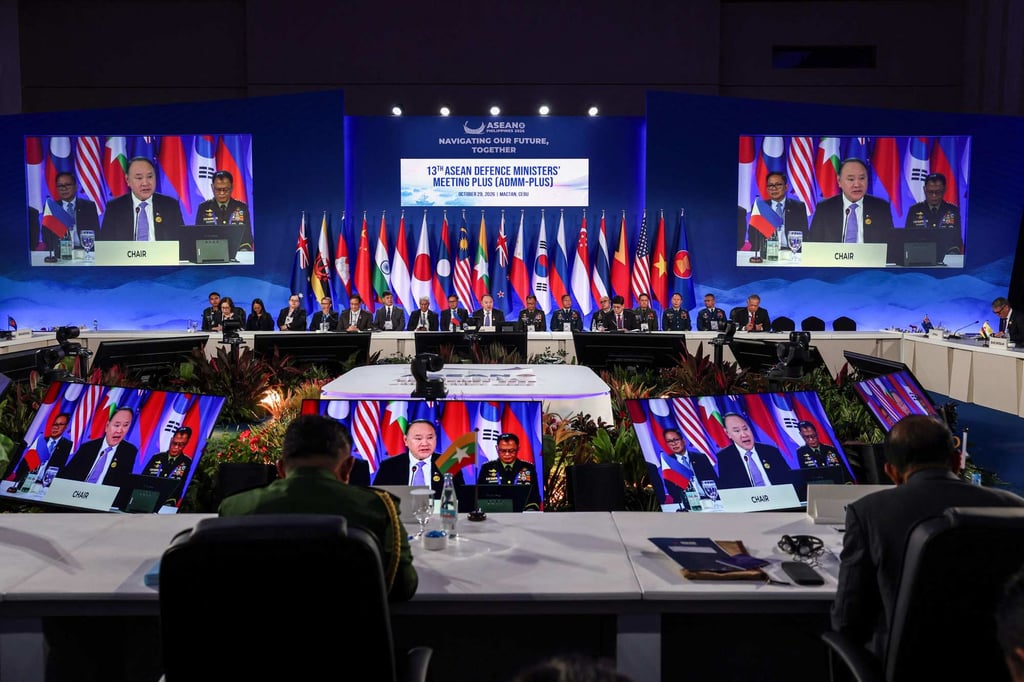
Experts see little prospect of the proposal gaining traction at the bloc level, let alone forcing Asean to pick a side.
SCMP Plus is a new premium news platform that gives you an
all-inclusive edge to stay ahead on China news.
To access our exclusive content you’ll need to subscribe.
Already a subscriber?
LOG IN
“There is no indication Hegseth is suggesting a mutual defence commitment of any kind, and any sort of Asean-US framework would be miles away from the defence integration and cooperation that characterises Nato,” said Jennifer Kavanagh, a senior fellow at Defence Priorities, a Washington-based think tank.
“In any case, Asean would reject such an arrangement. Asean has always balanced and hedged between the United States and China. It rejects any sort of defence alliance and refuses to choose sides between the two powers,” she said.
Collin Koh, a senior fellow at the S. Rajaratnam School of International Studies in Singapore, pointed to obstacles that go beyond geopolitics.
“Asean is an institution made up of 11 member states, each with its own unique national context, threat perception and priorities, as well as disparities in defence and security capacities amongst them,” he said. “Even envisaging an intra-Asean defence cooperation framework involving all 11 member states is itself fraught with challenges.”
Koh said that any cooperation beyond the “lowest common denominator” was unrealistic at the Asean level.
Without details of the proposed framework, he said realistic areas for Asean-US cooperation included “information-sharing mechanisms” to boost maritime awareness and coordinate responses to regional crises, including humanitarian help and disaster relief.
“More substantial cooperation that tangibly contributes towards building military interoperability … is likely to take place at the member states level, either bilaterally or minilaterally,” he added.
On the sidelines in Cebu, Hegseth met the defence ministers of Japan, Australia and the Philippines, which together with the US make up the informal “Squad” defence grouping focused on deterrence and operational readiness in the Indo-Pacific, with an emphasis on the South China Sea.
He also met Indian Defence Minister Rajnath Singh. India is a member of the Quad, a strategic security dialogue that also includes the US, Australia and Japan. Quad foreign ministers are meeting in the US this week, with a leaders’ summit planned in Manila next month.
Both the Squad and the Quad are “minilateral” groups that prioritise practical maritime and security cooperation among like-minded partners, bypassing the consensus constraints of the broader Asean format.
Kavanagh noted that the US and Asean already cooperated in limited ways on defence, making the added value of Hegseth’s proposal unclear.
She pointed to the Trump administration’s preference for bilateral deals over multilateral ones, and to the practical constraints on US attention.
“The biggest constraint on any sort of deeper US-Asean cooperation is bandwidth and resources,” she said. “Can a Pentagon tied up in a war with Iran, still supporting Ukraine, and chasing drugs in Latin America afford to invest more in Southeast Asia right now? I’d bet on no.”
On China, both experts were cautious. Kavanagh said it was hard to predict Beijing’s response until more details emerged, and that she would not expect a near-term reaction.
Koh said China was “likely to view this new initiative with no small amount of wariness – on the assumption that this is part of Washington’s attempt at strategic containment”.
Beijing’s most plausible response, he added, would be to deepen bilateral ties with individual Asean members rather than offer a competing framework, though its existing relationships remain thinner than Washington’s and are complicated by South China Sea tensions.
China’s absence amplified the optics. Defence Minister Dong Jun skipped the meetings in Cebu, with Beijing sending only its Manila-based defence attache. The timing coincides with the Communist Party’s fifth plenum in Beijing, but it also follows months of escalating South China Sea tensions with the Philippines.
The US proposal lands against a backdrop of debates around enhanced defence cooperation among Asean members.
Philippine Ambassador to the US Jose Manuel Romualdez recently told the South China Morning Post he hoped Asean would evolve into something “like a Nato” capable of handling its own security.
The idea was previously dismissed by his country’s defence secretary, Gilberto Teodoro Jnr, as unrealistic given the bloc’s diverging interests.
Teodoro, chairing this year’s Asean defence ministers’ meeting, welcomed continued US engagement as necessary for regional stability but stopped short of endorsing any alliance-like structure.
“We value the United States’ sustained engagement with the defence establishments of Asean, as a robust US presence is necessary for peace and stability in Southeast Asia and in the broader Indo-Pacific region,” he said.
KioskNews shows a cleaned-up reading view extracted from the publisher’s page — the original always lives on their site, not ours.