The biggest issues with delivery robots are exactly what you'd think
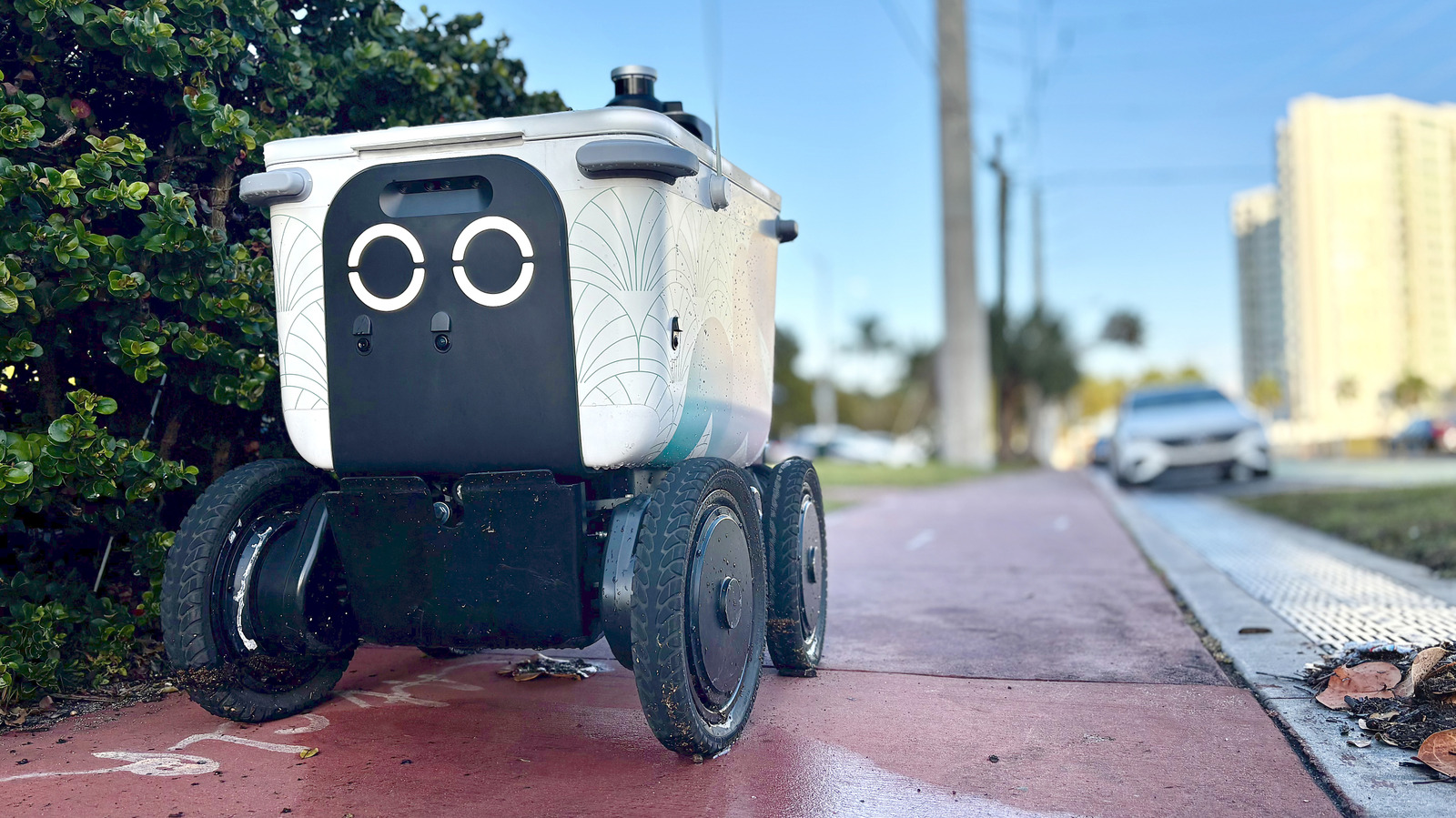
Too often, delivery robots just don't understand the rules of the road (or sidewalk).
Chuyn/Getty Images
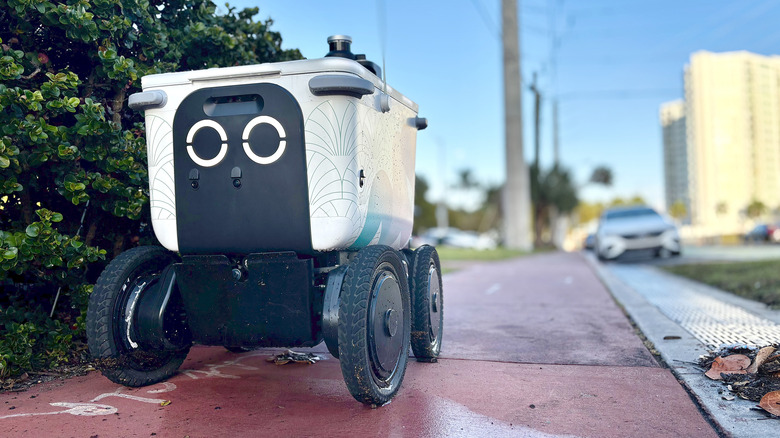
People tend to have two distinct reactions upon seeing a robot delivery driver scurrying down the sidewalk. Some are charmed by their anthropomorphized faces and see a cute little guy doing their job, while others feel instant annoyance at what's come to be known as a "clanker" in their path. Regardless of your gut reaction, they've become an increasingly large part of the delivery landscape in several countries.
The concept of delivery robots first began in Estonia in 2014, when Skype co-founders Ahti Heinla and Janus Friis started Starship Technologies. What was initially a small project saw a major boom during the pandemic; the company now operates in over 80 cities across North America, Europe and Asia. There are now several more companies in the delivery robot landscape beside Starship, like Serve Robotics, Coco Robotics and Delivers.AI; DoorDash has even launched their own in-house robots. As these little guys become more prolific, so do the problems they cause.
The problems with delivery robots
Though some robot delivery companies like Coco used to rely on remote human drivers every step of the way, almost every company in the space has shifted to autonomous robots that utilize a combination of camera, sensors and GPS to navigate, with human supervisors only stepping in when absolutely necessary. However, there are many environmental variables like broken sidewalks and random construction which are not accounted for that can trip up a robot's navigation. These often lead to stalls or even damage to public property, like an instance of a delivery robot destroying a bus stop in Chicago.
Even more pressing is their impact on pedestrians themselves. Some issues are more of a minor annoyance, like robots interfering with restaurants with outdoor seating or other crowded businesses that spill onto the sidewalk. Other problems are more detrimental. Even though they're in theory supposed to stop for pedestrians, there have been several reported cases of humans having to make way for robots. For people with limited mobility or utilizing wheelchairs, this is of particular concern, as is a bot hogging the sidewalk — a potential accessibility violation under ADA. There's even been cases of bodily harm. A man in New Jersey suffered a broken shoulder and head injury after a delivery bot hit his bike, and that's not the only instance of robot-caused harm.
The future of delivery robots
Sitikka/Getty Images
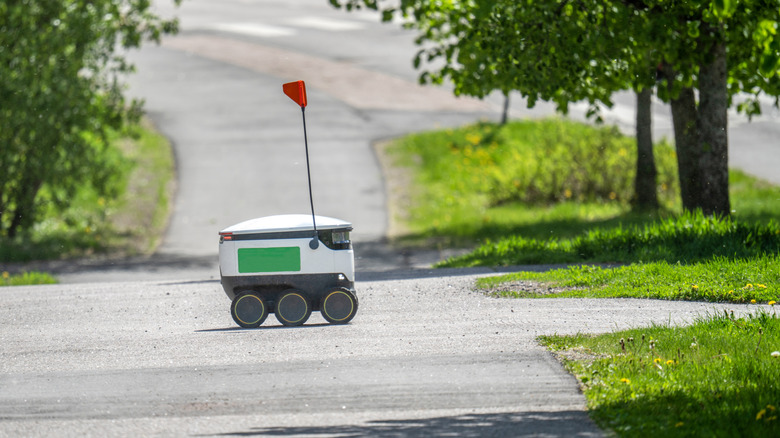
Despite their problems, robot delivery likely isn't going to go away any time soon; on the contrary, it's predicted to vastly expand. A recent study by Transforma Insights suggests that the world will have 559,000 automated urban delivery vehicles by 2035, compared to 28,000 in 2025. Considering this prediction, this robot revolution could have a big impact on gig workers. For companies like Uber Eats and DoorDash, both of which have faced scrutiny when it comes to paying their drivers ethically, robots are an easy way to increase overall company profits. However, the distance limitations of current robot models — about two miles — tend to limit their usage to more urban areas, meaning that, at least for the time being, humans cannot be completely taken out of the equation.
Many of the problems with delivery robots stem from insufficient regulation — currently, many areas have nothing in place to limit their usage, and in over 20 states, personal delivery devices are actually considered pedestrians. However, that tide is beginning to change. Many major cities like Chicago, San Francisco and Toronto have enacted restrictions or outright bans on delivery bots, and other cities may not be far behind. Because they utilize cameras, these robots have also faced increased scrutiny from regulatory bodies over privacy concerns, potentially leading to more future legislation. Though we may have to accept the presence of delivery robots, the problems that come with them will hopefully lessen with time.
KioskNews shows a cleaned-up reading view extracted from the publisher’s page — the original always lives on their site, not ours.