Poverty Went Down In India Over A Decade. How Earnings Are Keeping Up

India has made considerable progress in reducing poverty, and the decline is expected to continue. But while fewer people are living below the poverty line, an important question remains: are Indians also earning more?
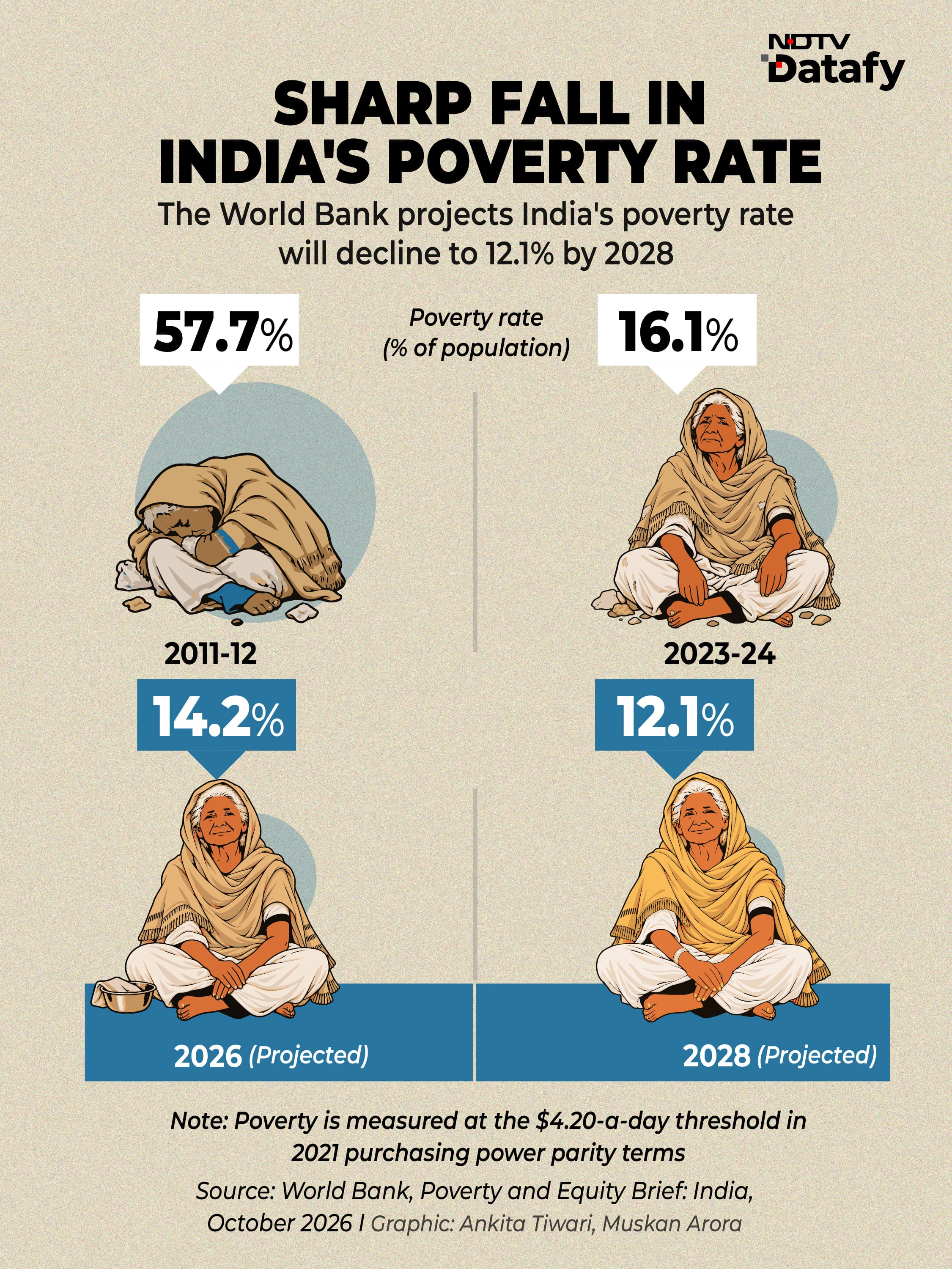
According to the World Bank's "Poverty and Equity Brief: India", on October 9, 2026, the share of people living below the $4.20-a-day poverty line fell from 57.7 per cent in 2011-12 to 16.1 per cent in 2023-24. The World Bank projects a further decline to 14.2 per cent in 2026 and 12.1 per cent by 2028.
The numbers point to a sharp improvement over little more than a decade. However, a falling poverty rate may necessarily mean that individual earnings are rising at the same pace. To understand this difference, it is worth looking at how employment and wages have changed.
India's worker-population ratio, which measures the share of people who are employed, increased from 46.8 per cent in 2017-18 to 58.2 per cent in 2023-24, according to the Periodic Labour Force Survey (PLFS). The survey years cover July to June. This suggests that a larger share of the population was working in 2023-24 than in 2017-18.
But the picture becomes more complicated when earnings are considered. Inflation-adjusted daily earnings for regular salaried workers remained unchanged at Rs 381 between the two survey years. For self-employed workers, earnings slipped slightly from Rs 246 to Rs 242. Casual workers saw an increase, with daily earnings rising from Rs 189 to Rs 227.
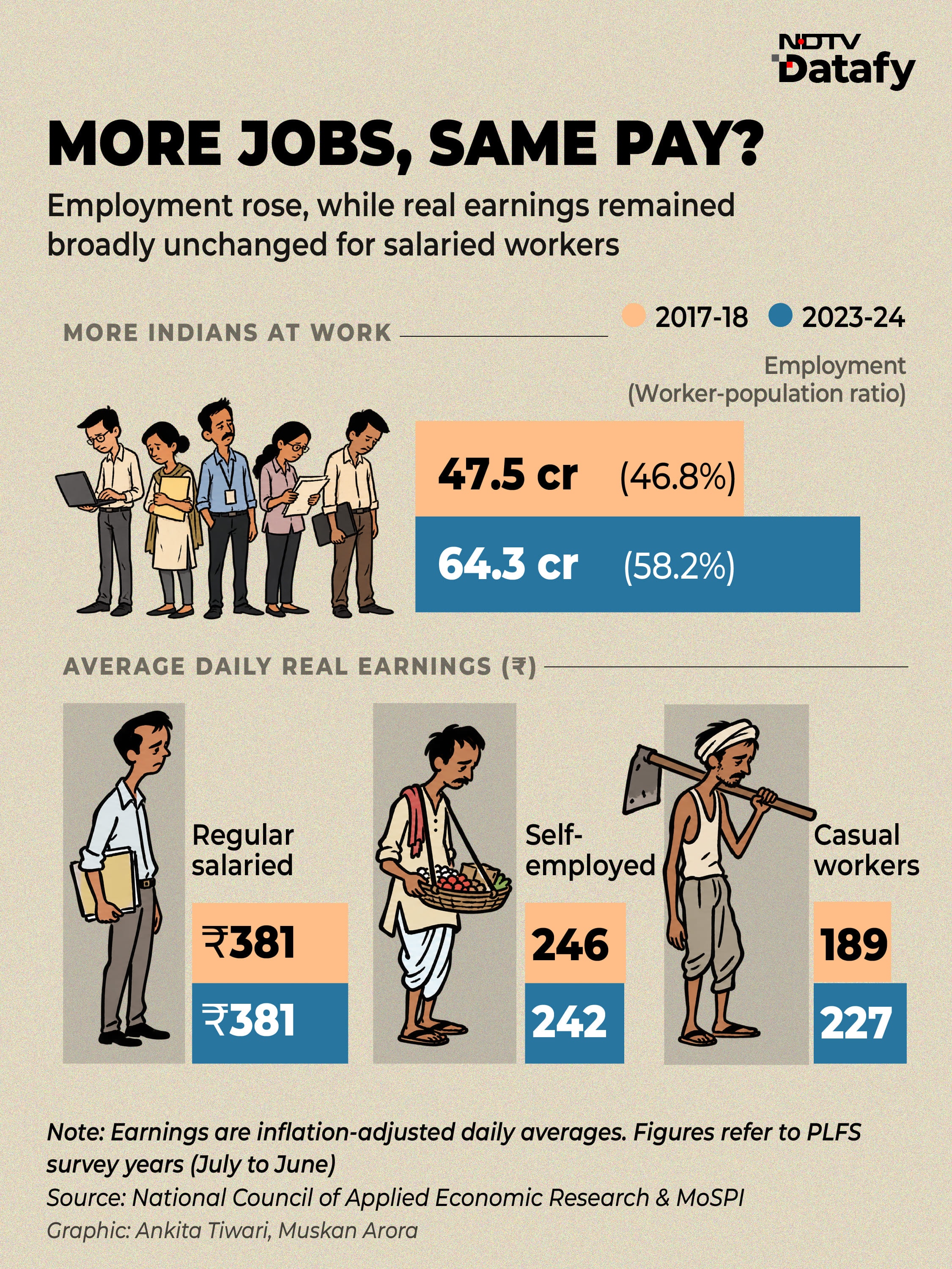
These figures show that employment and earnings have not moved in the same direction for every category of worker. More people are working, but the gains in real earnings have been uneven.
One possible explanation is that a household's financial position can improve when more of its members start earning, even if individual wages remain largely unchanged.
India's poverty decline is significant, but the wider picture is more complex. The challenge is not only to bring more people above the poverty line, but also to ensure that employment offers households a more secure and sustainable improvement in living standards.
KioskNews shows a cleaned-up reading view extracted from the publisher’s page — the original always lives on their site, not ours.