NDTV Exclusive: Immigration, Tech, And Lentils: Montana Governor On Critical India-US Ties
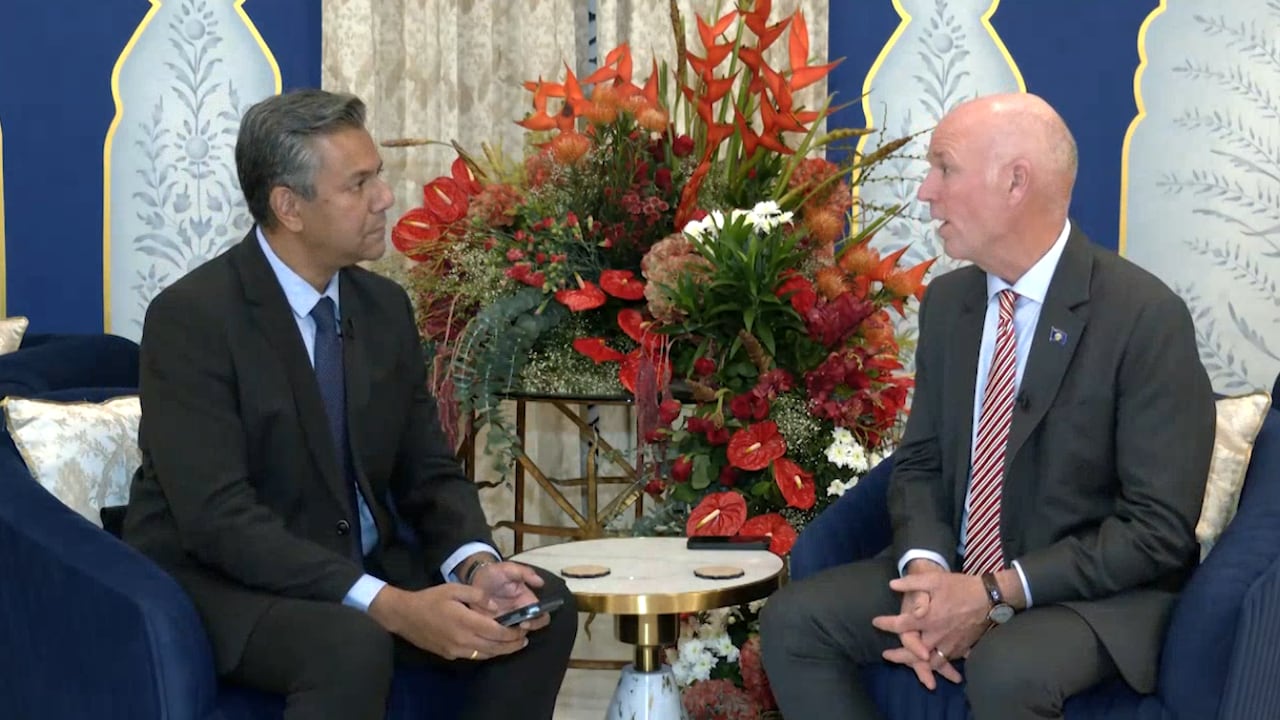
Montana Governor Greg Gianforte is leading a delegation of more than 30 people to India and Sri Lanka to explore business opportunities, expand educational partnerships and strengthen research collaboration. The delegation includes representatives from agriculture, aerospace, biotechnology, quantum, photonics and education.
A statement from the Governor's office said Gianforte will meet key ministerial leaders as well as trading, agricultural, bioscience, photonics, quantum, energy and education partners in the region.
"Our delegation stands ready to showcase Montana as a best state for business, expand educational partnerships, and strengthen research collaboration," Gianforte said.
In an exhaustive interview with NDTV's Vishnu Som, Governor Gianforte spoke about India-US trade, Montana's agricultural exports, the proposed trade deal between India and the United States, education, biotechnology, professional mobility, critical minerals, Indian students and the upcoming US midterm elections.
Q. The India-US relationship spans various levels. How does your visit to India fit into the broader India-US relationship and the effort to expand trade?
Greg Gianforte: This is a very important relationship for us. The US is India's largest foreign market. And we need reciprocal relationships. Montana in particular, we have a large delegation here, over 35 people representing a broad range of industries. It may, people may not know, but Montana produces more lentils, peas and chickpeas than any other state in the United States, and yet we see fluctuations in demand here in India. So we're hoping to establish long-term relationships. Agriculture is our traditional industry. But we've also brought folks from aerospace, biotechnology, quantum and photonics, which I think represents a growth opportunity for both India and the United States.
Q. India's purchases from Montana dipped from about $64 million in 2024 to $14 million last year. Why did that happen, and how are you addressing it?
Greg Gianforte: Well, it's important that we have long-term relationships. This is why I wanted to bring our pulse crop growers with me. Also leadership from our universities. We've had a history of purchases and then not purchases, maybe some barriers and then not barriers. For us to have a good, strong long-term relationship, we need more consistency. So that'll be one of the topics that we'll be covering here. We would like to have long-term relationships, where, as we continue to buy Indian products and import them into the US, we need consistent markets here as well, because we have delicious lentils.
Q. How important is an India-US trade deal for Montana and the United States?
Greg Gianforte: Well, this deal is critically important for our relationship. President Trump and Ambassador Gore have been working very closely to get it over the finish line because businesses both in India and the US need certainty in order to expand their relationship.
Q. Education has emerged as another important area of India-Montana engagement. How important is it for you?
Greg Gianforte: I brought the president of one of Montana's flagship universities with me to establish relationships on a number of levels. We love having Indian students in Montana. We also like cross-research opportunities that we have. Montana has a deep history in biotechnology. In fact, we have some of the most lenient laws as it relates to right to try. We're seeing massive investment in biotechnology products. Firms even moving from Silicon Valley to Montana because we make it easier to get products to market, and we would welcome similar relationships with Indian firms that want to bring their products to the North American market.
Q. How do you view the mobility of Indian and American professionals amid changes in US immigration policies?
Greg Gianforte: I think it's important. Talent is mobile, and we should allow the smartest people to go where they can do the best work. This is why one of our goals on this mission in bringing these education executives is to establish research relationships in areas of interest to us. Montana is the Treasure State. We have massive natural resources, critical minerals, copper that fueled the Industrial Revolution and continues to fuel our defense industries. There's areas of collaboration between Indian institutions and Montana institutions to continue and really build on that.
Q. What more needs to be done to expand Montana's lentil exports to India?
Greg Gianforte: As I mentioned, pulse crops, lentils, peas, chickpeas -- we're the number one producer in North America, in the United States, and in other agricultural markets. We have long-term, multi-year contracts that give our growers certainty, just as you want certainty and prosperity for your farmers. We want the same thing for our farmers. So if you want the proteins to be there in a year where you might not have your own, you might have to make some commitments in the off years to make sure that they're there and being a dependable partner. So this is what we have in other markets, whether it's our malt barley that we sell into Mexico or other markets. We're looking to establish long-term relationships. When I was in Japan last year, you know, we have relationships there for grain that have spanned multiple generations of growers and buyers. Those are the types of business relationships that we'd like to establish in Montana.
Q. You are also chair of the Republican Governors Association. How do you see the upcoming US midterm elections?
Greg Gianforte: The President has done an amazing job being an advocate for the private sector. At the Republican Governors Association, we have 36 governor's races out of 50 states. So that's basically a jump ball, every single one. And what we're seeing is in states that have Republican governors, unemployment is lower. Economies are growing faster. In Montana, just since I took over six years ago, Montana is now the fifth fastest-growing economy in the United States. Fifth, number five, and we're one of only two states where wage growth over the last five years has exceeded inflation. So these conservative business principles. Government basically getting out of the way and letting entrepreneurs, farmers, and merchants do their work. It works and it helps people to prosper. And I think more people want that.
Q. Montana has also been reaching out to the Indian-American community. How important is that relationship?
Greg Gianforte: Consul General Gupta out of the Seattle delegation has been to Montana. I think he's been there seven times now. We can't keep him away, not that we try, but he keeps coming back. We had the great pleasure of receiving as a gift a bust of Mahatma Gandhi, which is now at the University of Montana, proudly displayed, and we celebrate the partnership we have with it.
KioskNews shows a cleaned-up reading view extracted from the publisher’s page — the original always lives on their site, not ours.