Iran Guards Say 2 Oil Tankers On Fire In Strait Of Hormuz
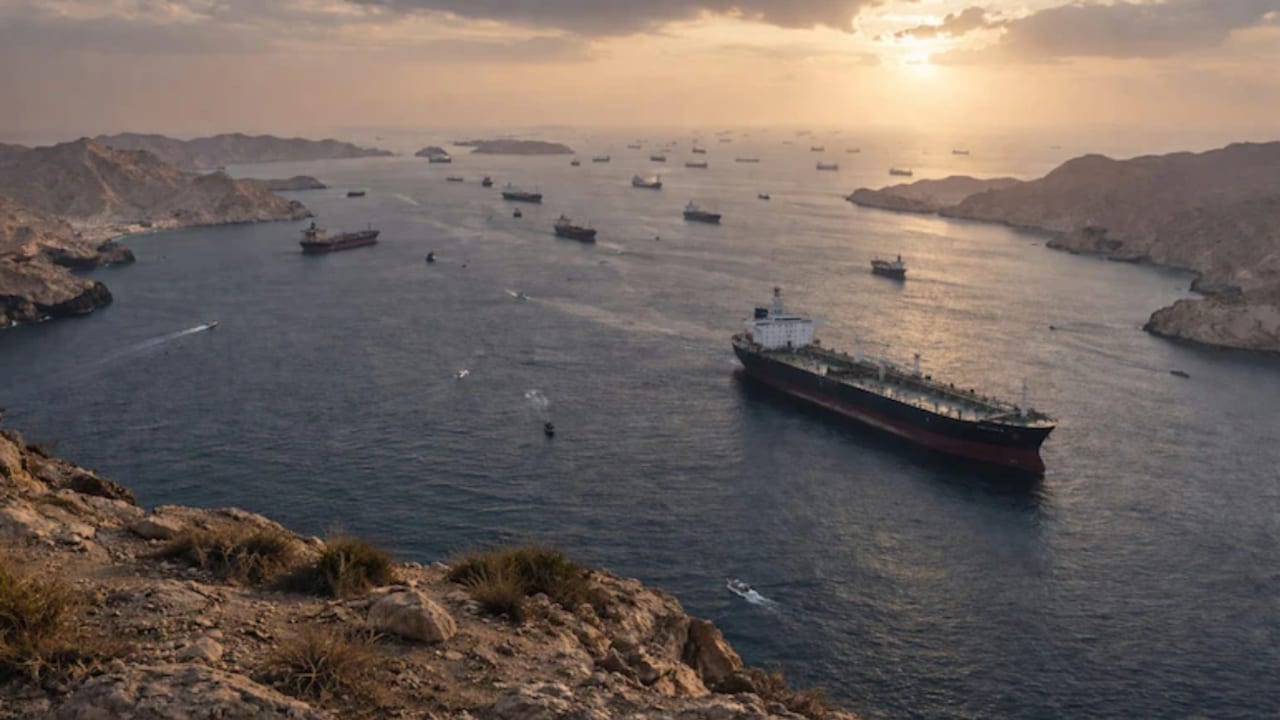
Iran's Revolutionary Guards said Tuesday that two oil tankers were on fire in the Strait of Hormuz, where the country regularly targets ships that transit without its authorisation.
Later in the day, the Emirati state oil company ADNOC said one of its vessels had "sustained damage following an attack in the UAE's territorial waters" in the Gulf, during the afternoon.
It was unclear whether this was one of the ships mentioned by Tehran.
Since the outbreak of the Middle East war in late February, Tehran has heavily restricted traffic through the strategic waterway, insisting vessels use routes authorised by the Islamic republic.
The United States has in response imposed a naval blockade on Iranian ports and helped tankers travel the strait, which normally carries about one-fifth of global oil.
"Two violating oil tankers, travelling along an unauthorised route in the Strait of Hormuz, have been brought to a halt following massive explosions and are left burning," the Islamic Revolutionary Guard Corps, the ideological arm of Iran's military, said in a statement.
The Guards did not specify the names or origins of the tankers.
Tehran has made multiple announcements in recent weeks saying ships had caught fire in the strait.
It has said some vessels struck mines, but the US military recently claimed all mines had been cleared from the waterway.
US Central Command, which oversees US military operations in the region, also said last month that it had helped Gulf countries export 1.5 billion barrels of oil via Hormuz since the summer.
On Tuesday, the Guards said "one of the vessels -- a supertanker -- struck a naval mine, resulting in an explosion".
"The second tanker, which was under the escort of the aggressor American military and attempting a covert passage via an illegal route, also had an incident," they added.
(Except for the headline, this story has not been edited by NDTV staff and is published from a syndicated feed.)
KioskNews shows a cleaned-up reading view extracted from the publisher’s page — the original always lives on their site, not ours.