China is no longer just the world’s factory. It’s the HQ
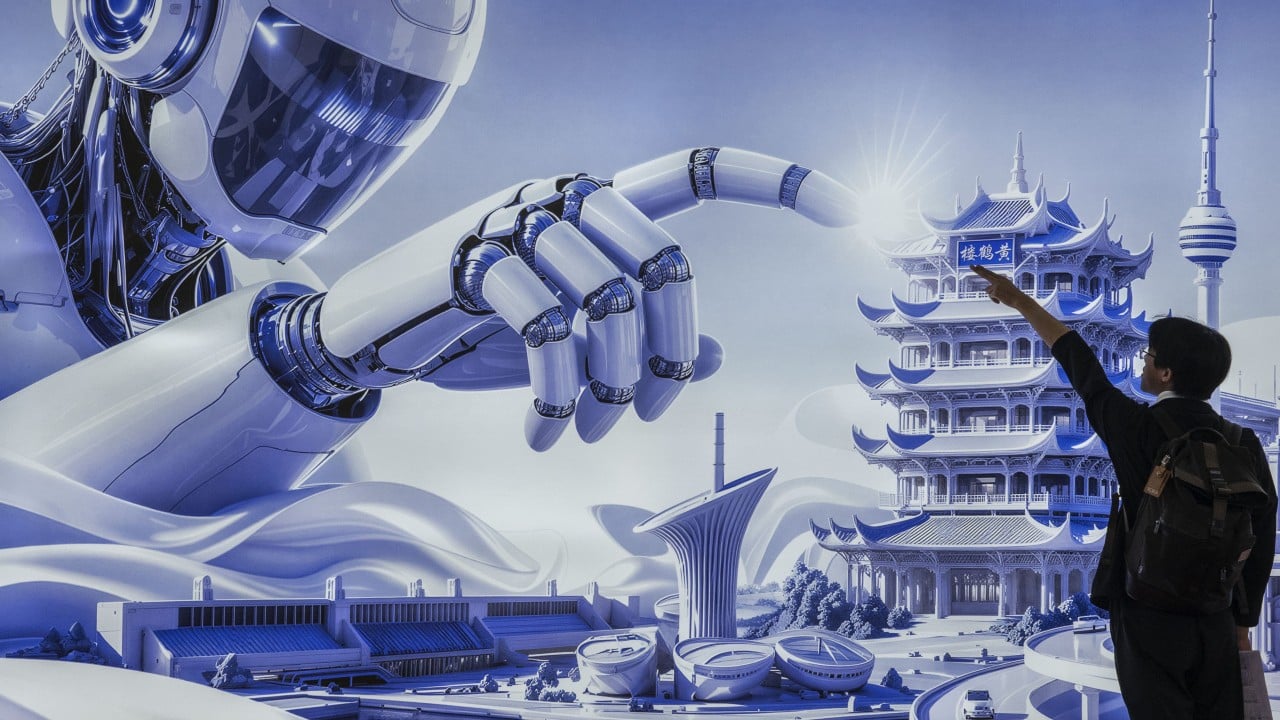
The global electronics industry is entering a structural transition. For over two decades, China served as the dominant manufacturing centre, with an unmatched concentration of suppliers, skilled labour, infrastructure, logistics and engineering capabilities. That concentration is being diluted. But interpreting this as the decline of Chinese manufacturing would be a mistake.
According to the Boston Consulting Group (BCG), since 2017, the share of electronics manufacturers from China – Taiwan, Hong Kong and the mainland – with overseas production has risen to 56 per cent from 12 per cent. BCG based its analysis on 942 publicly traded companies with annual revenues above US$500 million, including 314 headquartered in China. This transformation is remarkable.
From the early 2000s to the mid-2010s, companies concentrated production in China’s major industrial clusters to minimise costs. Low-cost labour played a significant role but the true advantage lay in the high density of the manufacturing ecosystem. This produced economies of scale and an operational efficiency few countries could match.
Since 2017, rising tariffs, increasingly extensive export controls and stricter scrutiny of critical technologies have transformed the calculation. US President Donald Trump’s high tariffs on Chinese goods were intended to reduce dependence on Chinese manufacturing and force production back to America, but it has also increased the incentive for Chinese companies to establish production capacity in third countries.
At the same time, Southeast Asia, India and Mexico began offering tax incentives, subsidies, industrial parks and other measures designed to attract manufacturers.
02:58
US battery start-up launches China factory ahead of Trump-Xi summit in Washington
Companies now see diversification as insurance against tariffs, export restrictions and sudden disruptions. But that does not necessarily mean abandoning China.
In many cases, companies are relocating only the final assembly. Components, materials, tooling, machinery and engineering expertise continue to originate in China. This is producing a “hub-and-spoke” model: the hub remains China; the spokes extend into Vietnam, Malaysia, Thailand, India, Mexico and other countries.
BCG estimates that about 76 per cent of Chinese manufacturers expanding in Southeast Asia are choosing Vietnam, Thailand or Malaysia. Vietnam is increasingly important for electronics assembly; Malaysia has strengths in semiconductor testing and packaging; India offers enormous domestic market potential; and Mexico benefits from its proximity to the United States. But all of these new centres remain deeply connected to Chinese supply chains.
The most consequential development may lie beyond electronics. China’s industrial strategy is increasingly compatible with a division of labour in which advanced research, engineering, technological innovation and sophisticated manufacturing remain concentrated domestically. At the same time, it distributes selected production stages internationally.
This could become a defining feature of China’s next stage of industrial globalisation. Rather than keep production concentrated in China, what matters more is control of the technologies, machinery, components, standards, engineering capabilities and supply-chain relationships underlying production. This is a fundamentally different conception of manufacturing power.
The old model measured industrial strength largely by where factories were. The emerging model measures it by who controls the industrial ecosystem.
09:30
China’s ‘gold rush’ in Mexico: why are Chinese companies investing south of the Rio Grande?
This process carries an unmistakable irony. Washington seeks to reduce China’s role in global manufacturing by imposing tariffs and restricting access to technology. Instead, it has spurred Chinese companies to build production networks with greater geographic diversification and potentially higher resilience to political risks.
Indeed, if Chinese companies can combine Chinese research and development, components, machinery and engineering with production facilities in Southeast Asia, India, Mexico and other markets, the result may be a manufacturing system less vulnerable to any single country’s trade policy.
This does not mean China’s manufacturing dominance is guaranteed. Competitors will also develop their own supplier ecosystems, technologies and industrial capacities. Competition will only increase.
But the main conclusion is already clear: globalisation is not ending; it is rapidly being reshaped. China is not abandoning its role as the “world’s factory”; rather, it is transforming what that concept means. It is becoming a global hub for innovation and development. While manufacturing capacity may continue to disperse across various countries, the “industrial brain” remains in China.
KioskNews shows a cleaned-up reading view extracted from the publisher’s page — the original always lives on their site, not ours.