J&K vs PoK: What Numbers Reveal About Spending, Infrastructure And Rights
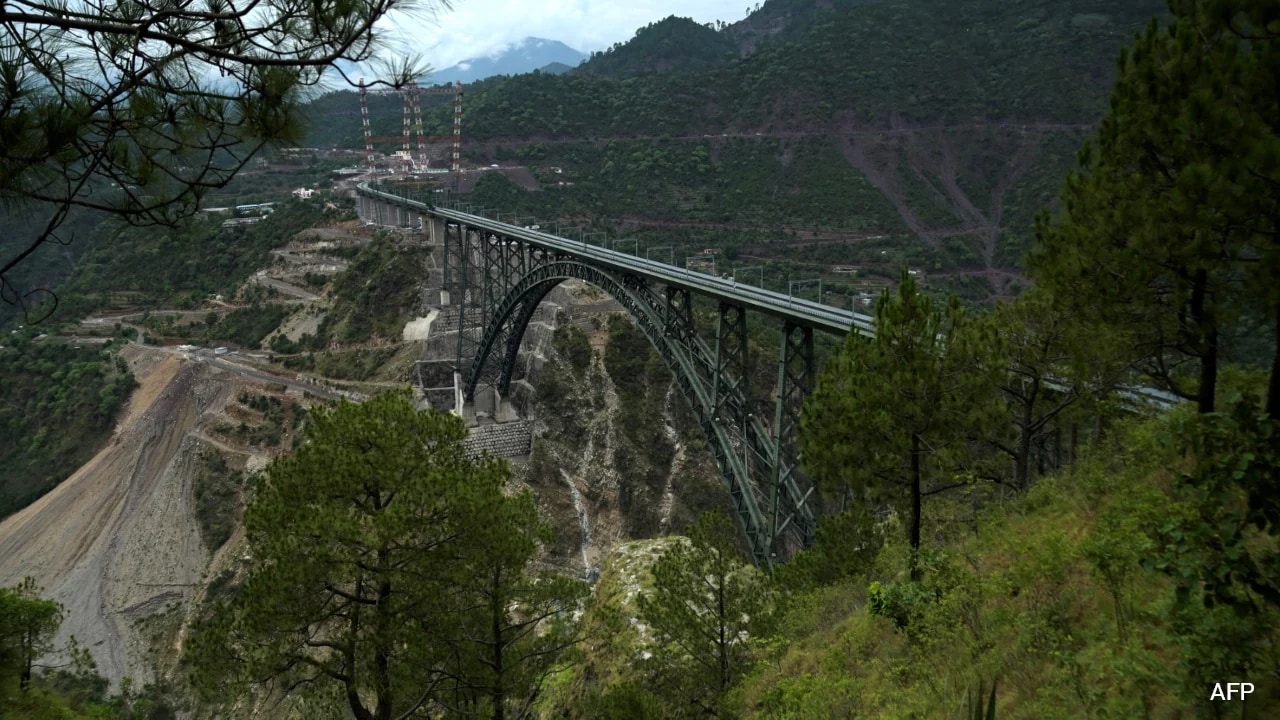
The world's highest railway arch bridge over the Chenab River opened on June 6, 2025, soaring 359 metres above the water. The first Vande Bharat trains started their service between Katra and Srinagar, reducing the travel time to the Kashmir Valley to about three hours. For the first time, the Valley had an all-weather rail link to the rest of the country.
Four months later, the news from Pakistan-occupied Kashmir (PoK) across the Line of Control was different. At least 10 people were killed in protests against the privileges of the elite, and over 12 assembly seats were reserved for refugees living in Pakistan. The authorities cut off communications as they ran. Even the airports at Muzaffarabad and Rawalakot in PoK have remained closed since 2006.
Two events, four months and one ceasefire line apart, tell the same story in miniature. The wider data tells this too. In all five areas, Jammu and Kashmir is ahead of PoK. The gap is widest in terms of public spending, connectivity, higher education, child health and parliamentary representation.
The Picture Summarised
Jammu and Kashmir is clearly ahead on public spending and, more or less, even on income in the economy. Its budget per resident is some 3.7 times that of PoK, and its per capita income is near the national average for Pakistan. On infrastructure, Jammu and Kashmir has had a rail link to Kashmir Valley since 2025. Both PoK airports have been closed since 2006. Jammu and Kashmir residents also use about 3.7 times more electricity per capita.
Jammu and Kashmir's lead in education is most evident in higher learning. It has an IIT, IIM, NIT and two AIIMS, with its annual MBBS intake larger than the total medical enrolment in PoK. Its infant mortality rate is 14 per 1,000 live births in health, compared to 43-51 in PoK and Gilgit-Baltistan. It has more than double the number of hospital beds per person. On constitutional rights, Jammu and Kashmir leads in representation and political rights. It has five Lok Sabha seats against none for PoK or Gilgit-Baltistan.
Public Spending Is Where The Gap Begins
Jammu and Kashmir's budget for 2026-27 is Rs 113,767 crore, or about $12 billion. PoK is Rs 286 billion, or $1.03 billion. That means the budget of Jammu and Kashmir is about eleven times as big. For every resident of Jammu and Kashmir, there is roughly 3.7 times the public money behind them than there is for a resident of PoK.
Private incomes are a lot closer. With a per capita income of about $1,770, Jammu and Kashmir is close to Pakistan's national average, so the divide here is more about government spending than household earnings. Jammu and Kashmir's unemployment rate is 6.1 per cent (2023-24), as against 9.6 per cent in PoK, but the latter's figure is for 2020-21. Tourism also favoured Jammu and Kashmir with 17.8 million visits in 2025 as compared to 3.21 million in PoK in 2024. Jammu and Kashmir's total in 2025 was down from 23.5 million the year before.
Railways, Airports And Electricity
The Chenab bridge is the highlight of a 272-km railway between Udhampur and Baramulla that has 36 tunnels and 943 bridges. The 6.5-km Z-Morh tunnel ensures Sonamarg remains accessible through winter. Srinagar airport handled 3.38 million passengers in 2025-26 and is being upgraded from a 2.5 million to 10 million capacity.
There is no railway in PoK. A proposed link through Murree has been dropped.
The same story is told by electricity, in kilowatt-hours. A Jammu and Kashmir resident uses 1,532 kWh per year, while in PoK it is only 408 kWh. Jammu and Kashmir meets 98.6 per cent of its energy needs. PoK has 3,205 MW of commissioned hydropower, but it only provides 330 MW against a local demand of 400 MW. This mismatch has led to the Joint Awami Action Committee-led strikes since 2023. The protesters want electricity to be charged at the rate of Pakistan's own generation, and in May 2024, Islamabad approved a subsidy of Rs 23 billion after violent clashes.
Higher Education Widens The Divide
The two are close on basic literacy: 82 per cent in Jammu and Kashmir (age 7+) vs 77.5 per cent in PoK (age 10+). Age bands are different, so do not over-read even that little gap. It starts in higher education. Jammu and Kashmir has 11 universities and is home to IIT Jammu, IIM Jammu, NIT Srinagar and two AIIMS. Its 12 medical colleges have 1,875 MBBS seats a year, up from around 500 in 2018. There are three public medical colleges in PoK, with an overall 1,655 students in all the years combined.
Infant Mortality And Access To Healthcare
Infant mortality is the one number in the dataset that stands out the most. Jammu and Kashmir has 14 deaths per 1,000 live births (2024). In Gilgit-Baltistan, the infant mortality rate is 43 deaths per 1,000 live births for 2024-25, while PoK records a range of 47 to 51 deaths per 1,000 live births for 2020-21. The national figure for Pakistan is 62, so PoK and Gilgit-Baltistan do better overall than Pakistan. However, they are still about three times the rate of Jammu and Kashmir.
The capacity is about the same. Jammu and Kashmir has about 630 people per hospital bed, while PoK has 1,487 people per hospital bed. The AB-PMJAY SEHAT scheme has been covering all residents of Jammu and Kashmir since December 2020, providing Rs 5 lakh per family per year. PoK's federal health card was suspended in March 2024 and restored in January 2026, but only until June 2027.
Political Representation And Democratic Rights
The people of Jammu and Kashmir are full citizens of India and elect five members to the Lok Sabha. There are no seats for people of PoK and Gilgit-Baltistan in Pakistan's parliament, and laws of PoK prohibit any politics against accession to Pakistan. The Jammu and Kashmir 2024 elections had 63.88 per cent turnout for the Assembly and 58.46 per cent for the Lok Sabha, the highest in 35 years. In the 2026 assembly elections in PoK, the reported districts saw 46.3 per cent to 53 per cent, and it was marred by allegations of violence and rigging.
What The Numbers Do Not Explain
A fair reading requires three caveats. First, both budgets rely heavily on their capitals. Of this, Jammu and Kashmir's own revenue is about Rs 31,800 crore, and the rest is largely met through central assistance of Rs 42,752 crore and centrally sponsored schemes of Rs 13,400 crore. PoK anticipates generating a tax revenue of Rs 75.2 billion against a federal grant of Rs 146 billion. Neither one is self-financing. Jammu and Kashmir has the advantage that the transfer is much larger per capita.
Second, the survey years vary. The Jammu and Kashmir doctor ratio is for 2022, and only government doctors are counted. On that measure, Gilgit-Baltistan's 2,065 people per doctor is broadly in line with Jammu and Kashmir's 2,191. Third, Jammu and Kashmir has its own unresolved issues. It is still a Union Territory, and its tourism numbers fell in 2025.
But the pattern is consistent across spending, infrastructure, classrooms, hospitals and the ballot box. Jammu and Kashmir leads in areas where public investment and institutions matter most, and by wide margins.
KioskNews shows a cleaned-up reading view extracted from the publisher’s page — the original always lives on their site, not ours.