Despite GRAP-2 curbs, Delhi pollution worsens; Mandir Marg records AQI over 500
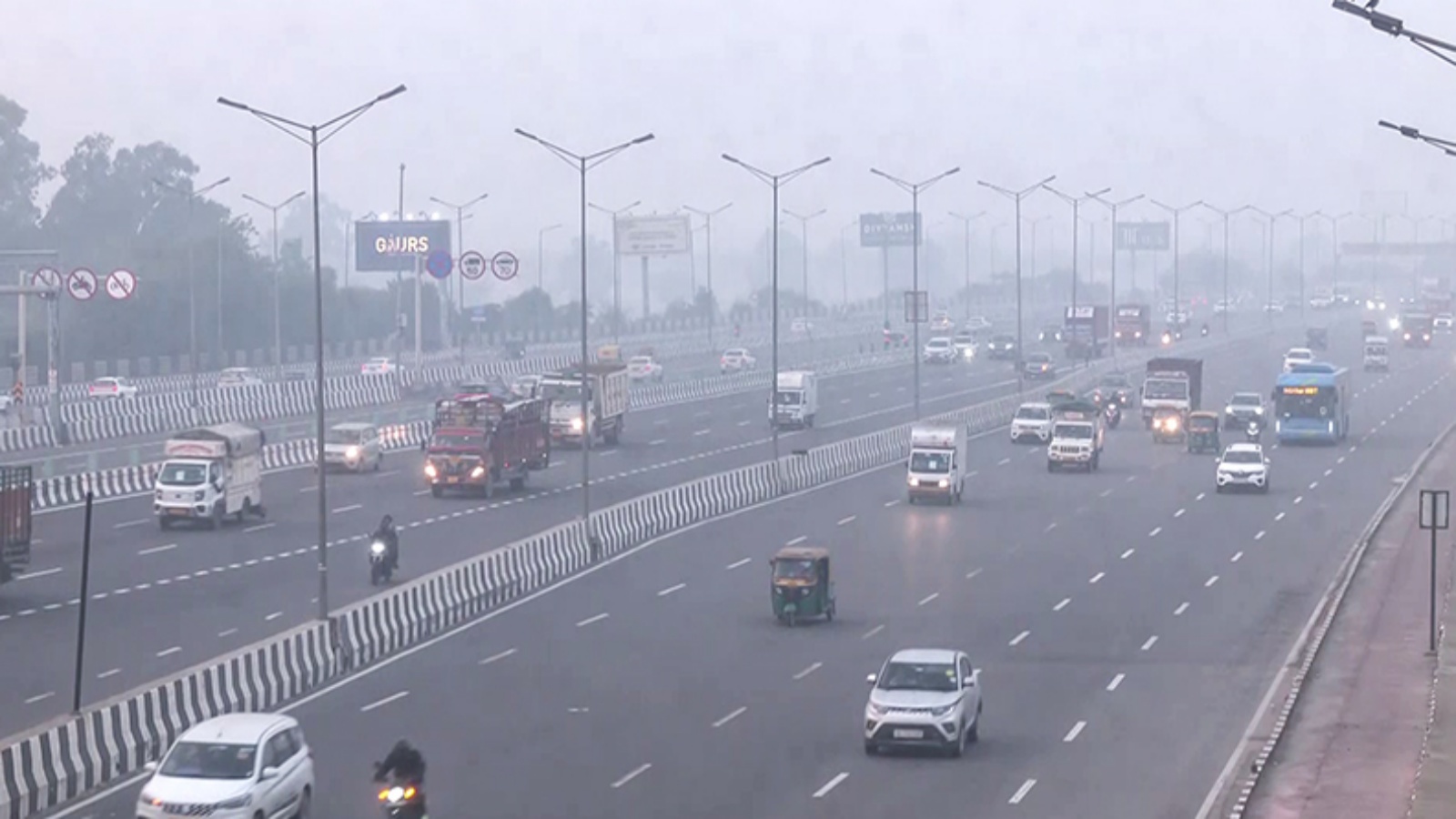
Despite the GRAP-2 anti-pollution restrictions, Delhi’s air quality remained in the ‘Very Poor’ category at 6 AM on Wednesday. The AQI at 4 PM on Tuesday was 350 and has worsened in 14 hours, with the Air Quality Index (AQI) recorded at 369, according to the Indian Institute of Tropical Meteorology (IITM). Several monitoring stations across Delhi reported high pollution levels, with Mandir Marg recording an AQI of 508, falling into the ‘severe’ category.
The initial wind and showers last week rendered the air somewhat clean, bringing down the average AQI of Delhi. However, since the showers abated, air pollution has been on the rise.
The city’s temperature stood at 17.2 degrees Celsius in the morning. The IITM has warned that people may experience more serious health effects due to the current air quality. And according to the IITM’s prediction, Delhi will still be in the same ‘Very Poor’ category on Thursday as well with the AQI of ‘343’.
AQI is categorised as Good (0 – 50), Satisfactory (51 – 100), Moderate (101 – 200), Poor (201 – 300), Very Poor (301 – 400), and Severe: (401 – 500).
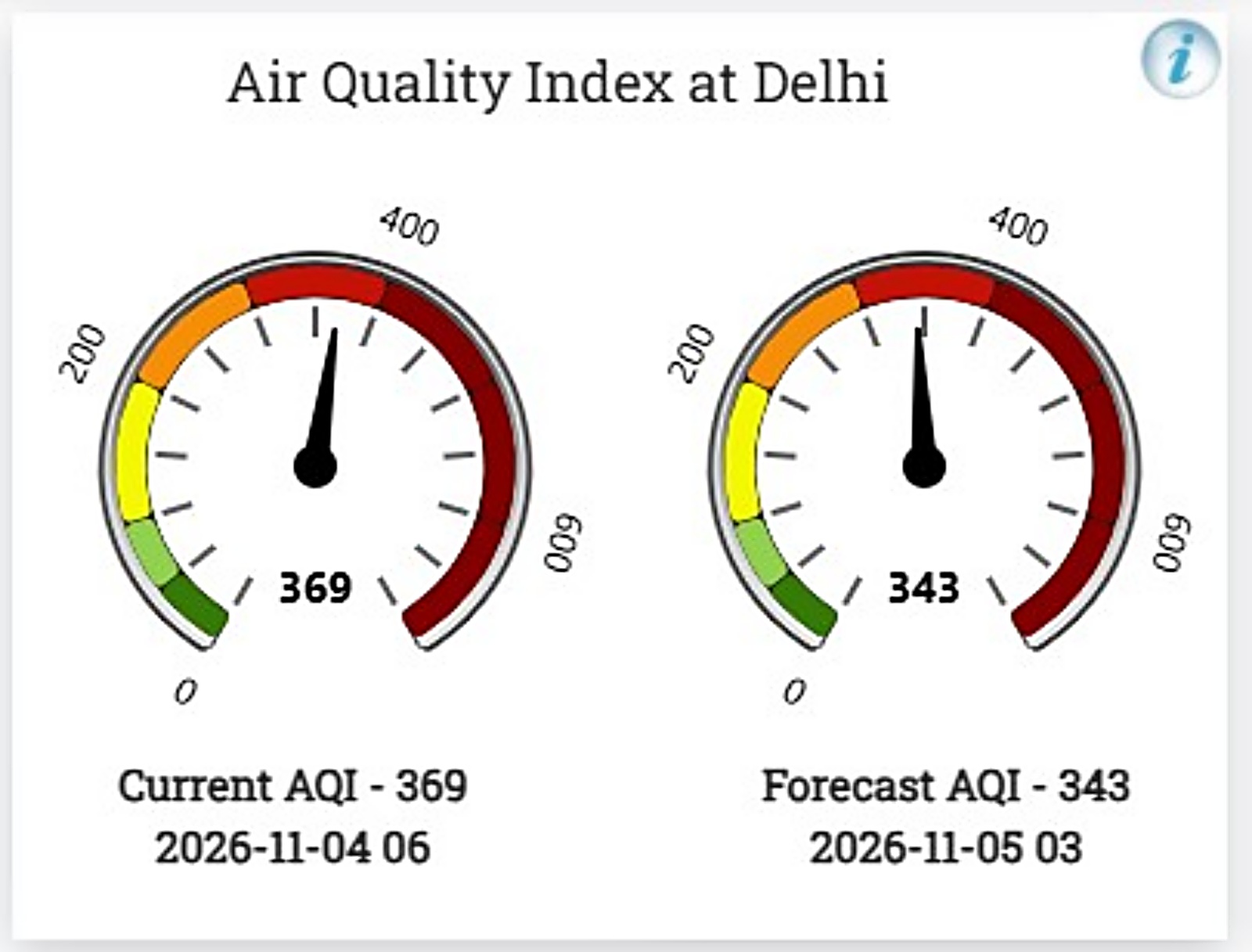 Delhi air quality. (Source: IITM)
The national capital is likely to remain in ‘Very Poor’ category over next few days, according to the latest updates of the department.
Delhi air quality · Wednesday, 4 Nov
Delhi's air stays 'Very Poor' at AQI 369; Mandir Marg hits 508
IITM expects no category change on Thursday. Gurugram halts dust-making construction from Nov 5.
Delhi AQI, Wednesday morning
Delhi overall, Wednesday (IITM)
369
Very Poor
Thursday forecast (IITM)
343
Very Poor
Highest station: Mandir Marg, 6 am
508
Severe
Morning temperature: 17.2°C. IITM says more serious health effects are possible at these levels.
Poor 201–300
Very Poor 301–400
Severe 401–500
Station by station, 6 am
By our count of the 25 stations listed: 14 in Severe, 10 in Very Poor, 1 in Poor (Anand Vihar, 297).
Mandir Marg
508
Jahangirpuri
447
Punjabi Bagh
447
Rohini
433
Vivek Vihar
428
Alipur
419
Narela
418
Sonia Vihar
417
RK Puram
417
ITO
414
Patparganj
410
Bawana
408
Sirifort
408
Okhla Phase 2
405
JLN Stadium
400
Dwarka
395
Pusa
389
Najafgarh
373
Wazirpur
363
Shadipur
346
Ashok Vihar
342
Nehru Nagar
328
Sri Aurobindo Marg
307
Dilshad Garden
303
Anand Vihar
297
What authorities are doing
PWD: anti-smog guns
200
Truck-mounted guns, cleared for use only after two committees of eight officials inspect them.
Plan: each cleans 200 m of road daily across a 1,400 km network (PTI). The guns can spray water up to 50 m high.
Gurugram: Nov 5 to 20
16 days
Dust-generating construction and demolition banned, including highways, flyovers and pipelines, on CAQM directions.
Offices: 50% staff in office, rest work from home. Railways, metro, airports, hospitals, water, sanitation and national security projects continue. Violations draw action under the CAQM Act, 2021.
Weather outlook (IMD)
Mainly clear skies with morning mist. Max 27–30°C, min 14–17°C from Nov 4 to 6. Northwesterly winds of 15–20 kmph in the afternoon on some days.
Source: IITM, IMD, PTI, CAQM order dated Oct 30. Readings are 6 am figures and change through the day.
Precautions taken by PWD
The Public Works Department (PWD) has formed two committees comprising eight officials to inspect 200 truck-mounted anti-smog guns being deployed across Delhi.
According to officials, no vehicle will be allowed to operate or be deployed unless its fitness is certified by the committees. The teams will conduct physical inspections and check whether the equipment is functioning properly and meeting the conditions according to the tender.
Story continues below this ad
The anti-smog guns will be deployed at construction sites and other pollution areas as part of the government’s efforts to control dust pollution ahead of winters. This comes after the capital’s chief minister Rekha Gupta’s direction.
The PWD is also planning a special drive to clean and control dust along its 1400 km road network. Under the plan, the 200 anti-smog guns will be tasked with deep cleaning at least 200 metres of road each day, according to a PTI report.
The cleaning drive will include removing dust from roads, clearing kerb/footpath channels and drainage openings, removing debris and coordinating with the Municipal Corporation of Delhi.
Anti-smog guns spray fine droplets of water into the air to settle dust and suspended particles. Mounted on vehicles fitted with water tanks, the equipment can spray water up to 50 metres high and is used to bring down dust pollution, including particulate matter.
Story continues below this ad
Construction activities ban
The Gurugram administration has prohibited dust-generating construction and demolition in the district from November 5 to 20 to curb rising air pollution. The restrictions have been imposed in accordance with directions issued by the Commission for Air Quality Management (CAQM).
Deputy Commissioner Uttam Singh also directed Haryana government and private offices to allow only 50% of their staff to work from office, with the remaining employees working from home, as per PTI reports.
The construction ban will cover highways, roads, flyovers, overbridges, pipelines and other linear infrastructure projects.
Projects related to railways, metro services, airports, hospitals, water supply, sanitation and national security will also be allowed to continue.
Story continues below this ad
Sub-Divisional Magistrates and Pollution Control Board officials will carry out daily inspections to ensure compliance. Violations will invite action under the CAQM Act, 2021, the administration said.
Explained · Delhi air
GRAP Stage II: what it means and what the AQI categories are
CAQM invoked Stage II across NCR on Nov 2, when Delhi's AQI reached 324 and entered 'Very Poor' for the first time this season.
I · Poor
II · Very Poor
III · Severe
IV · Severe+
Stage I has applied since Oct 21. Stage II is added on top; both are in force. CAQM can lift a stage as air improves.
Roads and dust
Daily mechanical or vacuum sweeping and water sprinkling on identified roads, preferably at night or early morning, with more machine shifts.
Daily sprinkling with dust suppressants before peak hours on heavy-traffic corridors and congestion points.
More inspections to enforce dust control at construction and demolition sites.
Focused action at all identified pollution hotspots in Delhi-NCR.
Traffic and transport
Local bodies to raise vehicle parking fees to discourage private transport.
Staggered timings for public offices and municipal bodies in Delhi, Gurugram, Faridabad, Ghaziabad and Gautam Buddha Nagar. States may decide for other NCR areas; the Centre for its own offices.
Delhi Metro says it will run 20 more weekday trips from Nov 3.
Winter burning
Resident welfare associations to provide electric heaters to security, sanitation and horticulture staff, so they do not burn biomass or waste.
Citizens are asked to: use public transport or carpool, take less congested routes, keep footpaths clear, avoid dust-generating construction work, outdoor smoke-generating cooking and heating, and open burning of waste. Work from home where possible.
Not part of GRAP-II: 50% office attendance. CAQM moved it to Stage III in its Nov 2025 revision. The Nov 5–20 construction curbs and 50% attendance in NCR come from a separate precautionary order dated Oct 30.
Still in force from Stage I (since Oct 21)
Ban on coal and firewood in tandoors at hotels, restaurants and open eateries.
Regulation of diesel generator sets.
Limits on inter-city and inter-state buses other than EV, CNG or BS-VI diesel.
Good
0–50
Minimal impact.
Satisfactory
51–100
Minor breathing discomfort to sensitive people.
Moderate
101–200
Breathing discomfort to people with lung disease, asthma and heart disease.
Poor
201–300
GRAP Stage I
Breathing discomfort on prolonged exposure.
Very Poor
301–400
GRAP Stage II · Delhi is here
Respiratory illness on prolonged exposure.
Severe
401–500
Stage III (401–450), Stage IV (above 450)
Affects healthy people; serious impact on those with existing disease.
GRAP is set by the Commission for Air Quality Management (CAQM) and is separate from measures the Delhi government announces on its own.
Source: CAQM order of Nov 2 and revised GRAP schedule (Sep 29, 2026); PIB (Nov 22, 2025); CPCB National AQI bands.
Delhi weather
According to the India Meteorological Department (IMD), Delhi is likely to witness mainly clear skies over the next few days, with mist expected during the morning hours.
The maximum temperature is likely to remain between 27 and 30 degrees Celsius, while the minimum temperature is expected to range from 14 to 17 degrees Celsius between November 4 and 6.
The IMD has forecast northwesterly winds, with speeds reaching up to 15-20 kmph during the afternoon on some days.
KioskNews shows a cleaned-up reading view extracted from the publisher’s page — the original always lives on their site, not ours.