Catherine's emotional cancer documentary strips away the stiff upper lip
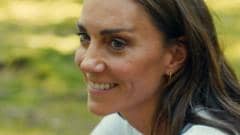
The Princess of Wales's personal account of her experience of cancer has a soul-bearing, emotionally candid tone never presented before in a royal documentary.
Discussing it at a private screening, she said it reflected the "fear, anxiety, uncertainty" shared by hundreds of thousands of people each year "who receive the words no one wants to hear" about having cancer.
The documentary, Heal, being shown on BBC One on Sunday, couldn't be further away from a stiff upper lip.
This is royal television without any palaces or carriages, it's an intense 30 minutes examining how "cancer strips everything away" and then a different kind of self-awareness emerges.
It reveals more of Catherine's inner thoughts than any of her previous speeches and we hear more from her children than ever before.
"Cancer does change you. It changes your body, it changes you physically. You have to go through treatment and surgeries and everything.
"But there's a much deeper part to what a cancer diagnosis shifts in you. I think when you've had to confront your own vulnerabilities, you know, when you're faced with your own mortality, you have to accept that life is not infinite and in those moments, yes, a shift does happen," she says.
Some viewers might be left in tears, others may think it's too schmaltzy - either way, they're going to be talking about it. It packs an emotional punch, even though it's more of a self-scripted, video diary than a conventional, journalistic documentary.
"This will be a documentary that most people can relate to and will admire her for doing. There is an emotional directness that's an unusual departure," says royal commentator Prof Pauline MacLaran, of Royal Holloway, University of London.
MacLaran thinks it will connect well with the public, who will admire Catherine's "bravery".
The documentary follows Catherine's Three Peaks Challenge, in which she climbed the biggest mountains in England, Wales and Scotland in a single day, and the cameras record her driving in between and her encounters with other climbers.
This climb is a big mountainous metaphor for the difficulties, resilience and help of other people during the "scary, disorientating experience" of her treatment.
At the summit of one peak she gets voice messages from her three children - George, Louis and Charlotte - who each in turn send their love in a way that shows the closeness of their family. They also all hug and kiss later, along with Prince William, with tears being brushed away.
Those moments could be the emotional peaks that people will share, in a documentary made for the social media age.
It's also probably the most we've heard directly from the royal children.
Somewhere, the late Prince Philip will be scratching his head at how much the royals have dropped their tradition of privacy. Although we don't learn from the film the type of cancer or any details of Catherine's treatment.
"No previous generation of the Royal Family would have considered producing something like this," says Valentine Low, author and royal commentator.
"They would have been less willing to talk about illness and personal matters," he says.
But this documentary is in keeping, says Low, with a generation "that's more likely to think in terms of whether there could be a positive message from the experience".
Nonetheless, says Low, such a film-making approach, sharing their own chosen thoughts with the camera without an interviewer, still allows Catherine to "control the narrative".
And there are questions that arise. She speaks of her cancer journey being a "pilgrimage" and the need to "spend time on our spiritual health" - and it makes you wonder whether there has been a deeply religious or spiritual experience as part of her recovery.
There's a melancholy tone to the documentary, describing the impact of a "really dark time", and you wonder how this will sit alongside the expectations of her future royal life, when she will be queen.
It could also raise wider questions about the treatment, waiting times and recovery support available to the great majority of NHS patients, who do not have royal titles, but whose needs are as intense.
But we see Catherine in this documentary in hospital wards sharing experiences with other cancer patients and hearing about their hopes and fears. It's deliberately raw and unadorned in how it's presented.
There are lighter moments too, joking with her brother James as they head up the mountains.
Speaking at a screening, Catherine said the documentary was about "giving back" to people facing similar health worries and also to recognise the support of health services and charities working with patients and families.
Proceeds from the documentary, like her Three Peaks Challenge fundraiser, will go to the Royal Marsden Cancer Charity, in support of the hospital where she received treatment.
The open, empathetic tone of the documentary has been warmly welcomed by those working with cancer patients.
"Watching someone speak so openly about the fear, the hope and the long road to recovery can make a real difference to those going through it," says Michelle Mitchell, chief executive of Cancer Research UK.
"Her honesty will help many people feel less alone, and it will encourage important conversations about cancer in homes across the country."
Ceinwen Giles, co-chief executive of Shine Cancer Support, said: "The film's honesty is what makes it so powerful.
"By being open about her experience, the princess gives others a way to start their own conversations about how cancer affects every part of a person's life, particularly younger adults and those with young families."
Catherine herself says that her experience has made her think about well-being in a much more holistic way, "not just about fixing what is wrong. It is about finding balance in how we live."
"My hope is that this film will encourage compassion, showing the real value in standing alongside one another in the hardest of times," she says.
Heal will be shown on BBC iPlayer from 12:00 GMT and BBC One at 18:40 GMT on 29 November. It will also air internationally, including on NBCUniversal in the US on 30 November, Channel 9 in Australia on 1 December and CTV and Noovo in Canada on 7 December
KioskNews shows a cleaned-up reading view extracted from the publisher’s page — the original always lives on their site, not ours.