‘They’ll never bring us dowwwwwwwn!’ Wicked’s stars pick their favourite songs from the smash hit
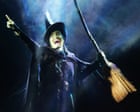
Idina Menzel originated the role of Elphaba, the witch of the west who turns out not to be so wicked (but still very green). She won a Tony on Broadway, starred in the West End run and made a cheeky cameo in the recent film version
I’ll never forget the exhilaration I felt the first time I sang Defying Gravity in dress rehearsal. All the lights were as they should be. The smoke machine was blowing. The orchestra was playing. I was locked into my safety belt and I started to rise up over the theatre. To have that incredible moment and to see how the audience leapt to their feet – I felt so proud but I also just wanted to cry.
I was part of the developmental process of writing Wicked for four years and stood at a piano with [composer and lyricist] Stephen Schwartz many a time, being introduced to new ideas and songs – often written just the night before. He came to really understand my voice. Not just how high I could hit a note but where it sat emotionally. Originally, Defying Gravity didn’t go up an octave at the end. It stayed in this low place. So I asked Stephen if I could take it up an octave – the whole song is soaring, I said, and I have it in me to go up there: “Looook to the western skiiiiiiy!” I do take credit for that change.
The final note is actually easy for me. It’s like a release. There are other notes I find much harder. Singing notes on an “E” vowel is not easy: “Bring meeeee down”, that’s really tricky. I actually botched that note in my call-back audition. But instead of falling to pieces, I looked at the accompanist and said: “I’m going to do that again.” And then I just took all this angst and frustration at not being perfect and nailed it. Joe Mantello [director of Wicked on Broadway] always told me that’s how he knew I was going to be their witch – because I had this power and ferocity about me. That’s why, to this day, whenever young people ask me for advice, I always tell them not to fear their mistakes. Embrace those moments.
Thank Goodness
Zizi Strallen plays Glinda the Good in the current West End cast. She’s used to stepping into the shoes of iconic roles – and hinting at cracks that lie beneath a pristine surface – after a breakout performance as Mary Poppins
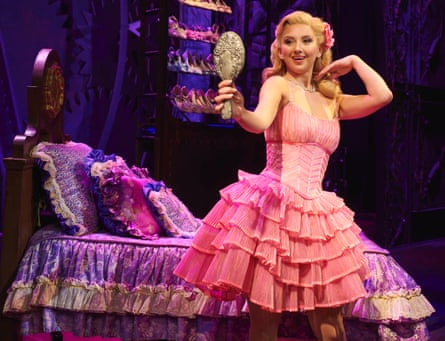
Whatever you’re going through in your life, Wicked somehow manages to hit a nerve. Everyone can relate to not feeling accepted for who they truly are or trying to figure out different parts of their personality. I’ve definitely gone through phases where I’ve made mistakes or said the wrong thing – so I channel all of that when I sing.
Thank Goodness shows the journey Glinda goes on throughout the whole show. It tells the audience that’s she’s struggling with the prospect of fame and recognition – and all the things that come with being Glinda the Good – but also wanting to stand up for her friend Elphaba and for what’s right. She’s getting everything she ever dreamed of but at what cost? That’s a beautiful arc for any actor to play: to start a song at one point and finish at an entirely different emotional one.
It’s wonderful to perform but very difficult to learn. The rhythms are really different to how you think they’re going to be. Stephen wrote it so that it’s sung exactly the way you would speak it, with little gaps here and there: “There’s a kind of a sort of – cost.” It’s similar to the way that Sondheim writes. It only really made sense to me when I sang it with the full orchestra and their rhythms accompanying me.
Dancing Through Life
Jordan Litz played Fiyero, the student who gets romantically entangled with Glinda and Elphaba, more than 1,700 times in the US. He makes his West End debut in the role
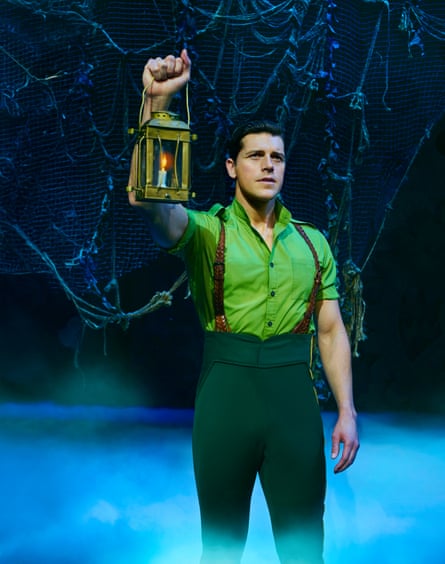
Dancing Through Life wasn’t always in the show. It was originally a song called Which Way Is the Party? The lyrics were a little sleazy: “Which way is the next keg of winkie beer?” It was all very frat boy and didn’t have nearly the same carefree attitude. You can hear they kept some stuff from the original number – the intro and the bridge – but the rest of the song is much more light and easy.
This was initially the hardest song for me to do because it’s the one that’s least like me. Growing up, I wasn’t the super-cool popular kid. I was 5ft 4in in my freshman year, singing soprano in my high-school choir and wearing oversized trainers. Finding the confidence to play Fiyero didn’t come naturally. It was always the song I got the most notes on during rehearsals for the Broadway run. More swagger! More confidence!
For the first year, performing it was a constant battle – trying to find that carefree confidence. And that struggle would show up in my dancing. My moves weren’t big enough or sharp enough. You’re surrounded by these incredible dancers and it’s very easy to shrink into yourself and not commit. It took a lot of support from people around me, convincing me that I have it inside myself. I was fighting against the person I envisioned myself to be, growing up, and who I actually am today. That’s probably why it’s become my favourite number: it feels like the song that I’ve learned the most from.
The Wizard and I
Musical supervisor Stephen Oremus conducted and helped to craft the Broadway premiere of Wicked
The Wizard and I was Stephen’s third try at a song in that spot in the show and it unlocked Elphaba’s journey. The first try felt very earnest and wide-eyed. It was a beautiful and heartfelt song called Making Good, about this young green girl who just wanted to do good things. But it wasn’t quite multi-layered enough. The second attempt was written after Idina was cast. It was a little bit more soaring and it suited Idina’s voice and personality more: it was the next step towards giving the number more of a sweeping grand gesture. Then in the third version, Stephen just hit it. He was able to combine everything good from the other takes and make it work. It’s an amazingly simple song but brilliantly written and executed.
The way we built the orchestrations, you can feel the excitement and anticipation of the character. The colours and flow of the song are relatively simple as Elphaba’s working out her thoughts and then it all shifts when she gets to that “unlimited” bridge. The orchestration gets dreamy and really expansive musically. Elphaba throws her arm out and allows herself to really feel for the first time. You’re seeing this very cerebral and intense girl start to get excited about the possibility of it all. It’s overwhelmingly beautiful to me.
For Good
The offers from Hollywood came flooding in after Gregory Maguire wrote his novel Wicked, a spin on L Frank Baum’s The Wizard of Oz. But it wasn’t until composer and lyricist Stephen Schwartz suggested setting it to song that an adaptation felt possible – and Wicked’s musical journey began
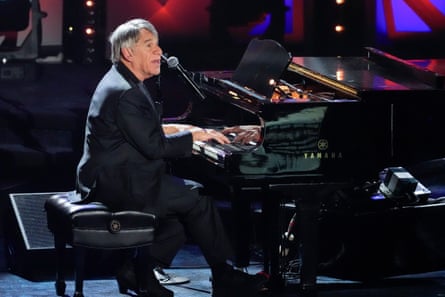
The final song between Elphaba and Glinda was one that I approached very cautiously. I knew it was going to be the heart of the show. If we got it right, we had our emotional ending. If we didn’t, it could undercut everything that had come before. So I phoned my collaborator, Winnie Holzman, and talked to her about this final meeting. What kind of things would they say to one another? At one point Winnie said: “They’ve had such an enormous impact on each other – they’ve changed each other for good.” “Stop right there,” I said. “You’ve just given me the title.”
I always knew what the song was going to feel like. I wanted something that was heartfelt and uncovered. Completely vulnerable. A lot of Glinda’s songs are about presenting a specific version of herself to the public. But I wanted this song to feel like a true expression from the heart. Then I started to think about the lyrics. My daughter Jessica was visiting at the time. She’d always had a deep friendship with a woman, Sarah, whom she first met when they were six or seven. So I sat down with Jess and I said: “Imagine you’re only going to see Sarah one last time. What would you say?” Jess started to talk about people coming into each other’s lives for a reason, about helping and hurting each other and about forgiveness. I wrote it all down and that was pretty much the entire first verse of For Good. I think that’s one of the reasons the song has such an impact – because people intuitively feel the truth of it.
KioskNews shows a cleaned-up reading view extracted from the publisher’s page — the original always lives on their site, not ours.