The audacity of being a girl
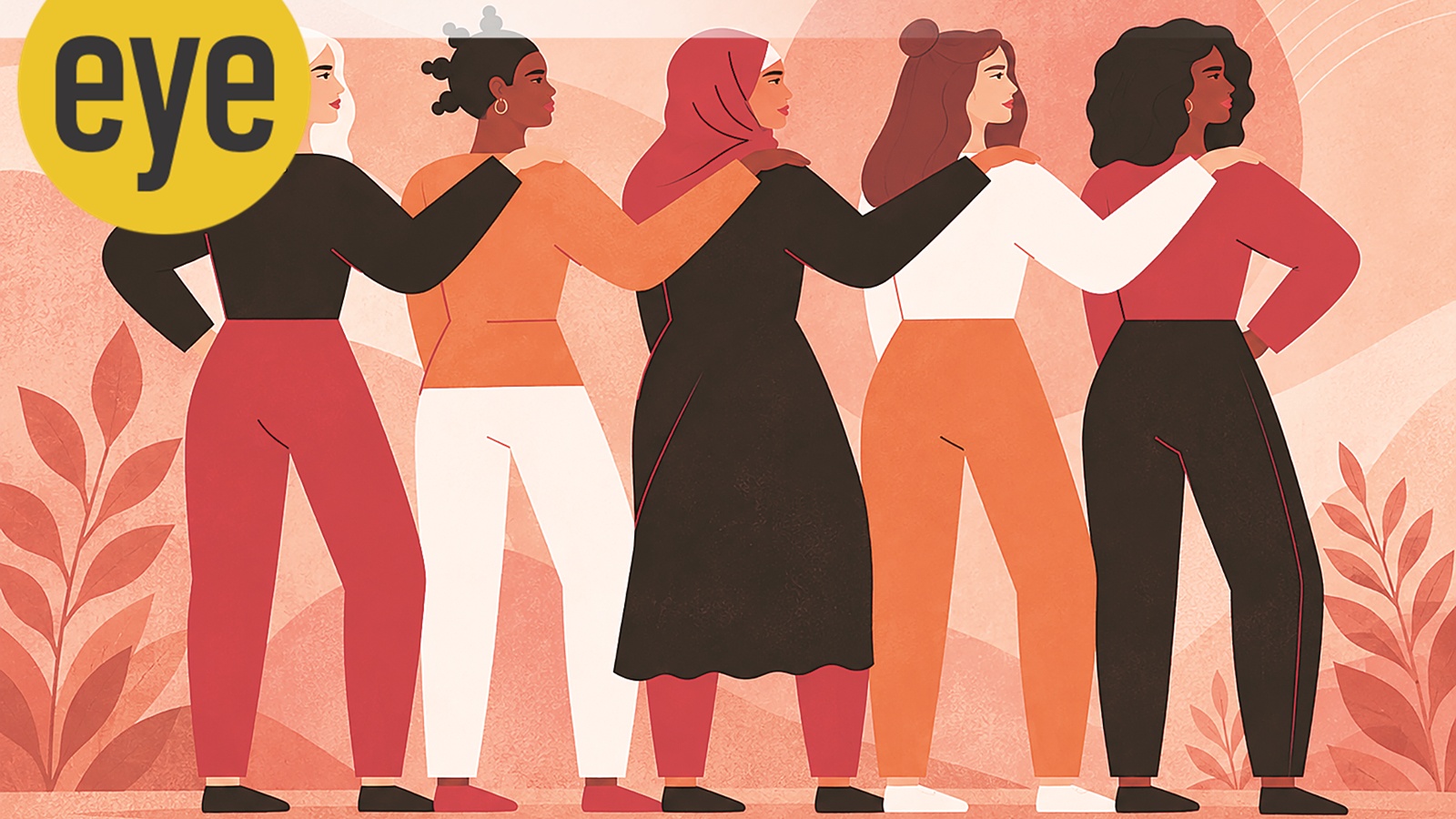
Reclaiming female autonomy and dismantling toxic expectations allows daughters to navigate independence confidently. (Illustration: Getty Images)
“We give a lot of freedom to our girls. That does not mean they can wear vulgar clothes and use bad language.” These words from the father did not surprise me, as they echo a sentiment I often hear when I meet families with daughters.
They had come to meet me after learning that their 18-year-old daughter, Atika, had recently started meeting a boy from her college without their knowledge. She had even gone to a party under the guise of a sleepover at a friend’s home to study together.
“We saw the party photos on Instagram and were shocked to see the clothes she was wearing,” the mother said. They offered me their phone with a screenshot of someone’s story, where I could see Atika in a short dress, dancing away blissfully. She shot an accusing look at her daughter, “Log kya kahenge (what will people say)…that your parents did not teach you any aadharsh (values).”
Atika sat upright on her chair, refusing to look at anyone. I tried to steer the conversation without dismissing the parents’ concern, yet still centre the young woman’s voice. I repeated the mother’s words aloud, “Log kya kahenge…”
“That’s all they are worried about, log kya kahenge,” Atika finally spoke up.
“We are really worried about your safety,” said the mother. Atika retorted, “I hate that word, safety. You just want to control me in the name of safety.” I was struck by her words, so I asked her to explain that.
“Whenever they do want me to do something, they will make it about my safety,” she said softly, curving her fingers as quotation marks. “But if they are honest, they will realise it is not about my safety – it is to control what I wear, what I do and where I go. I have grown up hearing – ‘had me rah, kam bol’ (stay within your limit and don’t talk too much), just because I am a girl. I am done with this sh*t.”
Story continues below this ad
“How dare you speak with disrespect to your parents?” the father snapped. Atika, in almost a whisper, said, “And you can call me characterless.” I took a deep breath and realised I had to step in, otherwise, the situation could spiral into something dangerous, causing more harm than healing. I requested the parents to step back so I could have a conversation with Atika, and later we could talk together. I turned to Atika and asked tentatively, “In their worry about your safety, what do you think your parents are not seeing?” Atika bent her head down and then said, “They forget that I am 18 now, and I am learning how to live in this world without putting myself in danger. I would like to be honest with them and tell them more about my life, but if they are going to judge and shame me, then I am left with no choice but to hide it from them.” We talked a little more, and I learned a lot about what she was studying in college, what was important to her, what she was passionate about and her hopes. I was in awe of her clarity of thinking and her dreams for her future.
When I turned to her parents, they were sitting in stunned silence, possibly hearing their daughter talk about these ideas for the first time. I reflected, “As a parent, I know I end up saying or doing things against my better judgment. As you were listening to Atika, did anything she say make you question what you could do differently?” The father said nothing and looked away, but the mother broke down in tears. “It is so difficult bringing up daughters in our society. As a mother, I feel if she does anything that spoils her character, agar bigad gai (if she goes out of hand), then I will be blamed for it.”
Bigadi hui ladki (girl who has gone out of hand) – a sentiment that comes in some shape and form in almost every conversation in a family with a young girl. I repeated the words with a smile, and then we sat and unpacked the loaded history and politics behind them. Where did it come from, how come girls had to carry the shame around it much more than boys and how it restricted our lives. The father did not participate in our unravelling of patriarchy, and when I joked that I had grown up being called “Bigdi hui ladki” and now claimed it proudly, his eyes widened in surprise.
I wondered if I had got carried away and taken it a bit too far, but then I saw his jaw soften. Something unclenched in him as maybe he realised that he did not have to carry the burden of being a harsh protector of his daughter. She was figuring it out very well for herself.
Story continues below this ad
Girls grow up with these implicit Lakshman Rekha (social norms) which decide what they can wear, speak or how they can act. Social control is most effective when it produces what Michel Foucault, the French philosopher, called “docile bodies”. Docile bodies that internalise surveillance and carry the burden of maryada and sanskar (the social indoctrination of being a good girl), are more useful for political power structures that claim “Humaari betiyaan is prakar ki bhasha kesse bol sakti hein (How can our daughter speak like this?)” My question is “Kyun nahi (why not)?”
We continued the discussions in the coming weeks – two steps forward and one step back. Healing is not linear. We have to keep at it, dismantling patriarchy one conversation at a time. After all, metaphorically, it is in the air we breathe, in our water supply and in the smells we imbibe. But now it has started stinking, and we can’t put a lid on it.
Our role as therapists is not to be complicit in becoming social control agents to “fix” the girls to be more docile. We have to be allies in their journey for gender justice. Patriarchy has an insidious way of recruiting parents against their daughters and pushing them to be custodians of their daughters’ “characters”. I do not hold it against them as they are repeating the language of hegemonic masculinity that they have grown up hearing.
It would also be absurd to assume that women have been passive recipients of oppression for all these years. Even recent resistance has taken shape through women-led social movements such as Narmada Bachao Andolan, Mothers of Manipur, the Shaheen Bagh protest, the Chipko movement, and many others, which have shaken the cobwebs of our male-dominated society. Girls are challenging the male-dominated social order at home, in schools, and in colleges, and critiquing society’s idea of being sanskaari. They are out on the streets, protesting, claiming their right to be heard and seen. It will be an honour to count myself among the bigdi hui ladkiyan. It’s time we all were.
Story continues below this ad
*This story is a composite of innumerable conversations with audacious girls across ages.
In this column, Shelja Sen curates the knowhow of the children and youth she has the honour of working with. Email her at shelja.sen@childrenfirstindia.com
KioskNews shows a cleaned-up reading view extracted from the publisher’s page — the original always lives on their site, not ours.