Marcos vows to build more solar pump irrigation systems amid El Niño threat
Make this your preferred source to get more updates from this publisher on Google.
President Ferdinand “Bongbong” Marcos Jr. on Friday committed to expanding solar-powered irrigation systems in the country in a bid to mitigate the impacts of the Super El Niño.
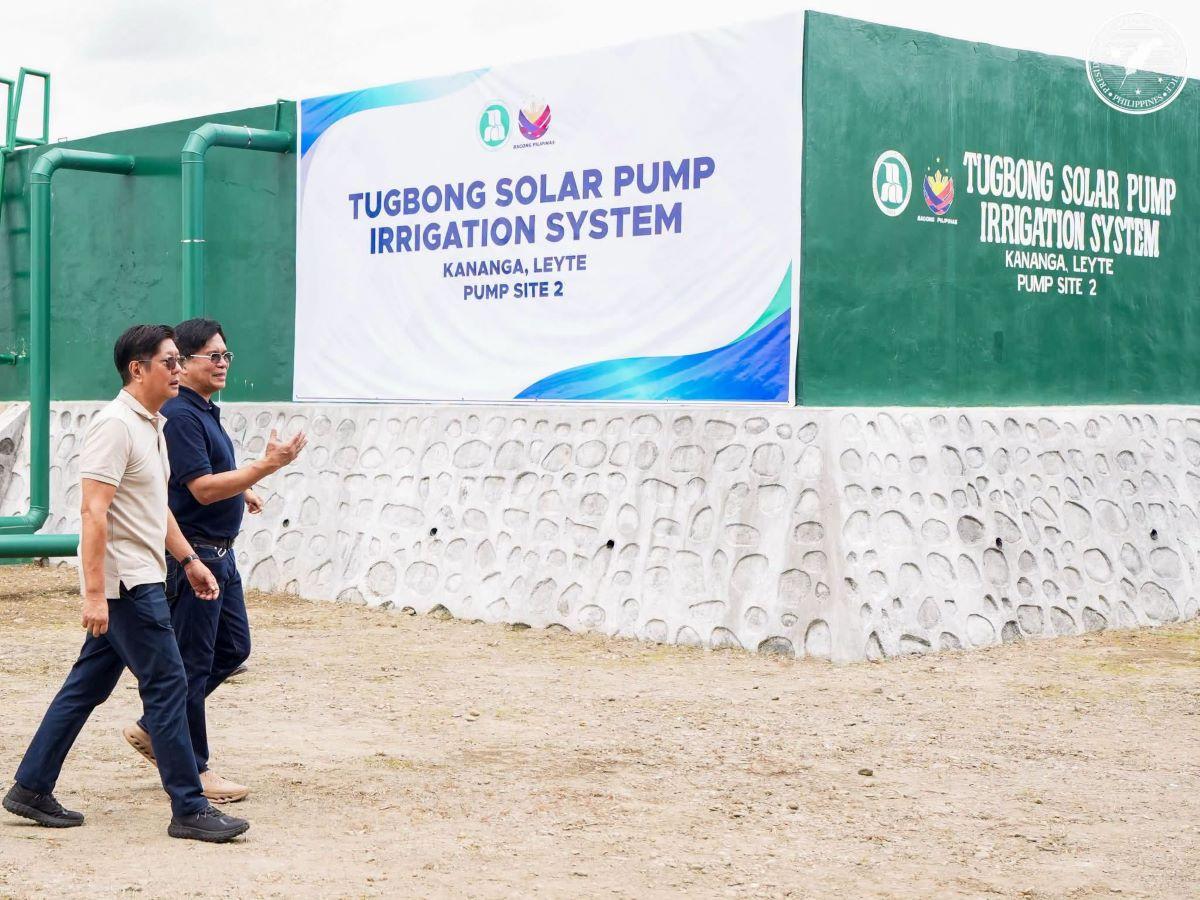
The President said this as he led the inauguration of the Tugbong Solar Pump Irrigation Project (SPIP) in Kananga, Leyte.
“Iniikot ko at tinitiyak ko na maayos ang ating mga patubig natin dahil parating na at napapag-usapan na parating ‘yung El Niño. Pero itong darating daw na El Niño ay mas mabigat kaysa sa dating mga El Niño. Sa ngayon, mayroon na tayo, nararamdaman na natin at umiinit na at sabi nila ay patuloy pa ‘to hanggang next year,” Marcos said.
(I am making the rounds to ensure that our irrigation systems are in good condition as the El Niño is coming. This El Niño is expected to be more severe than previous ones. We are already experiencing it now as the weather is getting hotter, and it is expected to persist until next year.)
“Kaya tinitiyak natin na ang ating mga irrigation systems ay nandyan na patuloy pa rin. Panay pa rin ang ating ginagawa na irrigation system para sa ating mga magsasaka at sa ating mga iba't ibang taniman,” he added.
(That is why we are ensuring that our irrigation systems remain operational. We are continuously working on irrigation systems to help our farmers.)
The Tugbong SPIP, one of two solar-powered irrigation projects inaugurated in Leyte, will provide irrigation to 115 hectares of rice fields in Barangays Tugbong and Sto. Niño in Kananga.
Meanwhile, the Guintigui-an Solar Pump Irrigation Project in Ormoc City, will serve 70 hectares of farmland and benefit over 80 farmers.
Through these solar-powered irrigation projects, Marcos said farmers would be able to save money on diesel costs.
“Sa paggamit natin ng solar power, alam niyo naman po, nakita naman po ninyo…gumagawa tayo ng kuryente na galing sa araw kaya’t libre,” the President explained.
(By using solar power, as you are well aware and have clearly seen, we generate free electricity from the sun.)
“Pagka ‘yung ganyang katumbas ng kuryente na lumalabas diyan sa solar…sa krudo na nanggagaling ang patakbo ng ating mga bomba ay siguro gagastos kayo ng mga P20,000 bawat season para makapagpatubig ng inyong mga lupain,” he added.
(If you were to generate the same amount of electricity by using diesel fuel to power your pumps, you would likely spend around P20,000 per season to irrigate your lands.)
Marcos said the Department of Agriculture is also distributing smaller solar-powered water pumps to farmers to further reduce irrigation costs.
He noted that around 3,000 solar pump irrigation systems have been established all over the country to improve agricultural productivity and provide farmers with a sustainable water source.
“Umaabot na tayo sa 70% ng irrigable lands ay irrigated na,” Marcos said.
(About 70% of our irrigable lands are now irrigated.)
“At pinapaspas natin para tiyakin na dahil alam ng mga magsasaka ‘yan na talaga naman ang pinakaimportante sa lahat pagka nagsasaka ay ang patubig. Kaya ito’y ginawa nating prayoridad,” he added.
(And we are planning to build more because we know that when it comes to farming, irrigation is the most important thing of all. That is why we have made this a priority.) — RSJ, GMA News
KioskNews shows a cleaned-up reading view extracted from the publisher’s page — the original always lives on their site, not ours.