The 10 Best Shows in Network TV History, Ranked


Michael Block is a 14 time GLAM Award nominated writer, producer, and host of the podcast Block Talk. Throughout his time in the entertainment industry, he has worked on and off Broadway as a stage manager, written several produced plays, critiqued hundreds of theatrical performances, drag and cabaret shows, and has produced events randing from drag competitoons to variety concerts!
On Block Talk, he interviews nightlife personalities, covers the wide world of entertainment through features, ranking episodes, and recaps ALL of Drag Race, as well as Dragula and Survivor. He has interviewed hundreds of RuGirls that span the globe at DragCon NYC, DragCon LA, and DragCon UK.
In his free time, he makes one-of-a-kind jewelry and gift baskets with his mom. He is a proud member of the LGBTQ+ community.
Sign in to your Collider account
Though the television landscape has changed drastically over the past few decades with the rise of streamers, we wouldn’t be where we are without the pioneers of network television. From dramatic wonders to hilarious sitcoms, the shows that we adore today were highly influenced by the shows of yesterday.
Though countless incredible network television shows exist, the ten on this list changed the game. Between influencing pop culture, daring to tell stories no show has done before, and reshaping genres forever, these ten titles have become timeless beacons in entertainment.
10 'Seinfeld' (1989-1998)

Sometimes shows about nothing are truly perfect. Such is the case for Seinfeld. Breaking conventional sitcom norms, the series followed the everyday lives and petty frustrations of four self-involved friends living in New York City. Centered on Jerry Seinfeld, a fictionalized version of himself, the antics include George Costanza (Jason Alexander), Jerry’s neurotic, insecure, and scheming childhood best friend, Elaine Benes (Julia Louis-Dreyfus), his impulsive ex-girlfriend and sharp-witted work colleague, and Cosmo Kramer (Michael Richards), Jerry’s eccentric, wild-haired, and bumbling neighbor who slides through the door unannounced. With each episode, Seinfeld captured the mundane annoyances of life; Seinfeld famously operated on a "no hugging, no learning" rule, meaning the characters never grew, matured, or learned moral lessons from their often selfish mistakes. And yet, we couldn’t get enough.
Through brilliant, razor-sharp observational humor, co-creators Seinfeld and Larry David made the characters behave terribly as their petty social anxieties and bad impulses mirrored real-world human flaws, making them strangely timeless. In a way, they made viewers feel better about themselves because they weren't them. Seinfeld notoriously manufactured iconic quotes, moments, and characters that continue to be parroted today. If you hear phrases like "yada yada yada," "no soup for you," "double dip," and "Festivus,” it’s because the show infused them into the pop culture lexicon. Rather than drag out the show until the writing suffered, Seinfeld ended after nine seasons, at the peak of its popularity. And it ended exactly how it should have. There simply will never be a show like it.
9 'M*A*S*H' (1972-1983)
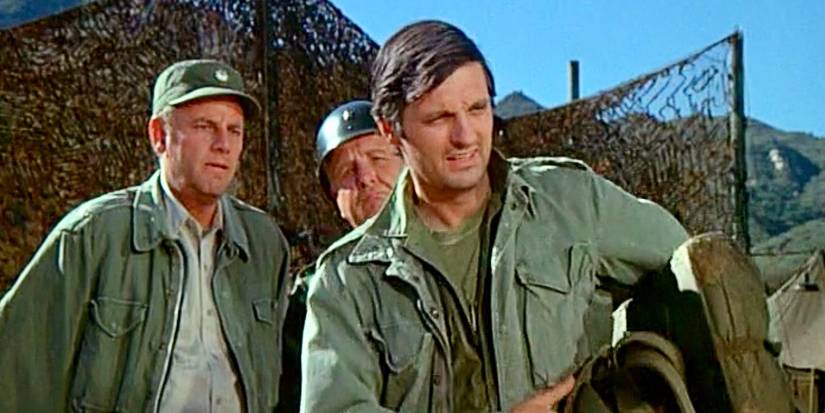
Spun off from the 1970 film of the same name, M*A*S*H follows the doctors, nurses, and support staff of the 4077th Mobile Army Surgical Hospital in South Korea during the Korean War. Stationed near the front lines, the medical personnel work under chaotic, high-pressure conditions to treat wounded soldiers but use humor as a coping mechanism. While it started more heavily as a sitcom, the show evolved into a deeper dramedy that exposed the grim realities of combat and human suffering. Made to reflect the anti-war sentiment, M*A*S*H championed humanity and empathy in order to appeal to a broad audience.
With an ensemble cast that included Alan Alda, Wayne Rogers, Loretta Swit, and Jamie Farr, M*A*S*H was a triumph as a character-driven series. Rather than keeping them frozen in time, the show deepened early caricatures into complex, trauma-scarred, deeply human figures. Even when the cast changed, the chemistry remained intact. M*A*S*H proved a sitcom could transition seamlessly from zany slapstick and office humor to heartbreaking tragedy in a single episode. With a profound legacy and one of the most-watched series finales ever, M*A*S*H helped pioneer the dramedy format.
8 'ER' (1994-2009)

Widely considered one of the greatest medical dramas of all time, ER brought the action within the emergency room of Cook County General Hospital in Chicago to life. Created by Michael Crichton, the 15-season series follows the frantic, high-stress daily lives of the doctors, nurses, medical students, and support staff as they face intense life-and-death medical emergencies. Known for its fast-paced, overlapping storytelling, realistic medical jargon, graphic emergency procedures, and long-term personal and ethical dilemmas, ER focused on high-stakes medical drama alongside profound character development. With an iconic cast of stars that served as the heartbeat of the show, ER became the blueprint for ensemble entertainment.
ER preeminently changed television craft through its dedication to medical realism. The series abandoned static multi-camera setups for frantic, high-energy Steadicam tracking shots, deep-focus lenses, and long, continuous takes that made the emergency room feel chaotic and alive. Characters shouted complex medical jargon and shorthand as they rushed down hospital corridors, mimicking the real-life tempo of a trauma center. Over 15 seasons and 331 episodes, the show followed multi-layered personal and professional transformations, mastering a hybrid format that weaves high-stress episodic medical emergencies with long-term, serialized character development. Over its run, the cast included George Clooney, Anthony Edwards, Alex Kingston, Julianna Margulies, Mekhi Pfeiffer, Maura Tierney, Noah Wyle, among others. As a beacon of appointment television, ER paved the way for decades of medical and workplace dramas.
COLLIDERInteractive
Five wards on call
TV/Medical Drama/Shift Assignment
Collider · TV Medicine
Which Fictional Hospital
Would You Work Best In?
Eight questions · five wards · one assignment
Five hospitals. Five completely different ways medicine goes sideways on television: brutal, chaotic, romantic, brilliant and ridiculous. Only one of them is the ward your instincts were built for, and eight questions will work out exactly where you belong. Wards accepting
PTMCThe Pitt
CGHER
GSMGrey's Anatomy
PPTHHouse
SHHScrubs
Rhythm strip01 / 08
Question 01 of 08APPROACH
01 A critical patient comes through the door. What is your first instinct? Medicine under pressure reveals who you really are.
Keys 1 to 5 or A to E · Enter to advance
Rhythm strip02 / 08
Question 02 of 08MOTIVATION
02 Why did you go into medicine in the first place? The honest answer says more about you than the one you would give in an interview.
Keys 1 to 5 or A to E · Enter to advance
Rhythm strip03 / 08
Question 03 of 08COLLEAGUES
03 What do you want most from the people you work with? Who you want beside you under pressure is who you are.
Keys 1 to 5 or A to E · Enter to advance
Rhythm strip04 / 08
Question 04 of 08LOSS
04 You lose a patient you fought hard to save. How do you carry it? Every doctor who has worked a long shift has had to answer this one.
Keys 1 to 5 or A to E · Enter to advance
Rhythm strip05 / 08
Question 05 of 08STYLE
05 How would your colleagues describe the way you work? Your reputation on the floor is usually more accurate than your self-image.
Keys 1 to 5 or A to E · Enter to advance
Rhythm strip06 / 08
Question 06 of 08RULES
06 How do you feel about hospital protocol and procedure? Every institution has rules. What you do with them is a choice.
Keys 1 to 5 or A to E · Enter to advance
Rhythm strip07 / 08
Question 07 of 08TOLL
07 What does this job cost you personally? Nobody works in medicine without paying a price. What is yours?
Keys 1 to 5 or A to E · Enter to advance
Rhythm strip08 / 08
Question 08 of 08PURPOSE
08 At the end of a long shift, what keeps you coming back? The answer to this one is the most honest thing about you.
Keys 1 to 5 or A to E · Enter to advance
Assignment madeYou belong in
PTMC · Admitted The Pitt Pittsburgh Trauma Medical Center This ward asks whether you can stay in the room for the whole shift, and come back tomorrow.
You are built for the most unsparing version of emergency medicine television has shown, the one that puts you inside a single long shift and does not let you look away. You need your work to be real rather than romanticized, and you find your purpose inside the work itself rather than in the chaos around it. You have made peace with a job that takes from you constantly and gives back in ways that are harder to name. What this ward asks of you
- Meaning over drama, honesty over aesthetics.
- The discipline to stay present when the department is at its worst.
- A tolerance for weight that does not get put down at the end of the day.
From the Collider file
- Each episode covers roughly one hour of the same emergency-department shift, in order.
- Noah Wyle has now won the lead drama actor Emmy for it twice, in 2025 and again in 2026.
- It reunites the ER team of Wyle, John Wells and R. Scott Gemmill, thirty years on.
Fully present No romance Built to endure
CGH · Admitted ER County General Hospital, Chicago This ward asks whether you can hold the line long enough for the next person to take it.
You are the one who keeps the whole floor moving. Not the most brilliant in the room, possibly the most essential. You show up, do the work, absorb the losses and come back the next day without needing the job to be anything other than what it is. You care about patients as individual people rather than as cases to solve or dramas to live inside, and you believe in the system even on the days it fails you. What this ward asks of you
- Reliability above brilliance, every single shift.
- Faith in a structure that is visibly imperfect.
- The stamina to treat the hundredth patient like the first.
From the Collider file
- Fifteen seasons and 331 episodes, from 1994 to 2009, created by Michael Crichton.
- It holds the record for the most Emmy nominations of any drama series, with 124.
- George Clooney, Julianna Margulies and Noah Wyle all broke out of County General.
Shows up Endurance Patient first
GSM · Admitted Grey's Anatomy Grey Sloan Memorial, Seattle This ward asks whether you can do the work with your whole self in the room.
You came to medicine with everything you have, your ambition, your feelings, your relationships and your history, and you have never quite managed to leave any of it at the door. You form deep attachments to the people you work with, and your personal and professional lives stay permanently, chaotically tangled. That tangle drives both your worst disasters and your most remarkable saves, because you understand that extraordinary medicine often happens where clinical skill meets human connection. What this ward asks of you
- A willingness to feel all of it rather than seal any of it off.
- Colleagues who become family, with everything that costs.
- Comfort with mess, in the OR and everywhere else.
From the Collider file
- Shonda Rhimes' series passed ER to become the longest-running primetime medical drama on US television.
- It is on season 22, with ABC having already renewed it for a twenty-third.
- Ellen Pompeo has played Meredith Grey across three decades of television.
Feels everything Found family Beautifully messy
PPTH · Admitted House Princeton-Plainsboro Teaching Hospital This ward asks whether you can be right when everyone in the room needs you to be wrong.
You are drawn to the problem above everything: the symptom that does not fit, the diagnosis hiding underneath the obvious one. The patient as a person is not your first motivation, though you are capable of caring more than you would admit. You work best when the stakes are highest and the standard answer is wrong. Princeton-Plainsboro exists to house one extraordinary and impossible mind, and everyone near it is there because they can keep up. What this ward asks of you
- Thinking harder than anyone else in the room, then defending it.
- A high tolerance for being disliked while you are right.
- Interest in the puzzle that outlasts your interest in being comfortable.
From the Collider file
- Eight seasons built on Sherlock Holmes: House and Holmes, Wilson and Watson, and an apartment at 221B.
- Hugh Laurie taped his audition in a hotel bathroom in Namibia while shooting another film.
- By 2008 it was the most-watched television show on earth, with an audience around 82 million.
Chases the puzzle Difficult on purpose Usually right
SHH · Admitted Scrubs Sacred Heart Hospital, California This ward asks whether you can hold the tragedy and the absurdity at the same time.
You understand that medicine is devastating and ridiculous in roughly equal measure, and that the only sane response is to carry both at once. You are warm, self-aware and funnier than most people in your field. You use humor to get through terrible moments, which at Sacred Heart is a survival strategy rather than a flaw. You lean on the people around you and let them lean back, because here the laughter and the grief are inseparable. What this ward asks of you
- Humor that never curdles into cruelty.
- The honesty to admit you are still learning how to do this.
- People you can lean on, and the willingness to be leaned on.
From the Collider file
- Nine seasons from Bill Lawrence, filmed largely inside a real decommissioned hospital in North Hollywood.
- Working doctors have repeatedly named it the most accurate medical show on television.
- Zach Braff, Donald Faison and Sarah Chalke returned for an ABC revival that premiered in February 2026.
Laughs to cope Still learning Leans on people
Shift report · your top three
1
2
3
Copied to your clipboard
Chart signed byCOLLIDERCollider.com · The TV Desk
7 'The Mary Tyler Moore Show' (1970-1977)
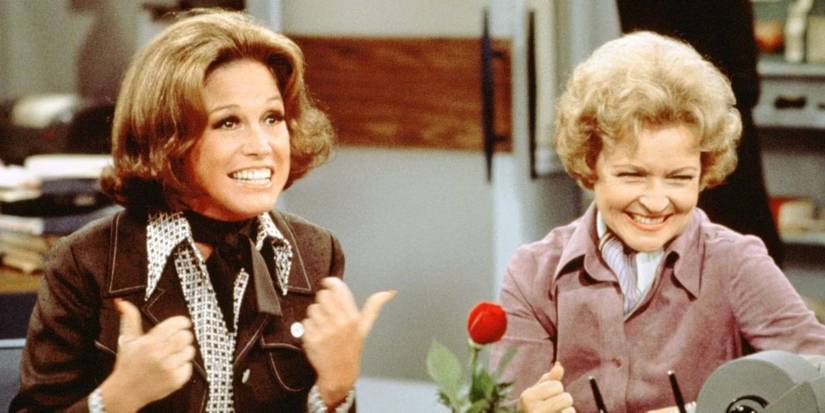
Female-led workplace comedies became a possibility thanks to The Mary Tyler Moore Show. Created by James L. Brooks and Allan Burns, the sitcom followed Mary Richards (Mary Tyler Moore), a 30-something single woman who moves to Minneapolis, Minnesota, after ending a long-term relationship. She gets a job as an associate producer for the low-rated Six O'Clock News, where she works alongside her newsroom family: Lou Grant (Ed Asner), her gruff, tough-talking news producer boss, Murray Slaughter (Gavin MacLeod), the witty, self-deprecating news writer, Ted Baxter (Ted Knight), pompous, dim-witted, and vain news anchor, and Sue Ann Nivens (Betty White), the outwardly sweet but deceptively sharp-tongued host of WJM's "Happy Homemaker" show. At home, Mary befriends Rhoda Morgenstern (Valerie Harper), her sarcastic, fashion-conscious upstairs neighbor, and Phyllis Lindstrom (Cloris Leachman), Mary's self-absorbed landlord and acquaintance.
The Mary Tyler Moore Show became a beacon because, unlike most female TV characters of the era defined by a husband or family, Mary is independent, self-reliant, and lives life on her own terms. The series pioneered character-driven storytelling through dynamic writing and extraordinary performances. The writing tackled progressive themes like equal pay, birth control, and workplace politics without relying on cheap or offensive gags. Essentially a perfect streak of peak hilarity, the series brought pure joy, as Mary and friends truly turned the world on with their smiles. The series was so beloved that three of its characters received their own titular spinoffs, extending the narrative into new stories. The Mary Tyler Moore Show remains a high-water mark of network television.
6 'The Simpsons' (1989-Present)

The Simpsons forever changed animated sitcoms. Created by Matt Groening, the long-running series satirizes everyday American life, culture, politics, and human nature through the lens of the titular working-class family. Set in the fictional town of Springfield, The Simpsons features bumbling, beer-loving, doughnut-eating Homer, patient, blue-haired homemaker Marge, mischievous professional prankster Bart, intellectual Lisa, and silent, pacifier-sucking infant Maggie. Unlike traditional sitcoms that showcased idealized families, The Simpsons skewered the ideal by embracing modern dysfunction while still genuinely caring for one another. Through extraordinary world-building and its fervent mission of poking fun at everyone and everything, The Simpsons became the pinnacle of pop culture.
The Simpsons became a legacy series because of its unmatched writing, rich ensemble, and profound cultural impact. It bridges highbrow literary references and lowbrow sight gags. With its genre versatility, it seamlessly functions as a domestic family sitcom, a sharp workplace satire, a political commentary, and a pop-culture spoof all at once. It is the longest-running American animated series and scripted primetime show, embedded deeply in the global pop-culture lexicon and everyday language. With no signs of slowing down, The Simpsons might outlive us all. Especially as it keeps prophesying the future!
5 'Cheers' (1982-1993)
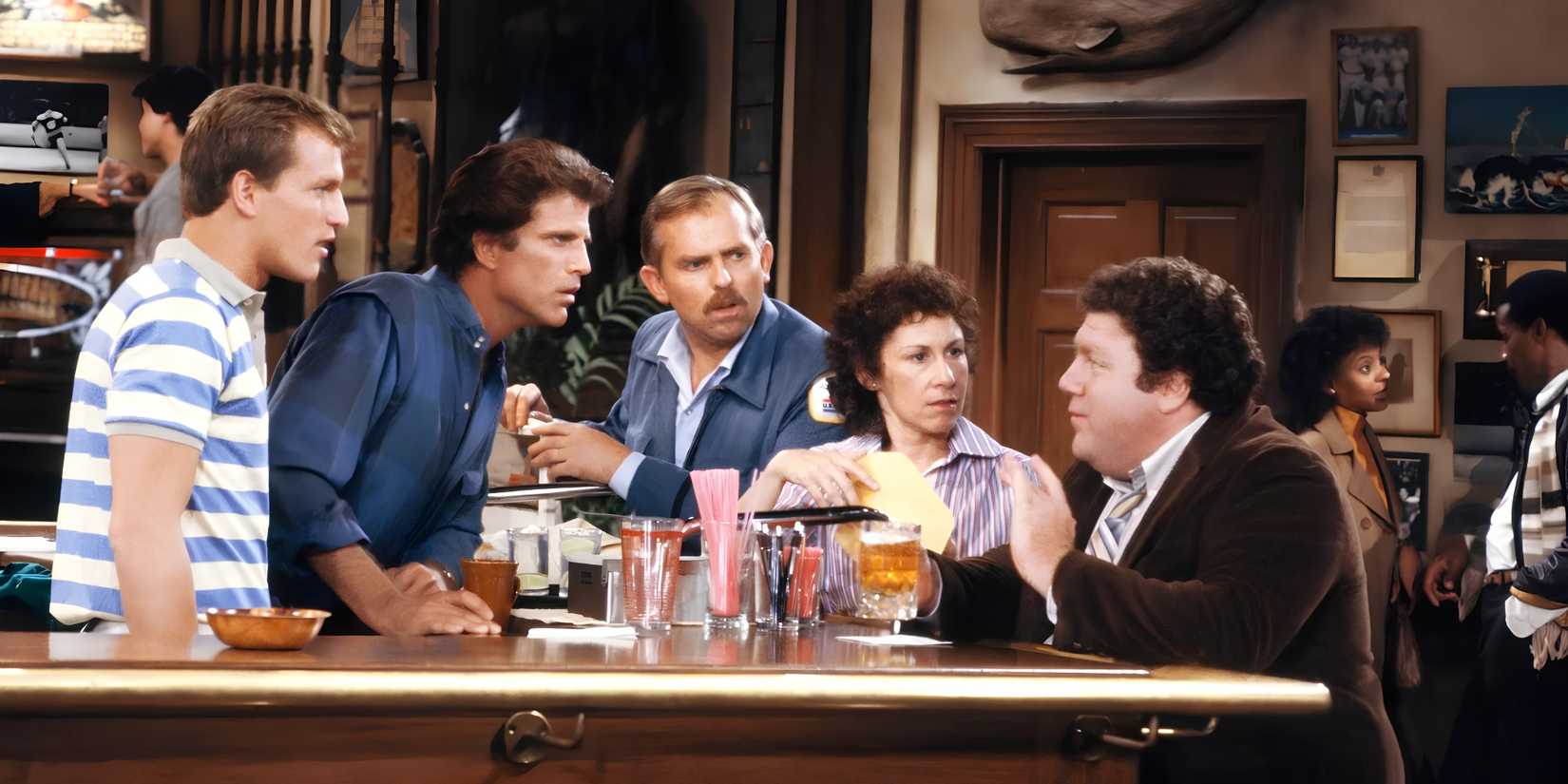
Sometimes you wanna go where everybody knows your name. And that place was Cheers. Created by Glen Charles, Les Charles and James Burrows, the Boston-set sitcom follows a regular group of local patrons and the bar's staff who gather at the titular bar to drink, relax, escape their daily lives, and socialize. The original lineup featured the central story of former Boston Red Sox ace Turner bar owner Sam Malone (Ted Danson), cultured, intellectual, and somewhat uptight graduate student Diane Chambers (Shelley Long), sweet-natured Coach (Nicholas Colasanto), fiercely sarcastic, sharp-tongued waitress Carla Tortelli (Rhea Perlman), and bumbling barflies Norm Peterson (George Wendt) and Cliff Clavin (John Ratzenberger). A masterclass in writing, Cheers relied on smart, quick-witted, and dense dialogue that elevated its characters into beloved icons.
Cheers celebrated found family. Cheers reset the status quo, allowing its characters to genuinely grow, change jobs, marry, age, and shift their social standing over 11 seasons. Even when the cast featured major cast changes, adding Kirstie Alley, Woody Harrelson, and Kelsey Grammer to the mix, the DNA remained the same. The show captured the comforting, nostalgic idea of a local hangout, transforming a simple neighborhood watering hole into an emotional home base for millions of viewers. A ratings juggernaut, Cheers was nominated for Outstanding Comedy Series all 11 years it aired, racking up 28 Primetime Emmy Awards. Establishing a lasting legacy, launching another megahit in Fraser, Cheers is simply perfect.
4 'The Office' (2005-2013)

The mockumentary sitcom format became a massive 21st-century trend after The Office's success. Based on the British show of the same name, The Office follows the everyday lives, office politics, and relationships of employees at the Scranton, Pennsylvania branch of the fictional Dunder Mifflin Paper Company. The show is filmed as if a real documentary crew is capturing the daily work life of the staff, complete with "talking head" interview confessionals where characters speak directly to the camera. Michael Scott (Steve Carell), an oblivious, desperate-for-attention regional manager, manages the branch. The story tracks the slow-burn romance of easygoing salesman Jim Halpert (John Krasinski) and warm receptionist Pam Beesly (Jenna Fischer), as well as the hilarious rivalry with Dwight Schrute (Rainn Wilson), an intensity-driven, socially awkward salesman and beet farmer. The epitome of an ensemble series, The Office features a revolving door of accountants, sales reps, and customer service staff dealing with the mundane.
The Office combines a hyper-relatable workplace setting with a groundbreaking mockumentary style, deep character growth, and a poignant look at human connection. It transformed the little things in life into hilarious moments that brought non-stop laughter. 9-to-5 office routines, petty break room politics, and boring corporate meetings became high-stakes comedy anyone with a job recognizes. Using a single-camera, fly-on-the-wall documentary style and ditching the laugh track, it relied on awkward silences, fast zoom-ins, and iconic direct-to-camera glances to make the audience feel like a silent co-worker in the room. With unforgettable, multi-layered characters, it allowed the genuine core to focus on the human condition. Beneath the awkward comedy, the show touches on a melancholic truth about the American dream: people spending years of their lives in a job they didn't necessarily plan for, finding meaning, friendship, and love along the way. The Office remains one of the most bingeable shows that predated the streaming format.
3 'The West Wing' (1999-2006)
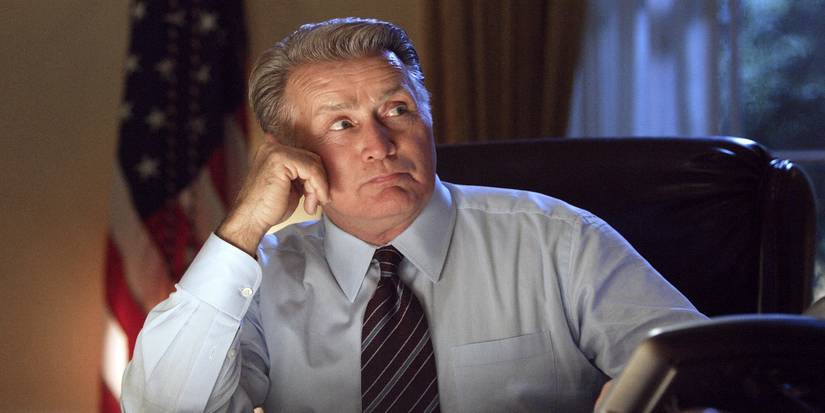
From today’s worldview, The West Wing may sound like a fantasy series, but the Aaron Sorkin-created drama remains the greatest American political series of all time. For seven seasons, The West Wing follows President Jed Bartlet (Martin Sheen) and his dedicated, fast-talking senior advisors as they balance the heavy demands of running the country with high-pressure Washington politics, personal sacrifices, and ethical dilemmas. Known for its sharp, witty, and fast-paced dialogue, walk-and-talk hallway scenes, and idealistic view of public service, The West Wing became a safe space to dream that this is what actually happened inside the walls of the People’s House in Washington, D.C.
Sorkin brought a theatrical, fast-paced rhythm to network TV, turning complex policy debates and legislative strategy into riveting drama. Sorkin and his writing staff proved that administrative processes could build high-stakes tension. The series thrived thanks to its landmark cast, including Allison Janney, Bradley Whitford, Richard Schiff, Rob Lowe, Dulé Hill, Stockard Channing, Janelle Moloney, and John Spencer. The inner circle was written as deeply intelligent, quick-witted, and driven by a shared, albeit sometimes frustratingly romanticized, moral urgency. Absolutely dominating the Emmys with 26 Primetime Emmy Awards, including four consecutive wins for Outstanding Drama Series, The West Wing left a tangible footprint in real-life D.C., inspiring a generation of staffers and public servants who viewed government service as an honorable calling.
2 'I Love Lucy' (1951-1957)
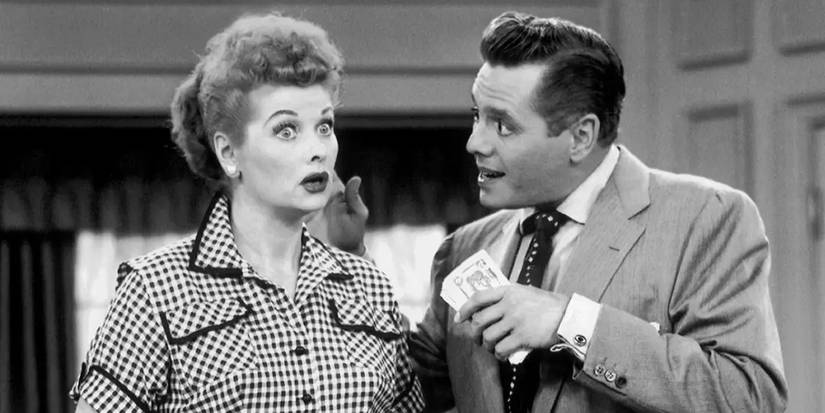
It’s not that there hasn’t been a better sitcom since, it’s just I Love Lucy set the trajectory of the entire genre. The classic sitcom followed the chaotic domestic life and comedic misadventures of Lucy Ricardo (Lucille Ball), a zany, ambitious New York City housewife, and her Cuban bandleader husband, Ricky Ricardo (Desi Arnaz). Alongside their best friends Fred and Ethel Mertz (William Frawley and Vivian Vance), Lucy drags them into wild schemes as she constantly hatches elaborate, frantic plans to perform or make money, which inevitably backfire and land the group in hilarious predicaments. Pushing the boundaries of storytelling and leading the charge toward change, I Love Lucy is why the modern sitcom exists today.
From a technical standpoint, I Love Lucy was the first scripted series filmed on 35mm film in front of a live studio audience using a multi-camera setup, launching the rerun industry. The series broke cultural barriers by featuring television's first major interethnic/interracial couple and pushed network boundaries by writing Ball’s real-life pregnancy directly into the plot. Ball did not play Lucy like a standard housewife. Physical slapstick, facial expressions, and timing, combined with tight ensemble chemistry, created timeless, universal visual humor. The show was a massive cultural juggernaut, ranking as America's most-watched show for four of its six seasons.
1 'Saturday Night Live' (1975-Present)

It’s not an easy feat for anything nowadays to last for a significant amount of time, and yet, five decades later, Saturday Night Live is still kicking! The long-running live sketch comedy and variety show created by Lorne Michaels, filmed live at Studio 8H in New York City, features a weekly guest host from the worlds of entertainment, sports, and politics alongside a musical guest. Poking fun at politics, current events, pop culture, and human behavior, SNL is infamous for launching the careers of many of Hollywood's greatest comedic stars, from Adam Sandler and Eddie Murphy to Tina Fey and Kristen Wiig.
There truly has never been another show that has become such a touchstone in American culture. As a talent incubator, the series has routinely ranked among the top-performing broadcast comedies, even as naysayers question its longevity and quality. Airing late at night gives the show looser content regulations, letting writers and cast members mock politicians, societal trends, and taboo subjects in real time. The show has produced countless iconic moments, both hilarious and controversial, that have become part of the pop culture lexicon. From iconic characters that have made it to film to a launchpad for music, SNL remains a defining part of entertainment. At this point in time, it doesn’t seem to be slowing down. The big conversation will be who will get the reins next.
Saturday Night Live
- Release Date
- October 11, 1975
- Network
- NBC
- Showrunner
- Lorne Michaels
- Directors
- Dave Wilson, Don Roy King, Liz Patrick, Andy Warhol, Linda Lee Cadwell, Matthew Meshekoff, Paul Miller, Robert Altman, Robert Smigel
KioskNews shows a cleaned-up reading view extracted from the publisher’s page — the original always lives on their site, not ours.